

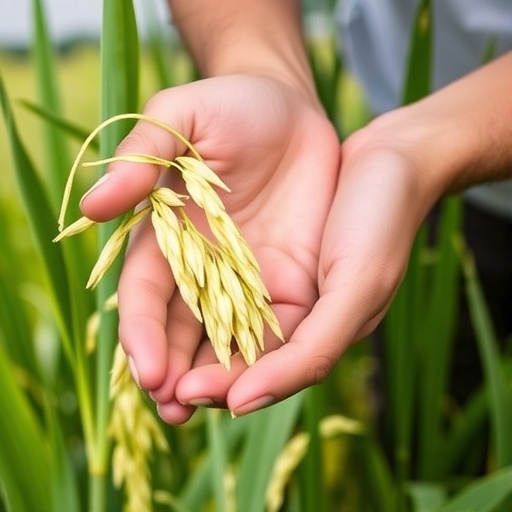
A groundbreaking discovery in rice genetics promises to revolutionize sustainable agriculture by significantly reducing the need for synthetic nitrogen fertilizers while preserving, and even enhancing, crop yields. Researchers from the University of Oxford, Nanjing Agricultural University, and the Institute of Genetics and Developmental Biology of the Chinese Academy of Sciences have identified a master regulatory gene in rice plants that orchestrates the balance between root and shoot growth in response to nitrogen availability. This discovery, detailed in a study published in Science, paves the way for developing rice varieties that can thrive with lower fertilizer inputs, mitigating environmental harm and supporting global food security.
Nitrogen is a fundamental nutrient for plant growth and a critical component in the production of synthetic fertilizers that underpin modern agriculture. However, its use carries severe environmental consequences, including the emission of greenhouse gases, contamination of waterways, and long-term soil degradation. Typically, rice plants adapt to nitrogen scarcity by reallocating resources to their root systems to scavenge for nutrients, often sacrificing shoot development and grain yield. This natural trade-off, while advantageous in wild ecosystems, constrains productivity in an agricultural context where maximizing grain yield is paramount.
Until this study, the molecular mechanisms triggering this adaptive growth adjustment were elusive. The current research fills this critical gap by pinpointing the gene responsible for this developmental switch. Known as WRINKLED1a (WRI1a), the gene acts as a central regulator that integrates nitrogen signals to modulate growth patterns in rice plants, ensuring a balanced allocation of resources between roots and shoots even under nutrient stress.
The team’s experiments using both controlled greenhouse conditions and large-scale field trials revealed that rice plants deficient in functional WRINKLED1a exhibit impaired root growth response under nitrogen-deficient conditions and experience stunted shoot growth when nitrogen is abundant. Conversely, genetically engineered rice plants overexpressing WRINKLED1a maintained robust growth in both roots and shoots across varying nitrogen levels. This dynamic stabilization of the root-to-shoot ratio is critical for sustaining grain production without excessive fertilizer input.
To harness natural genetic diversity, researchers screened over 3,000 rice cultivars, identifying an allelic variant of WRI1a with elevated expression levels. This natural “improved” allele was introgressed into plants carrying weaker versions of the gene, generating rice lines with enhanced growth regulation. Subsequent field evaluations in the agriculturally significant regions of Hainan and Anhui provinces demonstrated that these rice lines delivered remarkable yield improvements. Under low nitrogen application rates (120 kg/ha), yields increased by nearly 24%, while even under high nitrogen input (300 kg/ha), yield gains of almost 20% were recorded, highlighting the gene’s broad effectiveness.
The molecular basis of WRINKLED1a function is intricate and tissue-specific. In shoots, WRI1a operates as a transcriptional activator, inducing expression of a regulatory gene called NGR5, which promotes shoot branching—a vital determinant of grain-bearing potential. In roots, WRI1a enhances the expression of genes involved in nitrogen uptake and simultaneously disrupts the formation of a protein complex that normally limits the accumulation of auxin, a plant hormone integral to root development. By selectively modulating auxin levels in roots but not in shoots, WRINKLED1a finely tunes growth responses in different tissues based on nitrogen status.
Rice is the primary food source for over half of the world’s population, yet its production faces escalating threats from climate change. Rising temperatures can reduce rice yields substantially, with studies revealing that each 1°C increase during the growing season results in an over 8% yield decline. Moreover, nitrogen fertilizers constitute a significant portion of production costs—sometimes up to one-third for smallholder farmers—and exacerbate climate change through emissions associated with their manufacture and use. The ability to maintain or improve yields with reduced fertilizer presents a double dividend for sustainability and food security.
Dr. Zhe Ji from the University of Oxford emphasized the extraordinary impact of this gene on rice yields, calling it a promising target for sustainable crop improvement. The research exemplifies the synergy of molecular biology, genetics, and agronomy to address global challenges. This gene’s discovery heralds a new era in crop sciences where genetic improvements can mitigate environmental impact while bolstering food production.
Adding further interest, lead author Dr. Shan Li from Nanjing Agricultural University highlighted the potential for this genetic mechanism to extend beyond rice. Given the conservation of homologous genes across cereal crops, this discovery opens avenues for similar enhancements in staple crops like wheat and maize, which together with rice constitute the backbone of global food systems.
The research team conducted comprehensive field trials over multiple seasons, ensuring robust validation of the improved allele’s effects under real-world agricultural conditions. The observed yield stability despite fluctuations in nitrogen availability addresses a major challenge faced by farmers worldwide: optimizing input use while reducing vulnerability to nutrient stresses. This stability is crucial for smallholder farmers who often lack resource-intensive means of fertilization.
From a biochemical perspective, WRINKLED1a’s modulation of nitrogen uptake genes and auxin pathways underscores the complex hormonal and metabolic networks underpinning plant adaptive growth. Understanding and manipulating such pathways represents a pivotal strategy for engineering crops that can dynamically adjust to fluctuating soil nutrient profiles, enhancing resilience and efficiency.
Beyond yield metrics, this discovery carries profound implications for the global nitrogen cycle. By enabling reduced fertilizer application without yield penalty, adoption of WRINKLED1a-enhanced rice varieties could decrease nitrogen runoff and associated eutrophication of water bodies. The consequent reduction in nitrous oxide, a potent greenhouse gas, complements broader climate mitigation efforts linked to agriculture.
In conclusion, the identification and functional characterization of WRINKLED1a mark a significant advance in plant developmental biology with direct translational potential for sustainable agriculture. As climate pressures intensify and the global population grows, innovations that reconcile productivity with environmental stewardship will be pivotal in securing food systems. This research represents a beacon of hope for the future of rice cultivation and beyond.
Subject of Research: Plant genetics, molecular biology, nitrogen use efficiency, rice crop improvement, sustainable agriculture
Article Title: OsWRI1a coordinates systemic growth responses to nitrogen availability in rice
News Publication Date: 26 February 2026
Web References:
- https://www.fao.org/4/Y5167E/y5167e02.htm
- https://www.sciencedirect.com/science/article/pii/S0048969722003539
- https://www.irri.org/projects/fertilize-right-project
References:
- DOI: 10.1126/science.aeb8384
Image Credits: University of Oxford
Keywords: WRINKLED1a, nitrogen use efficiency, rice yield, sustainable agriculture, nitrogen fertilizer reduction, plant hormone auxin, root-shoot balance, NGR5 gene, genetic regulation, crop resilience, climate change adaptation, rice genetics


