

A Revolutionary Capsule-Based Technology Transforms Single-Cell Analysis
In the rapidly evolving field of molecular biology, the precise analysis of individual cells holds the key to unraveling complex biological processes and disease mechanisms. Groundbreaking research led by Visiting Professor Linas Mazutis at Umeå University has introduced an innovative capsule-based technology that significantly advances the study of single cells. Published recently in the esteemed journal Science, this pioneering approach addresses a long-standing limitation in cell research: the inability to repeatedly analyze the same individual cell through multiple experimental steps without losing or contaminating it.
Traditional single-cell analysis methodologies, despite their immense contributions, often restrict researchers to a one-time examination of a cell, creating a barrier to understanding dynamic cellular changes and responses to external stimuli. This new technology leverages microscopic, semi-permeable capsules—each encapsulating a single cell—allowing sequential and multifaceted analyses while preserving the cellular contents intact. This breakthrough holds transformative potential for biological sciences, providing unprecedented insights into cellular diversity and disease progression.
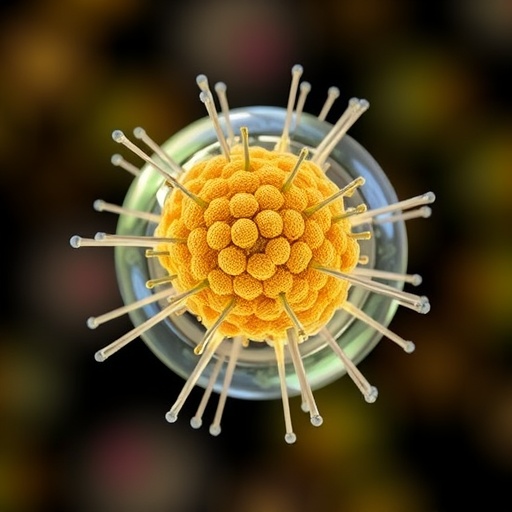
The essence of the technology lies in the design of the semi-permeable capsules, consisting of a liquid core enveloped by a delicate yet robust porous membrane. This membrane is uniquely engineered to permit the passage of small molecules like enzymes, reagents, and other chemical agents, while selectively retaining larger biomolecules such as DNA and RNA within the capsule. This selective permeability ensures that the cell’s genetic material remains isolated and protected, facilitating multiple rounds of molecular analysis without contamination or sample loss.
By integrating this capsule technology with microfluidics—a technique that manipulates minute volumes of liquids with extraordinary precision—the researchers have crafted a platform capable of processing hundreds of thousands of individual cells simultaneously. The methodology retains the speed and scalability advantages of microfluidics but overcomes the key limitations of droplet-based systems commonly used in single-cell research.
One of the most important features of this technology is its compatibility with advanced molecular biology workflows. Unlike conventional methods, which often necessitate sacrificing the cell after a single analysis, these capsules allow stepwise experimental protocols to be performed sequentially on the very same cell. This capability opens avenues for sophisticated analyses such as performing sequential enzymatic reactions or chemical labeling, shedding new light on cellular processes as they unfold in real-time.
Crucially, the researchers demonstrated that cells can be maintained alive inside the capsules for extended durations, an achievement that enables longitudinal studies of cellular behaviors and responses. Alternatively, cells can also be deliberately lysed within the capsule environment to extract nucleic acids for high-resolution genetic analyses. This dual functionality enhances research flexibility, allowing scientists to explore diverse biological questions ranging from cell viability to comprehensive genomic sequencing.
An additional innovation introduced in this study is a novel RNA sequencing approach specifically tailored to work with the capsule technology. This method greatly improves the detection and characterization of fragile or rare cell populations—cell types that are typically lost or underrepresented in traditional single-cell sequencing techniques. By preserving these elusive cells, researchers are better equipped to understand their roles in health and disease, especially in heterogeneous tissues like tumors or immune cell populations.
The scalability, simplicity, and adaptability of this capsule-based platform signal its potential for broad adoption across biological and medical research disciplines. The capacity for repeated analyses on the same individual cells will undeniably accelerate discoveries in cell biology, immunology, and cancer research, among many others. For instance, monitoring how genetically identical cancer cells within the same tumor respond differently to chemotherapy drugs could inform more effective, personalized treatment strategies in oncology.
Looking forward, the implications of this technology extend well beyond laboratory research. Its precise, scalable nature could profoundly influence clinical diagnostics and therapeutic monitoring by enabling the early detection of critical cellular changes indicative of disease progression or treatment response. This technology could thus become instrumental in developing next-generation precision medicine frameworks tailored to individual patients’ cellular profiles.
Professor Mazutis emphasizes the importance of understanding intrinsic cell-to-cell variability to unravel disease mechanisms: “All cells are different, and discerning those differences is fundamental to advancing personalized medicine.” This statement encapsulates the core promise of the capsule technology—to expose and exploit the subtle molecular heterogeneity within cell populations that drives disease outcomes and therapeutic resistance.
Ultimately, this capsule-based single-cell analysis method represents a new paradigm in molecular biology research, combining innovative material science with microfluidic engineering to overcome prior technical obstacles. The capacity to execute high-throughput, multi-step molecular assays on isolated, live cells paves the way for a deeper and more nuanced understanding of biology at the most fundamental unit of life.
As the scientific community embraces this breakthrough, ongoing developmental efforts will likely enhance capsule designs and expand their integration with diverse omics technologies, including proteomics and metabolomics. This convergence promises to deliver an all-encompassing toolkit to explore cellular complexity with unparalleled accuracy and depth.
This work not only illustrates a remarkable technical advance but also underscores the synergy between interdisciplinary approaches—combining bioengineering, molecular biology, and computational methods—to push the frontiers of science. The new capsule-based platform sets an exciting precedent, heralding a future where the secrets of single cells can be decoded with unprecedented clarity and speed, ultimately catalyzing transformative impacts in biomedical research and healthcare.
Subject of Research: Cells
Article Title: High-throughput single cell omics using semipermeable capsules
News Publication Date: 18-Dec-2025
Web References: DOI: 10.1126/science.ady7227
Image Credits: Photo by Katažyna Samaitė
Keywords: Cell biology; Single cell sequencing; DNA sequencing; Biotechnology; Molecular biology


