

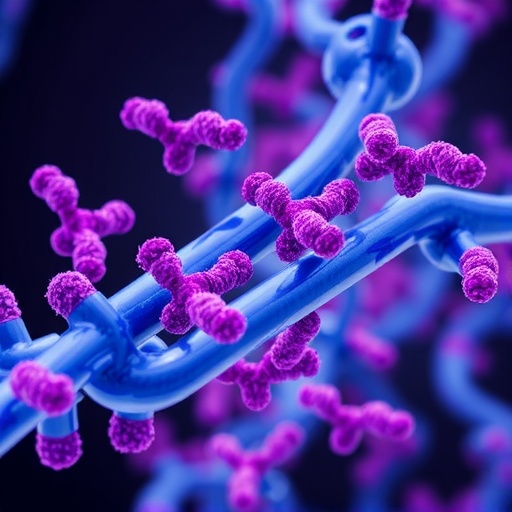
In a groundbreaking advance from Northwestern University, scientists have unveiled a novel therapeutic strategy designed to dismantle cancer-causing proteins by harnessing the cell’s natural waste disposal system. This pioneering approach moves beyond traditional inhibition tactics, proposing instead to physically eliminate problematic proteins through targeted degradation. Presented in a recent publication in Nature Communications, this innovative method introduces protein-like polymers (PLPs) engineered to identify and escort oncogenic proteins directly to the cellular “trash bin” — the proteasome or autophagy machinery — thereby prompting their destruction and inducing cancer cell death.
Traditional cancer therapies have struggled to tackle proteins such as MYC and KRAS, which are notorious for driving aggressive tumor growth and evading most small molecule drugs and antibody-based treatments. These proteins are termed “undruggable” due to their intrinsically disordered structures and lack of well-defined binding pockets, leaving conventional drug design at a disadvantage. The Northwestern team circumvented these hurdles by developing a novel class of heterobifunctional polymers dubbed HYDRACs (HYbrid DegRAding Copolymers), which function with remarkable precision to snare and shuttle these elusive proteins toward their degradation.
The essence of HYDRAC technology lies in its dual-binding architecture. Each polymer is designed with two functional domains: one arm incorporates multiple copies of peptides capable of selectively binding target proteins like MYC and KRAS, while the other arm carries molecular cues that recruit the cell’s protein decay machinery. This bifunctional design enables the polymers to physically juxtapose the target protein with the degradation systems naturally embedded within the cell, overcoming the need for a traditional druggable pocket.
Experimental work demonstrated the efficacy of these polymers in cellular models representing a spectrum of cancers. When introduced into cultured cancer cells, HYDRACs selectively engaged MYC and KRAS proteins, resulting in their prompt degradation. This degradation halted oncogenic signaling cascades driven by these proteins, leading to cell death. More impressively, in animal models harboring tumors driven by MYC, these polymers localized preferentially within tumors and curtailed tumor progression without significant toxicity or side effects, highlighting the potential for in vivo therapeutic application.
One of the most daunting challenges in contemporary oncology is managing the mutational plasticity of cancer cells, particularly with proteins like KRAS. Although recent small molecule inhibitors have been developed for specific KRAS mutations, resistance emerges quickly as tumors evolve alternative pathways or mutate their drug-binding sites. HYDRAC-based degradation effectively neutralizes this problem by targeting the entire protein for disposal rather than inhibiting a specific site. As detailed by Professor Nathan Gianneschi—the lead researcher and a renowned expert in polymer chemistry—this method effectively drags the protein “kicking and screaming” into the cell’s degradation pathway, indifferent to mutation status or protein conformational changes.
The methodology holds promise not only for oncology but could potentially revolutionize therapeutic strategies across multiple disease domains. Neurodegenerative disorders, inflammatory conditions, and metabolic diseases often involve aberrant or harmful proteins that are challenging to target with conventional drugs. The modular design of HYDRAC polymers allows for customization against a diverse array of protein targets, effectively opening doors to a broad spectrum of proteinopathies previously deemed intractable.
From a molecular engineering perspective, the one-step polymer synthesis employed by Gianneschi’s group is particularly noteworthy. It enables rapid, scalable production of these proteomimetic polymers with high specificity and multivalency, providing multiple binding sites on a single polymer chain to increase avidity and efficacy. This synthetic flexibility stands in contrast to small molecule strategies, which often require extensive medicinal chemistry optimization and face limitations imposed by the necessity of precise binding pockets.
Moreover, the theoretical underpinning of HYDRAC’s mechanism capitalizes on cellular quality control systems such as ubiquitin-proteasome pathways and autophagy. By co-opting these endogenous pathways, HYDRACs leverage the cell’s intrinsic mechanisms for protein homeostasis rather than relying on external enzymatic activity or immune-mediated clearance. This endogenous engagement minimizes off-target effects and enhances the likelihood of sustained therapeutic response.
The successful proof-of-concept studies published by the Northwestern team demonstrate the potential for translation from bench to bedside. Northwestern’s tech transfer and associated spinout company, Grove Biopharma, are actively developing the HYDRAC platform within the framework of “Bionic Biologics,” aiming to expedite clinical application. This translational push is supported by grants from various prestigious institutes, reinforcing the significance and potential impact of this research.
Importantly, the potential for multivalent polymer-based degraders extends beyond static protein targets. Given the dynamic and disordered nature of many pathological proteins, the ability of HYDRACs to adapt to variations and mutations makes it a versatile platform that could surmount longstanding obstacles in drug resistance and target selectivity. The polymers’ capability to bind disordered regions affords a new paradigm in drug design, shifting focus from rigid lock-and-key interactions toward adaptable, multivalent binding polymers.
While much remains to be explored, including long-term safety profiles, pharmacokinetics, and efficacy across diverse human tumors, the initial data provide compelling evidence that targeted protein degradation mediated by synthetic polymers represents a viable and transformative avenue in oncology and beyond. This research not only deepens our understanding of protein biology but also pioneers a new front in the war against cancer by transforming the cell’s disposal systems into strategic allies.
The study titled “Heterobifunctional proteomimetic polymers for targeted degradation of MYC and KRAS” propels the field forward, combining meticulous polymer chemistry with cellular biology to address formidable challenges posed by disordered cancer proteins. As targeted therapies evolve, this technology points toward a future where “undruggable” proteins can be effectively eliminated rather than inhibited, offering renewed hope for patients burdened by aggressive cancers and, potentially, other devastating diseases.
Subject of Research: Animals
Article Title: Heterobifunctional proteomimetic polymers for targeted degradation of MYC and KRAS
News Publication Date: 24-Feb-2026
Web References: https://doi.org/10.1038/s41467-026-68913-3
Keywords: Cancer, Proteins, Cellular proteins, Cancer cells, Cancer treatments


