


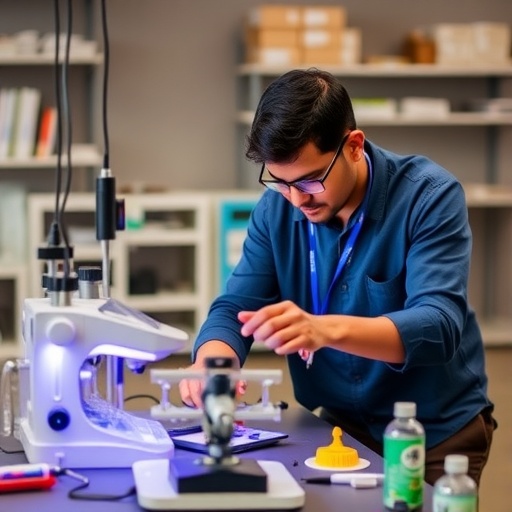
India’s higher education system stands at a critical juncture, poised between immense potential and significant hurdles, especially in the realm of Science, Technology, Engineering, and Mathematics (STEM). This discourse is encapsulated in the recent study conducted by Gopinath, Kumar, and Banerjee titled “STEM Beyond Reach? An Analysis of Access Barriers in India’s Higher Education Landscape.” This comprehensive research sheds light on the multifaceted barriers that obstruct students from fully engaging in STEM education, an area crucial to India’s future competitiveness in the global economy.
The researchers delve deep into the complexities of access to higher education, emphasizing that the issues are not just systemic but also societal. Diversity in educational background, economic disparities, and varying levels of infrastructure create a cascading effect on students’ opportunities to pursue STEM disciplines. The study emphasizes that merely increasing the number of institutions or programs does not suffice; instead, a reevaluation of existing frameworks is necessary.
One of the major takeaways from this analysis is the importance of addressing financial barriers faced by students. Many promising individuals are thwarted from pursuing their aspirations due to the prohibitive costs associated with higher education. It’s not just about tuition fees but also the ancillary costs—books, materials, travel, and even living expenses—that accumulate significantly. This often leads to a situation where capable students forfeit their educational dreams, further entrenching the societal inequities prevalent in India.
In addition to financial constraints, the study highlights regional disparities in educational access. Rural areas in India often lack sufficient infrastructure, qualified faculty, and essential learning resources. Students from these regions face a steep uphill battle, one that often culminates in them abandoning their dreams of entering STEM fields. The researchers point out that a concentrated effort is needed to develop educational frameworks that cater to these underserved populations, ensuring that talent from all backgrounds can thrive.
Cultural factors also play a significant role in shaping students’ educational journeys. Traditional mindsets towards education and career choices can deter many from pursuing STEM. Gopinath and his colleagues noted that societal expectations can inhibit a student’s ability to explore their interests, diverting them toward more conventional pathways deemed socially acceptable. This phenomenon not only limits individual potential but also stifles innovation.
A significant focus of the examination is the governance and regulatory framework surrounding India’s higher education institutions. While there have been numerous reforms aimed at enhancing educational access, implementation remains a challenge. The study argues for a thorough review of policies to identify their efficacy in meeting the needs of prospective STEM students. This includes assessing the student support systems that are in place, including mentorship programs and career counseling that can guide students towards STEM careers.
Moreover, the authors stress the role of technology in mitigating some of these access barriers. Digital education platforms hold tremendous potential to reach students in remote areas and provide them with opportunities to engage with STEM subjects. Yet, the effectiveness of these platforms is contingent upon the availability of reliable internet access and technological literacy. This necessitates a dual focus on infrastructural enhancement and educational equity to ensure that no student is left behind due to a lack of access to digital resources.
As the study progresses, it discusses the necessity of stakeholder collaboration to enhance STEM educational access. Policymakers, educators, and industry leaders must come together to create initiatives that support underrepresented groups in STEM. Scholarships, grants, and targeted outreach programs can play pivotal roles in opening doors for students who might otherwise be excluded from these opportunities.
The collective efforts inspired by this research hold the potential to transform the educational landscape in India significantly. By breaking down access barriers, there is an opportunity for a diverse range of individuals to contribute to the STEM field, diverging from the homogeneity that currently defines many areas within these disciplines. Diversity fosters creativity, leading to more innovative solutions to global problems.
Furthermore, Gopinath, Kumar, and Banerjee call attention to the need for sustained investment in educational research and development. By understanding the challenges faced by students in real-time, institutions can adapt and evolve their offerings to better serve the needs of their communities. In the long run, the health of India’s economy may very well hinge on its ability to cultivate a rich environment for STEM talent.
This ongoing discourse calls for an awakening within society—awareness is a powerful catalyst for change. By bringing the challenges of access to light, there is hope not only for enhancing the educational landscapes but for nurturing a new generation of innovators who can lead India into a prosperous future. The study serves not just as an analysis but as a clarion call to action, encouraging all stakeholders to recognize their roles in creating an equitable educational framework for STEM.
As the narrative culminates, it is clear that the research presented is only the beginning. The findings of Gopinath, Kumar, and Banerjee lay the groundwork upon which further studies can emerge, driving home the significance of addressing these barriers with urgency and purpose. The dream of a STEM-savvy India is founded on the premise of accessibility, equity, and inclusivity—an endeavor that demands collective resolve.
The revelations from this study not only resonate within the academic sector but extend to policymakers, industry leaders, and communities far beyond the classrooms of India. The potential for transformation is palpable, and the steps taken today can pave the way for a brighter, more inclusive tomorrow in the realm of education and beyond.
Cite Scienmag News
Courtney Benton. (November 15, 2025). Breaking Down Barriers to STEM Education in India. Scienmag. https://scienmag.com/breaking-down-barriers-to-stem-education-in-india/
Courtney Benton. "Breaking Down Barriers to STEM Education in India." Scienmag, 15 November 2025, https://scienmag.com/breaking-down-barriers-to-stem-education-in-india/. Accessed 4 September 2026.
Courtney Benton. "Breaking Down Barriers to STEM Education in India." Scienmag. November 15, 2025. https://scienmag.com/breaking-down-barriers-to-stem-education-in-india/


