


In a groundbreaking study published in the open-access journal PLOS Biology, researchers from the University of Surrey have unveiled compelling evidence linking brain connectivity to mathematical learning ability. The investigation reveals that the strength of neural connections between specific brain regions can not only predict proficiency in math but also be enhanced through mild electrical brain stimulation, offering potential breakthroughs in cognitive enhancement for those with learning difficulties.
Mathematics is a domain of cognition with a curious trajectory: while early advantages in abilities like reading often snowball through academic years, mathematical skills appear to plateau in many individuals from childhood into adulthood. This phenomenon has sparked scientific curiosity about the underlying neural mechanisms that govern mathematical learning and performance, and how these may be shaped by biological rather than just environmental factors. To address this, the interdisciplinary team led by Professor Roi Cohen Kadosh implemented a novel multi-modal approach integrating neurostimulation, neuroimaging, and behavioral analyses.
The study recruited 72 adult participants who engaged in a five-day rigorous math learning protocol. The participants faced problems that varied in cognitive demand, requiring either active calculation or rote memorization of solutions. During these sessions, participants received targeted transcranial electrical stimulation (tES) over either the dorsolateral prefrontal cortex (dlPFC) or the posterior parietal cortex (PPC), brain regions implicated in executive function and memory recall, respectively. A sham stimulation served as the control condition to ensure that observed effects were due to the active intervention.
Concurrently, the researchers employed magnetic resonance spectroscopy (MRS) to quantify neurochemical concentrations, specifically glutamate and gamma-aminobutyric acid (GABA), within the stimulated regions. These neurotransmitters serve as biological markers of cortical excitability and plasticity, offering a window into the brain’s readiness for learning and adaptation. Glutamate is primarily excitatory and associated with synaptic potentiation, whereas GABA serves inhibitory functions, maintaining balance within neural circuits.
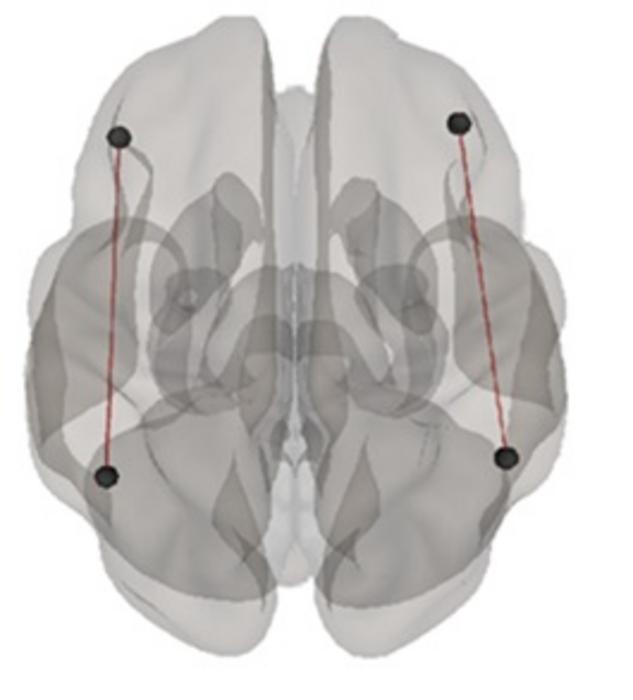
Functional connectivity analyses provided insights into how effectively the dlPFC and PPC communicate both with each other and with the hippocampus, a critical hub for long-term memory consolidation and algorithm generalization. The investigators discovered that individuals exhibiting stronger baseline connectivity among these regions demonstrated superior performance in calculation-based math tasks. Interestingly, this relationship was selective to problems requiring computation rather than memorization, suggesting that integrative cognitive functions rely heavily on dynamic neural interplay.
The application of electrical stimulation revealed a striking neuroplastic effect. Participants with initially weaker frontoparietal connectivity showed significant improvement in calculation learning following tES targeting the dlPFC. This enhancement was not observed when stimulation was applied to the PPC or in sham conditions. These results imply that augmenting the excitability of executive control regions can compensate for inherent neural disadvantages, effectively “tuning up” the brain’s computational network.
Furthermore, a complex interplay between neurochemical milieu and functional connectivity emerged. The findings suggest that the relationship between excitatory and inhibitory neurotransmission modulates how neurostimulation influences learning efficacy. In particular, a balanced ratio of glutamate to GABA appears essential for optimal plastic changes in response to external modulation, emphasizing the importance of neurochemical substrates in cognitive enhancement strategies.
This research disrupts traditional paradigms that have primarily focused on modifying educational environments to improve learning outcomes. Instead, it spotlights the critical role of an individual’s neuronal architecture and neurophysiology, proposing that personalized interventions targeting neural circuitry could revolutionize educational practice and remediation of cognitive deficits. It also aligns with burgeoning evidence underscoring the heritability and neurobiological basis of educational attainment.
Professor Cohen Kadosh articulated the broader implications of these findings: “Integrating neuroscience with educational approaches opens unprecedented avenues to address disparities in academic achievement. By acknowledging and targeting the biological constraints that shape learning potential, we advance toward inclusive strategies that nurture diverse talents and promote equity.” He stressed the need for further translational studies to examine the efficacy and safety of neurostimulation outside laboratory settings.
Although these results herald a promising frontier, the study also calls attention to the ethical considerations inherent in neuroenhancement technologies. Issues such as accessibility, long-term effects, and the potential for misuse necessitate careful deliberation. The authors advocate for robust guidelines and community engagement to balance innovation with responsibility.
This study exemplifies cutting-edge experimental research blending neurostimulation, neuroimaging, and neurochemical assays to unravel the subtleties of cognitive enhancement. Future research directions will likely expand this integrative framework, exploring individualized stimulation protocols, developmental factors, and cross-domain applicability to other learning challenges.
The implications of these discoveries resonate beyond math education, touching upon broader themes of brain plasticity, cognitive rehabilitation, and the personalized medicine revolution. As neurotechnology continues to mature, the possibility of tailored interventions designed to harness an individual’s unique neurobiology moves closer to reality, potentially transforming lifelong learning trajectories.
Ultimately, this work illuminates the profound interconnectedness of brain function, neurochemistry, and behavior, demonstrating how subtle modulations in neural communication can yield substantial gains in complex cognitive skills. It challenges educators, neuroscientists, and policymakers to rethink the interplay between biology and learning, heralding a new era where targeted brain interventions might complement traditional educational tools to unlock human potential.
News Publication Date: July 1, 2025
Web References: http://dx.doi.org/10.1371/journal.pbio.3003200
References: Zacharopoulos G, Dehghani M, Krause-Sorio B, Near J, Cohen Kadosh R (2025) Functional connectivity and GABAergic signaling modulate the enhancement effect of neurostimulation on mathematical learning. PLoS Biol 23(7): e3003200. https://doi.org/10.1371/journal.pbio.3003200
Cite Scienmag News
Cassandra Pierce. (July 1, 2025). Brain Stimulation Enhances Math Learning in Individuals with Weaker Neural Connections. Scienmag. https://scienmag.com/brain-stimulation-enhances-math-learning-in-individuals-with-weaker-neural-connections/
Cassandra Pierce. "Brain Stimulation Enhances Math Learning in Individuals with Weaker Neural Connections." Scienmag, 1 July 2025, https://scienmag.com/brain-stimulation-enhances-math-learning-in-individuals-with-weaker-neural-connections/. Accessed 4 September 2026.
Cassandra Pierce. "Brain Stimulation Enhances Math Learning in Individuals with Weaker Neural Connections." Scienmag. July 1, 2025. https://scienmag.com/brain-stimulation-enhances-math-learning-in-individuals-with-weaker-neural-connections/


