

Wednesday, November 11, 2026
Science
No Result
View All Result
  • Login
  • HOME
  • SCIENCE NEWS
  • CONTACT US
  • HOME
  • SCIENCE NEWS
  • CONTACT US
No Result
View All Result
Scienmag
No Result
View All Result
Home Science News Medicine

Brain Phantom Study Puts Amyloid PET Correction Methods to the Test

October 28, 2026
in Medicine, Technology and Engineering
Cassandra Pierce
By Cassandra Pierce Scienmag Editorial Profile - Systems Neuroscience
Reading Time: 2 mins read
0
Brain Phantom Study Puts Amyloid PET Correction Methods to the Test

Brain Phantom Study Puts Amyloid PET Correction Methods to the Test

65
SHARES
587
VIEWS
Share on FacebookShare on Twitter
ADVERTISEMENT

A new short communication in EJNMMI Physics, published on 15 October 2026, reports a controlled way to measure that distortion and to judge how well existing correction methods fix it.

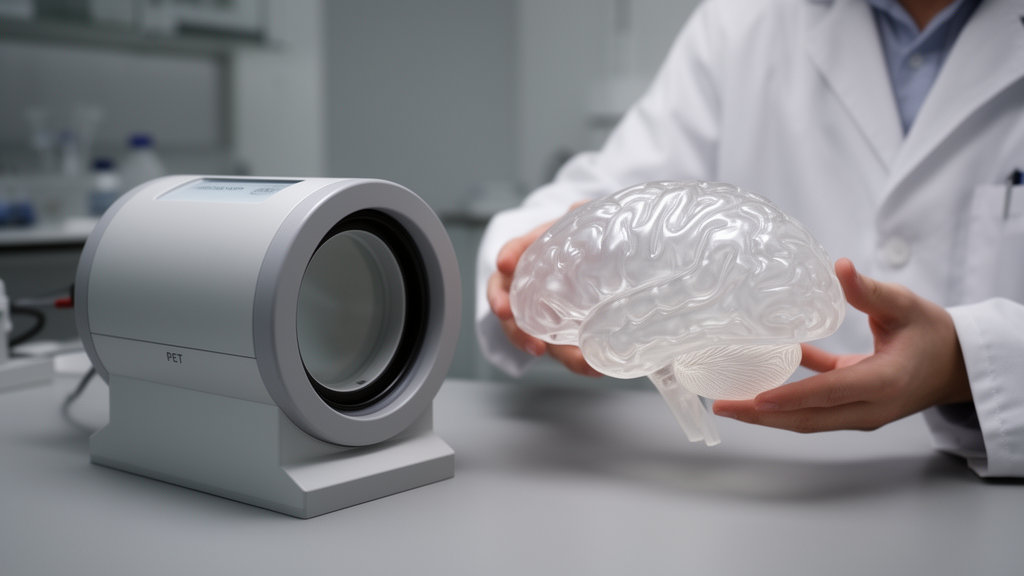
The research team, led by Maria Agnese Pirozzi and Mario Quarantelli with colleagues including Eugenio Di Giorgio, Anna Prinster, Luigi Mansi, Bruno Alfano and Marco Spadafora, used an anatomical brain phantom called StepBrain (SB).

The phantom was scanned to simulate clinical amyloid PET studies across a range of gray-to-white matter ratios (GWR) from 0 to 120 percent. This range was designed to reproduce the clinical spectrum of amyloid uptake patterns, from amyloid-negative to strongly positive scans, giving the researchers a known ground truth against which measurement error could be calculated.

From the simulated scans, the team derived two widely used quantitative measures: the gray-to-white matter ratio and the Standardized Uptake Value Ratio (SUVR), normalized to the cerebellum. Both were computed from an atlas-based volume-of-interest set, first on uncorrected images and then after applying partial volume effect correction (PVEc).

Four correction approaches were compared: a two-compartment method (2C), a three-compartment method (3C), a modified three-compartment method (m3C), and the geometric transfer matrix (GTM) technique.

The results were striking. Uncorrected GWR values showed a mean absolute inaccuracy of 14.1 percent, and uncorrected SUVR values were off by 19.8 percent on average. After applying the correction methods, these errors fell to as low as 6.1 percent for GWR and 7.6 percent for SUVR.

Accuracy and precision differed significantly among the four correction methods for both outcome measures, with linear mixed models analysis yielding F statistics above 95 in all comparisons. The modified three-compartment method and the geometric transfer matrix delivered the highest accuracy and precision of the approaches tested.

According to the authors, the 3C-, m3C- and GTM-based corrections significantly improved tracer ratio accuracy without a relevant loss of precision, supporting their use in the quantitative analysis of clinical amyloid PET studies. Because the StepBrain phantom reproduced realistic amyloid PET distributions while providing an exact ground truth, it offers a practical validation platform for correction algorithms before they are applied to patient data.

As a phantom-based simulation study, the work does not itself establish clinical performance in patients, but it provides a rigorous benchmark for the methods that underpin amyloid burden measurement in both research and clinical PET practice.

Subject of Research: Validation of partial volume effect correction methods for amyloid PET using an anatomical brain phantom.

Article Title: Application of an anatomical brain phantom in the evaluation of partial volume effect correction of amyloid PET studies

Article References: Pirozzi, M. A., Di Giorgio, E., Prinster, A., Mansi, L., Alfano, B., Spadafora, M., & Quarantelli, M. (2026). Application of an anatomical brain phantom in the evaluation of partial volume effect correction of amyloid PET studies. EJNMMI Physics. https://doi.org/10.1186/s40658-026-00956-3

Image Credits: AI Generated

DOI: 10.1186/s40658-026-00956-3

Keywords: amyloid PET, partial volume effect, brain phantom, SUVR, gray-to-white matter ratio, GTM, nuclear medicine, quantitative imaging, Alzheimer's research, image correction, Application, anatomical

Cite Scienmag News

Cassandra Pierce. (October 28, 2026). Brain Phantom Study Puts Amyloid PET Correction Methods to the Test. Scienmag. https://scienmag.com/brain-phantom-study-puts-amyloid-pet-correction-methods-to-the-test/

Cassandra Pierce. "Brain Phantom Study Puts Amyloid PET Correction Methods to the Test." Scienmag, 28 October 2026, https://scienmag.com/brain-phantom-study-puts-amyloid-pet-correction-methods-to-the-test/. Accessed 11 November 2026.

Cassandra Pierce. "Brain Phantom Study Puts Amyloid PET Correction Methods to the Test." Scienmag. October 28, 2026. https://scienmag.com/brain-phantom-study-puts-amyloid-pet-correction-methods-to-the-test/

Tags: Alzheimer's researchamyloid PETAmyloid PET correction methodsamyloid PET scan distortionanatomicalapplicationbrain phantombrain phantom imagingclinical spectrum of amyloid uptakecomparison of PET correction techniquescontrolled phantom study in neuroimagingevaluation of correction algorithm performancegray-to-white matter ratiogray-to-white matter ratio analysisGTMimage correctionnuclear medicinepartial volume effectpartial volume effect correctionquantitative amyloid imagingquantitative imagingStepBrain anatomical phantomSUVRSUVR measurement accuracy
Share26Tweet16
Previous Post

Computational redesign of nirmatrelvir yields ranked MERS-CoV protease inhibitor candidates

Next Post

Liquid Polycaprolactone Injections Show Skin Firmness Signals in Small Uncontrolled Trial

Related Posts

Nepal Expands Open-Source Electronic Medical Records Across Nineteen Public Hospitals
Medicine

Nepal Expands Open-Source Electronic Medical Records Across Nineteen Public Hospitals

November 11, 2026
Cancer Telemedicine Study Uncovers Participation Gaps and End-of-Life Messaging Trends
Medicine

Cancer Telemedicine Study Uncovers Participation Gaps and End-of-Life Messaging Trends

November 11, 2026
Quality of Life Rose in Observational Study of Glaucoma App Users
Medicine

Quality of Life Rose in Observational Study of Glaucoma App Users

November 11, 2026
Researchers Propose Butyrate and RNA Methylation Hypothesis for Post-Stroke Depression
Medicine

Researchers Propose Butyrate and RNA Methylation Hypothesis for Post-Stroke Depression

November 11, 2026
Dual-Energy CT Visualizes High-Grade Glioma Without Contrast
Technology and Engineering

Dual-Energy CT Visualizes High-Grade Glioma Without Contrast

November 11, 2026
Engineered Gold and Graphene Nanocomposite Triggers Apoptosis in Ovarian Cancer Cells
Technology and Engineering

Engineered Gold and Graphene Nanocomposite Triggers Apoptosis in Ovarian Cancer Cells

November 11, 2026
Next Post
Liquid Polycaprolactone Injections Show Skin Firmness Signals in Small Uncontrolled Trial

Liquid Polycaprolactone Injections Show Skin Firmness Signals in Small Uncontrolled Trial

  • Mothers who receive childcare support from maternal grandparents show more optimized

    Mothers who receive childcare support from maternal grandparents show more parental warmth, finds NTU Singapore study

    27656 shares
    Share 11059 Tweet 6912
  • University of Seville Breaks 120-Year-Old Mystery, Revises a Key Einstein Concept

    1061 shares
    Share 424 Tweet 265
  • Bee body mass, pathogens and local climate influence heat tolerance

    682 shares
    Share 273 Tweet 171
  • Researchers record first-ever images and data of a shark experiencing a boat strike

    546 shares
    Share 218 Tweet 137
  • Groundbreaking Clinical Trial Reveals Lubiprostone Enhances Kidney Function

    531 shares
    Share 212 Tweet 133
Science

Embark on a thrilling journey of discovery with Scienmag.com—your ultimate source for cutting-edge breakthroughs. Immerse yourself in a world where curiosity knows no limits and tomorrow’s possibilities become today’s reality!

RECENT NEWS

  • Nepal Expands Open-Source Electronic Medical Records Across Nineteen Public Hospitals
  • Cancer Telemedicine Study Uncovers Participation Gaps and End-of-Life Messaging Trends
  • Quality of Life Rose in Observational Study of Glaucoma App Users
  • Researchers Propose Butyrate and RNA Methylation Hypothesis for Post-Stroke Depression

Categories

  • Agriculture
  • Anthropology
  • Archaeology
  • Athmospheric
  • Biology
  • Biotechnology
  • Blog
  • Bussines
  • Cancer
  • Chemistry
  • Climate
  • Earth Science
  • Editorial Policy
  • Marine
  • Mathematics
  • Medicine
  • Pediatry
  • Policy
  • Psychology & Psychiatry
  • Science Education
  • Science News
  • Social Science
  • Space
  • Technology and Engineering

Subscribe to Blog via Email

Enter your email address to subscribe to this blog and receive notifications of new posts by email.

Join 5,150 other subscribers

© 2026 Scienmag - Science Magazine

Welcome Back!

Login to your account below

Forgotten Password?

Retrieve your password

Please enter your username or email address to reset your password.

Log In
No Result
View All Result
  • HOME
  • SCIENCE NEWS
  • CONTACT US

© 2026 Scienmag - Science Magazine

Discover more from Science

Subscribe now to keep reading and get access to the full archive.

Continue reading

