

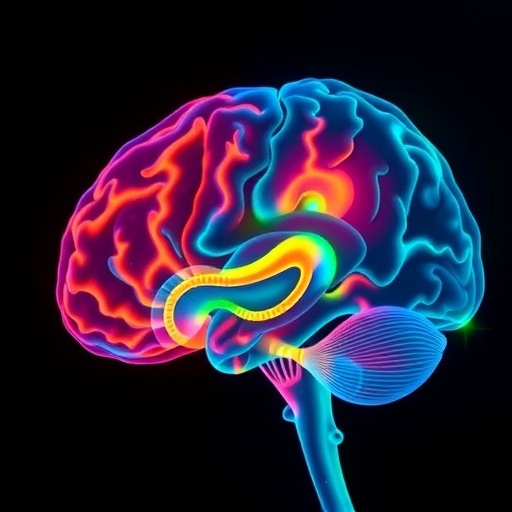
Recent research employing advanced brain imaging techniques has unveiled the intricate neural mechanisms that drive public engagement with wildlife photography on social media platforms. In a groundbreaking study led by Tara Srirangarajan and her colleagues at Stanford University, the neural responses elicited by wildlife images were systematically analyzed to identify the social and emotional features that motivate individuals to “like” posts or donate to conservation efforts. This investigation used functional brain scans to record activity in 34 adult participants as they rapidly viewed a series of 56 wildlife photographs sourced from National Geographic’s Instagram feed.
By focusing on brain regions implicated in reward processing and social cognition, the team discovered that activation within the nucleus accumbens and medial prefrontal cortex reliably predicted individual tendencies to engage with the content either through liking or donation behaviors. The nucleus accumbens, well-established as a central hub in the brain’s reward circuitry, appeared to encode the perceived value or appeal of the images, while the medial prefrontal cortex’s activity forewarned actual engagement metrics assessed on Instagram, such as the number of likes normalized to follower counts.
Delving deeper into the medial prefrontal cortex’s role, the research demonstrated its functional connectivity with regions specialized in face processing and mentalizing—the cognitive ability to attribute mental states to others. This association suggests that images containing discernible animal faces evoke neural processes analogous to how humans comprehend and empathize with social cues from conspecifics. Moreover, the study quantified the phylogenetic closeness of featured species to humans, revealing that animals evolutionarily nearer to humans, notably mammals, provoked stronger engagement responses both neurally and behaviorally.
To validate these findings, the researchers extended their neurally-inspired predictive model to a larger cohort of images, analyzing 276 additional wildlife photographs from the same social media feed. The model successfully forecasted engagement levels, confirming the robustness of neural indicators as predictors of real-world behavior on digital platforms. These insights carry profound implications for conservation communication, emphasizing that visual content emphasizing recognizable faces and evolutionarily relatable species can strategically enhance public interaction and fundraising efficacy.
The study’s methodological approach stands out for integrating neuroimaging with social media analytics, enabling an unprecedented understanding of subconscious determinants behind digital engagement. Participants’ brain activity was captured using functional magnetic resonance imaging (fMRI) while they were instructed to make split-second decisions on their inclination to endorse posts via likes or donations. This fusion of neurocognitive data with ecological content metrics provides a compelling framework for conservation organizations aiming to harness the psychological drivers behind public support.
Furthermore, the research uncovers the potent emotional resonance elicited by faces in wildlife photography. Just as human faces trigger social connection and empathy, animals’ facial expressions and eyes can evoke similar psychophysiological responses, mediated by specialized cortical systems in the observer. The medial prefrontal cortex’s engagement underscores a cognitive simulation process whereby viewers perhaps attribute agency or personality to animals, reinforcing affective bonds crucial for motivating prosocial actions.
Analyzing the significance of phylogenetic proximity, the study highlights that species more closely related to humans not only garner heightened neural activity in affect and social cognition networks but also better predict larger-scale social media engagement. Mammals, given their anatomical and behavioral similarities, thus emerge as pivotal figures in visual conservation narratives, capable of bridging human-wildlife divides through empathetic resonance.
Importantly, this research contributes to a growing body of literature that positions neuroscientific data as valuable tools for optimizing communication strategies in environmental advocacy. Traditionally, conservation outreach has relied on intuition and anecdotal evidence to select appealing imagery. The elucidation of specific brain-behavior relationships now offers an empirical basis for crafting targeted campaigns that maximize public involvement and resource mobilization.
Moreover, the implications extend beyond mere engagement metrics, suggesting that fostering genuine emotional and cognitive connections with wildlife via visual media could have cascading effects on attitudes and behaviors supportive of biodiversity protection. By strategically curating images that tap into innate social brain systems, organizations might inspire both immediate online actions and longer-term commitments to conservation goals.
In summary, the study by Srirangarajan et al. pioneers an interdisciplinary approach that transcends conventional marketing analyses by integrating neurobiological insights with digital interaction data. The findings decisively indicate that wildlife faces and evolutionary closeness are key drivers of audience engagement, reflected in both brain activity and social media metrics. This work charts a promising pathway for refining conservation messaging, leveraging the human brain’s social machinery to foster deeper public empathy and support for endangered species and their habitats.
As digital platforms become central arenas for environmental discourse, understanding the neural substrates of engagement offers a potent avenue for enhancing the visibility and impact of conservation narratives. Future research may build upon these foundations to explore how different visual features, contextual factors, and individual differences modulate neural responses and engagement behaviors. By decoding the neuroscience of wildlife imagery, the path toward more effective and emotionally resonant conservation communication is increasingly illuminated.
Subject of Research: Neural mechanisms underlying social and emotional engagement with wildlife imagery on social media
Article Title: Brain activity reveals how wildlife imagery evokes engagement on social media
News Publication Date: 17-Feb-2026
Image Credits: Reused with Permission. Joel Sartore, National Geographic Photo Ark
Keywords: Conservation biology


