

Friday, September 4, 2026
Science
No Result
View All Result
  • Login
  • HOME
  • SCIENCE NEWS
  • CONTACT US
  • HOME
  • SCIENCE NEWS
  • CONTACT US
No Result
View All Result
Scienmag
No Result
View All Result
Home Science News Technology and Engineering

Brain-Computer Interface Training Could Boost Error Detection Abilities

July 15, 2026
in Technology and Engineering
Cassandra Pierce
By Cassandra Pierce Scienmag Editorial Profile - Systems Neuroscience
Reading Time: 2 mins read
0
Brain-Computer Interface Training Could Boost Error Detection Abilities

Brain-Computer Interface Training Could Boost Error Detection Abilities

65
SHARES
587
VIEWS
Share on FacebookShare on Twitter
ADVERTISEMENT

When the brain coordinates movement, it continually compares motor commands with sensory feedback. Small mismatches—visuo-motor errors—can normally be corrected only if they’re detected in time. Detecting these errors is critical to everyday stability, from preventing falls as we age, to maintaining fine control in demanding skills. A new study in Advanced Science reports that training people with real-time feedback derived from brain electrical activity can sharpen their ability to notice subtle errors.

The work centers on a brain signal known as the error-related potential (ErrP). Within this pattern, a component called the error positivity (Pe) appears when a person becomes consciously aware that an error occurred. Because Pe reflects conscious error detection, the researchers tested whether enhancing this neural signature could improve perceptual learning for visuo-motor mismatches.

Participants completed a joystick task in which a cursor had to be moved toward a target along a straight line. On randomized trials, the cursor path was rotated by varying magnitudes, creating a controlled visuo-motor error. One group received conventional behavioral feedback: they reported whether they perceived a rotation and then saw confirmation of their response. The other group received brain-computer interface (BCI) feedback: an EEG-based system indicated whether it detected an ErrP, giving participants learning signals tied directly to their neural Pe responses.

Training ran daily for five consecutive days. Across sessions, Pe amplitude grew when participants perceived a rotation, indicating that the brain’s conscious error marker became more strongly expressed during learning. Over the full training period, Pe increased overall, suggesting that error awareness itself improved.

The behavioral group showed gains mainly for larger rotation magnitudes, where errors were easier to notice. For smaller rotations, behavioral training produced little improvement in detection. In contrast, BCI training led to accelerated learning and better perception of the smallest errors—precisely the range where conventional approaches struggled.

EEG analyses implicated brain regions involved in decision-making and visuospatial processing, aligning with the idea that BCI feedback helps individuals “tune” both perception and control. The results highlight a neural-targeted learning strategy rather than relying only on overt behavior or self-report.

The authors argue that this approach is safer than pharmacological alternatives for boosting perceptual learning. They also suggest future applications in supporting cognitive function in neuropsychiatric populations and improving rapid, adaptive responses in high-precision domains such as motorsport driving.

“This approach targets the neural signature of error awareness itself, not just behavior,” said senior author José del R. Millán. “By decoding the Pe component in real time and feeding it back to participants, we help the brain amplify its own marker of conscious error detection—something conventional training can’t do once errors get too subtle to notice.”

Keywords

Brain-computer interface, EEG, error positivity (Pe), error-related potential (ErrP), perceptual learning, visuo-motor errors, conscious error detection, neurotechnology

Subject of Research: Human error awareness and perceptual learning using EEG-based brain-computer interface training
Article Title: Brain-computer interface training fosters perceptual skills to detect errors
News Publication Date: July 15, 2026
Web References: https://advanced.onlinelibrary.wiley.com/journal/21983844 | https://www.wiley.com/en-us/ | https://doi.org/10.1002/advs.76153
References: Deland H. Liu et al., Advanced Science, Published Online: July 13, 2026.

Article Title: Brain-Computer Interface Training Could Boost Error Detection Abilities

Article References: Original research article

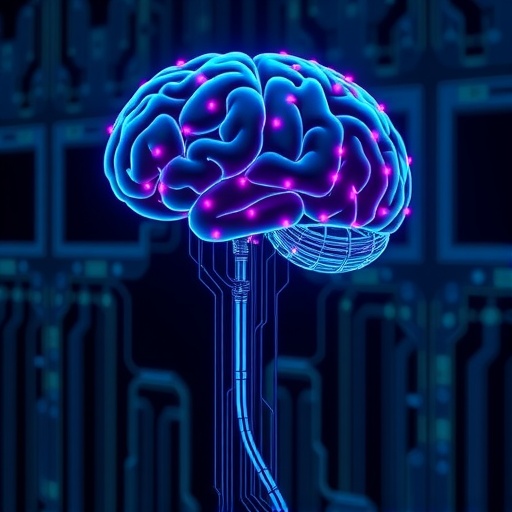
Image Credits: AI Generated

DOI: Not provided

Keywords: BCI-assisted error correction, Brain-computer interface training, EEG-based feedback, enhancement of error positivity (Pe), error-related potentials, motor control and sensory feedback integration, neural mechanisms of error awareness, neuroplasticity in error detection, perceptual learning in motor tasks, real-time brain signal feedback, skill improvement through neural feedback, visuo-motor error detection

Cite Scienmag News

Cassandra Pierce. (July 15, 2026). Brain-Computer Interface Training Could Boost Error Detection Abilities. Scienmag. https://scienmag.com/brain-computer-interface-training-could-boost-error-detection-abilities/

Cassandra Pierce. "Brain-Computer Interface Training Could Boost Error Detection Abilities." Scienmag, 15 July 2026, https://scienmag.com/brain-computer-interface-training-could-boost-error-detection-abilities/. Accessed 4 September 2026.

Cassandra Pierce. "Brain-Computer Interface Training Could Boost Error Detection Abilities." Scienmag. July 15, 2026. https://scienmag.com/brain-computer-interface-training-could-boost-error-detection-abilities/


Tags: BCI-assisted error correctionBrain-computer interface trainingEEG-based feedbackenhancement of error positivity (Pe)error-related potentialsmotor control and sensory feedback integrationneural mechanisms of error awarenessneuroplasticity in error detectionperceptual learning in motor tasksreal-time brain signal feedbackskill improvement through neural feedbackvisuo-motor error detection
Share26Tweet16
Previous Post

Dielectric metasurface enables spin-multiplexed point spread functions for imaging

Next Post

Early maturation of antimicrobial peptide defenses enables host–pathogen coexistence

Related Posts

AgCl Nanoparticles from Dual Extracts: Bioactivity, Ecotoxicity, Molecular Mechanisms
Technology and Engineering

AgCl Nanoparticles from Dual Extracts: Bioactivity, Ecotoxicity, Molecular Mechanisms

September 4, 2026
Molecular stacking under nanoconfinement creates flexible honeycomb topological structures
Technology and Engineering

Molecular stacking under nanoconfinement creates flexible honeycomb topological structures

September 4, 2026
DiffKT diffusion model advances fine-grained knowledge tracing
Technology and Engineering

DiffKT diffusion model advances fine-grained knowledge tracing

September 3, 2026
Attributed hypergraphs capture structure and attributes realistically, beyond binary links
Technology and Engineering

Attributed hypergraphs capture structure and attributes realistically, beyond binary links

September 3, 2026
DDOI: A Decomposed Approach to Discovering Object Interaction Skills
Technology and Engineering

DDOI: A Decomposed Approach to Discovering Object Interaction Skills

September 3, 2026
Molecular dynamics reveals fusion behavior of Ni–Pd core–shell nanoparticles
Technology and Engineering

Molecular dynamics reveals fusion behavior of Ni–Pd core–shell nanoparticles

September 3, 2026
Next Post
Early maturation of antimicrobial peptide defenses enables host–pathogen coexistence

Early maturation of antimicrobial peptide defenses enables host–pathogen coexistence

  • Mothers who receive childcare support from maternal grandparents show more optimized

    Mothers who receive childcare support from maternal grandparents show more parental warmth, finds NTU Singapore study

    27656 shares
    Share 11059 Tweet 6912
  • University of Seville Breaks 120-Year-Old Mystery, Revises a Key Einstein Concept

    1061 shares
    Share 424 Tweet 265
  • Bee body mass, pathogens and local climate influence heat tolerance

    682 shares
    Share 273 Tweet 171
  • Researchers record first-ever images and data of a shark experiencing a boat strike

    546 shares
    Share 218 Tweet 137
  • Groundbreaking Clinical Trial Reveals Lubiprostone Enhances Kidney Function

    531 shares
    Share 212 Tweet 133
Science

Embark on a thrilling journey of discovery with Scienmag.com—your ultimate source for cutting-edge breakthroughs. Immerse yourself in a world where curiosity knows no limits and tomorrow’s possibilities become today’s reality!

RECENT NEWS

  • VESALIUS-REAL study reveals lipid treatment gaps in high-risk patients lacking prior cardiovascular events
  • GFRAL mediates metabolic responses to mitochondrial stress in brown fat
  • How microplastics may weaken the human immune system
  • AgCl Nanoparticles from Dual Extracts: Bioactivity, Ecotoxicity, Molecular Mechanisms

Categories

  • Agriculture
  • Anthropology
  • Archaeology
  • Athmospheric
  • Biology
  • Biotechnology
  • Blog
  • Bussines
  • Cancer
  • Chemistry
  • Climate
  • Earth Science
  • Editorial Policy
  • Marine
  • Mathematics
  • Medicine
  • Pediatry
  • Policy
  • Psychology & Psychiatry
  • Science Education
  • Social Science
  • Space
  • Technology and Engineering

Subscribe to Blog via Email

Enter your email address to subscribe to this blog and receive notifications of new posts by email.

Join 5,151 other subscribers

© 2025 Scienmag - Science Magazine

Welcome Back!

Login to your account below

Forgotten Password?

Retrieve your password

Please enter your username or email address to reset your password.

Log In
No Result
View All Result
  • HOME
  • SCIENCE NEWS
  • CONTACT US

© 2025 Scienmag - Science Magazine

Discover more from Science

Subscribe now to keep reading and get access to the full archive.

Continue reading