

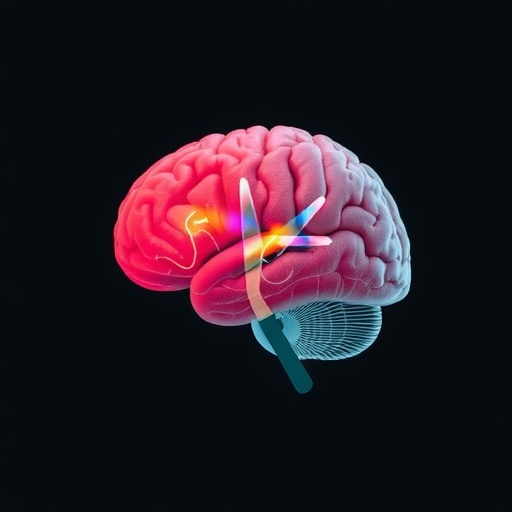
In a groundbreaking study set to reshape our understanding of schizophrenia spectrum disorders (SSDs), researchers Schmitter and Straube have uncovered significant alterations in neural processing within specific brain regions—namely, the middle frontal gyrus and the cerebellum—during temporal recalibration of action-outcome predictions. Published in the 2026 edition of Schizophrenia, this research delves deeply into the neurobiological underpinnings of predictive processing deficits that characterize schizophrenia, offering fresh insights with potential implications for both diagnosis and therapeutic intervention.
At the core of this study lies the concept of temporal recalibration—a fundamental neural mechanism that allows the brain to adjust its expectations regarding the timing of events following voluntary actions. Temporal recalibration is critical for maintaining a coherent sense of agency, the feeling that one is the driver of their own actions and their consequences. Impairments in this mechanism could, therefore, underlie some of the hallmark symptoms of SSDs, such as delusions of control and the experience of external forces influencing personal actions.
Schminster and Straube employed advanced neuroimaging techniques alongside sophisticated behavioral paradigms designed to probe the timing of action-outcome predictions in individuals diagnosed with SSDs compared to healthy controls. The study specifically focused on the middle frontal gyrus (MFG), a prefrontal cortex subregion implicated in high-level executive processing, and the cerebellum, long recognized for its role in motor control but increasingly acknowledged as a key player in cognitive functions including temporal processing and prediction error correction.
Findings revealed a marked alteration in the activity patterns of these regions during tasks requiring temporal recalibration. Whereas healthy participants exhibited flexible and adaptive neural responses facilitating accurate prediction updates in real time, individuals with SSDs showed blunted or aberrant activation profiles. Notably, the cerebellum’s involvement demonstrated considerable deviations, suggesting that its contribution to the timing and integration of sensory feedback with motor commands is significantly compromised in schizophrenia.
This aberrant processing could underpin difficulties in synchronizing internal predictions with external sensory inputs, resulting in the perceptual abnormalities and disordered self-experience typical of schizophrenia. The middle frontal gyrus’s diminished engagement in temporal recalibration tasks further implicates executive dysfunction in the disease’s symptomatology, illuminating how impaired top-down modulation might exacerbate disruptions in predictive coding.
The research also leveraged cutting-edge computational modeling to interpret neural dynamics observed during brain scanning sessions. By mapping reciprocal interactions between the MFG and cerebellum over milliseconds, Schmitter and Straube provided compelling evidence of disrupted functional connectivity in SSDs, offering a nuanced view of how these brain regions fail to effectively communicate when temporal recalibration demands are high.
Moreover, this study pioneers the exploration of temporal prediction abnormalities in a dimension critical for real-world functioning, as humans constantly anticipate the timing of sensory consequences following their actions. Disruptions in this mechanism could explain patients’ struggles with tasks requiring precise timing and prediction, ranging from speech and motor coordination to social interactions.
These findings have profound clinical implications. Targeting these neural circuits with novel interventions—such as neuromodulation or cognitive training aimed at enhancing temporal recalibration capabilities—might prove a promising route to ameliorate some cognitive and perceptual symptoms of schizophrenia. Importantly, these results encourage the development of tailored therapies that focus not merely on symptom suppression but also on restoring core predictive processing mechanisms.
Further research building on this study is needed to dissect the causal relationships between altered neural activity and clinical outcomes in schizophrenia, as well as to explore how medication status, disease duration, and symptom severity influence temporal recalibration and associated brain activity. Longitudinal studies could elucidate whether these neural signatures serve as biomarkers for disease progression or treatment response.
In conclusion, Schmitter and Straube’s investigation propels forward a sophisticated understanding of schizophrenia as a disorder of predictive timing, anchored in neural dysfunction of the middle frontal gyrus and cerebellum. By exposing these brain regions’ pivotal roles in temporal recalibration of action-outcome predictions, the study opens exciting avenues for both basic neuroscience and translational psychiatry, ultimately charting a path toward more effective, mechanism-based therapies for those afflicted by this pervasive disorder.
Subject of Research: Neural mechanisms underlying temporal recalibration of action-outcome predictions in schizophrenia spectrum disorders.
Article Title: Altered neural processing in middle frontal gyrus and cerebellum during temporal recalibration of action-outcome predictions in schizophrenia spectrum disorders.
Article References:
Schmitter, C.V., Straube, B. Altered neural processing in middle frontal gyrus and cerebellum during temporal recalibration of action-outcome predictions in schizophrenia spectrum disorders. Schizophr (2026). https://doi.org/10.1038/s41537-025-00721-y
Image Credits: AI Generated


