


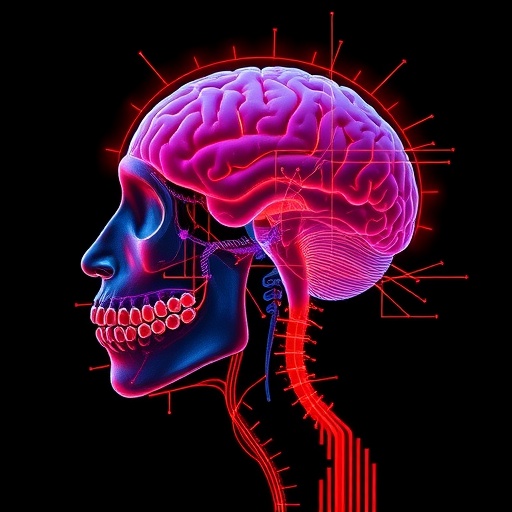
Parkinson’s disease may begin changing the brain’s movement circuitry before the first unmistakable behavioral symptoms appear, according to a new study in a progressive macaque model of the disorder. Researchers led by M. Bertrand, S. Chabardes, and J. Hugues Dit Ciles report that alterations in the activity of the subthalamic nucleus preceded behavioral changes in macaques developing Parkinson’s-like pathology. The finding places one of the brain’s most important movement-control hubs at the center of an early-warning system that could eventually help scientists identify disease progression before disabling symptoms emerge.
The study, published in npj Parkinson’s Disease, focuses on the subthalamic nucleus, or STN, a small but powerful structure buried deep within the basal ganglia. This network of interconnected brain regions helps select, initiate, and regulate movement. The STN acts partly as a braking mechanism: by influencing downstream motor circuits, it can suppress competing or excessive actions. In Parkinson’s disease, the loss of dopamine-producing neurons in the substantia nigra disrupts this circuitry, contributing to slowness, rigidity, tremor, and difficulties with movement initiation.
The researchers used a progressive macaque model rather than examining the brain only after advanced disease had developed. That distinction is crucial. Many experimental models reproduce selected features of Parkinson’s disease over a short period, making it difficult to determine which neural changes are early events and which are consequences of long-established degeneration. A progressive model allows investigators to follow the sequence of biological and behavioral changes as they unfold, potentially revealing when specific circuits become abnormal.
According to the study’s title, changes in STN activity appeared before measurable behavioral alterations. This temporal order is one of the report’s most important implications. If neural activity becomes abnormal before behavior visibly changes, the STN may provide a physiological signature of early circuit dysfunction. In practical terms, scientists could use patterns of neuronal firing or network activity to detect that the motor system is becoming unstable even while an animal—or eventually a patient—still appears to move normally.
Neural activity in the STN is not simply an on-or-off signal. It consists of patterns that vary in timing, frequency, synchrony, and coordination with other regions. In Parkinson’s disease, abnormal synchronization and changes in oscillatory activity have been associated with impaired movement and with the mechanisms targeted by deep brain stimulation. Monitoring these signals during disease progression can therefore offer more than a snapshot of damage; it can reveal how the brain’s communication architecture changes over time.
The macaque model is particularly valuable because the primate brain and motor system share important organizational features with humans. Macaques perform complex movements and can display subtle changes in motivation, coordination, speed, and action selection that may be difficult to capture in simpler laboratory animals. At the same time, researchers must be cautious when translating findings across species. A neural signature in macaques is not automatically a diagnostic marker in people, and its clinical value will depend on whether similar changes can be detected safely and reliably in patients.
The study also adds weight to a broader shift in Parkinson’s research: the search for biomarkers that measure disease biology rather than symptoms alone. Traditional clinical assessments often rely on visible motor changes, which may emerge only after substantial neural damage has occurred. By identifying circuit alterations earlier, researchers hope to improve the timing of interventions, refine experimental treatments, and distinguish disease-modifying effects from temporary symptom relief. The STN is already accessible to neurosurgical recording and stimulation, making it an especially relevant target for this line of investigation.
Deep brain stimulation provides a direct example of why STN activity matters. In selected patients with Parkinson’s disease, electrodes placed in or near the STN can deliver electrical pulses that reduce motor symptoms. Yet stimulation is generally introduced after the disease has become clinically significant. If progressive changes in STN activity can be mapped before symptoms appear, future technologies might one day use those signals to guide adaptive stimulation, detect worsening disease, or identify the most effective moment to intervene. Such possibilities remain prospective rather than established outcomes of the current study.
The findings do not mean that a clinical test for pre-symptomatic Parkinson’s disease is ready for use. The researchers’ result must be replicated, and the precise activity patterns that predict behavioral decline must be defined. Future work will also need to compare STN signals with dopamine loss, inflammation, structural brain changes, and other biological markers. Still, the study offers a compelling view of Parkinson’s as a process that reshapes neural circuits gradually, with measurable changes potentially emerging before the disease becomes obvious. By tracing that hidden progression in a primate model, the research may help move Parkinson’s science closer to earlier detection and more precisely timed treatment.
Cite Scienmag News
Cassandra Pierce. (July 31, 2026). Brain activity changes precede behavioral symptoms in macaque Parkinson’s disease model. Scienmag. https://scienmag.com/brain-activity-changes-precede-behavioral-symptoms-in-macaque-parkinsons-disease-model/
Cassandra Pierce. "Brain activity changes precede behavioral symptoms in macaque Parkinson’s disease model." Scienmag, 31 July 2026, https://scienmag.com/brain-activity-changes-precede-behavioral-symptoms-in-macaque-parkinsons-disease-model/. Accessed 4 September 2026.
Cassandra Pierce. "Brain activity changes precede behavioral symptoms in macaque Parkinson’s disease model." Scienmag. July 31, 2026. https://scienmag.com/brain-activity-changes-precede-behavioral-symptoms-in-macaque-parkinsons-disease-model/


