


Prepare yourselves for a mind-bending journey into the subatomic realm, where the very fabric of reality is woven by forces that defy our everyday intuition. In a groundbreaking study published in the European Physical Journal C, a team of intrepid physicists has illuminated the intricate dance of charm quarks, the enigmatic building blocks of exotic matter. Their meticulous work uncovers the secrets behind the binding and resonant states of particles known as D mesons and their excited counterparts, the D* mesons, along with their antimatter twins. This research, employing the sophisticated technique of complex scaling, offers an unprecedented glimpse into the strong nuclear force, the glue that holds atomic nuclei together and sculpts the universe as we know it. The implications are far-reaching, potentially reshaping our understanding of particle physics and the very origins of matter.
At the heart of this investigation lies the captivating world of heavy quarks, particularly the charm quark, a fundamental constituent of D mesons. These particles, far more massive than the ubiquitous up and down quarks found in protons and neutrons, exhibit unique properties that make them invaluable probes of the strong interaction. The study delves into the configurations where two charm-containing particles – whether they are D mesons or D* mesons, and whether they are matter or antimatter – come together. Understanding how these particles bind, or fleetingly exist in resonant states, provides critical data points for refining theoretical models of quantum chromodynamics (QCD), the theory that governs the strong force. The subtle nuances of these interactions are key to unlocking deeper mysteries of the universe.
The complexity of these multi-particle systems necessitates advanced theoretical tools, and this research employs the elegant and powerful method of complex scaling. Imagine observing a symphony; the complex scaling method allows physicists to effectively “tune” their perspective, much like adjusting the focus on a high-powered telescope, to peer into the transient and often fleeting nature of resonant states. By analytically rotating the energy axis into the complex plane, this technique transforms the notoriously difficult problem of finding resonant states into a more manageable eigenvalue problem. This mathematical maneuver essentially allows researchers to extract information about unstable, short-lived particle configurations that would otherwise be incredibly challenging to detect and characterize, offering a unique window into quantum phenomena.
The findings presented in this study shed light on a diverse array of bound and resonant states within the (D^{()}D^{()}) and (D^{()}{\bar{D}}^{()}) systems. These are not simple, stable particles like electrons or protons; rather, they represent temporary groupings, akin to fleeting partnerships formed and dissolved in the blink of an eye within the high-energy environments where they are born. The researchers have meticulously calculated the properties of these states, including their energies and decay widths, providing a detailed map of this fascinating corner of the particle physics landscape. Each identified state is a testament to the intricate interplay of attractive and repulsive forces at play.
The significance of these exotic states extends far beyond mere academic curiosity. They serve as crucial benchmarks for theoretical predictions, allowing physicists to test and refine their understanding of QCD. When experimental results, like those from particle accelerators, are compared with theoretical calculations, discrepancies can point towards areas where our current models are incomplete. Conversely, agreement between theory and experiment bolsters confidence in our fundamental understanding of how the universe works at its most basic level, guiding future research directions and inspiring new theoretical avenues for exploration.
One of the key takeaways from this research is the insight it provides into the nature of the strong force itself. The binding of these heavy mesons is dictated by the complex exchange of gluons, the force-carrying particles of the strong interaction. The way these gluons mediate the interactions between charm quarks and their antiquarks, as well as between different types of mesons, determines whether a bound state can form or if a transient resonance emerges. This study offers a detailed picture of these gluon-mediated interactions in a regime not easily accessible to direct experimental observation.
The computational effort required to perform such detailed calculations is immense, involving sophisticated algorithms and significant processing power. The team utilized advanced numerical techniques to simulate the interactions between these particles, meticulously exploring the vast parameter space of possible configurations. This scientific endeavor is a testament to the power of modern computational physics, enabling researchers to tackle problems that were unimaginable just a few decades ago and pushing the boundaries of what is possible in theoretical physics.
The identification of specific molecular-like states, where two mesons behave almost like a composite object, is particularly intriguing. These “hadronic molecules” are a relatively newer concept in particle physics, suggesting that composite particles can bind together in ways analogous to how atoms form molecules. The study’s findings lend further support to the existence and importance of these exotic molecular structures in the spectrum of heavy mesons, challenging traditional views of particle classification.
Furthermore, the research meticulously investigates the role of spin configurations in these interactions. The D meson and D* meson differ in their spin – a fundamental quantum mechanical property. The interplay between the spins of the interacting particles significantly influences the strength of the binding force and the characteristics of any resulting states. Understanding these spin-dependent effects is crucial for a complete picture of how these particles interact and form different configurations.
The European Physical Journal C is a highly respected venue for cutting-edge research in particle physics, and the publication of this study underscores its importance and rigorous peer review. This signifies that the work has met the high standards expected in the field, providing a reliable and authoritative contribution to our collective scientific knowledge. Such publications are essential for disseminating new discoveries and fostering collaboration within the global physics community.
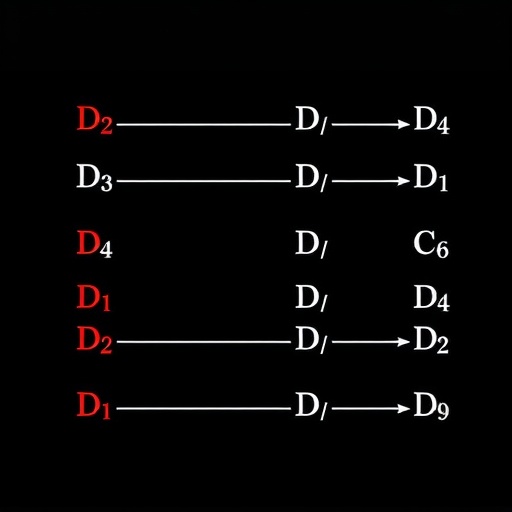
The visual representation accompanying this research, a complex diagram illustrating the various states and their relationships, offers a powerful, albeit abstract, glimpse into the multi-dimensional landscape of particle interactions. While perhaps not as immediately arresting as a photograph of a distant galaxy, these complex charts are the artwork of theoretical physics, conveying intricate relationships and data in a concise and informative manner, requiring specialized knowledge to fully appreciate their profound meaning.
The implications of this work extend to the broader understanding of the strong nuclear force and its role in phenomena such as the formation of neutron stars and the early universe. While the focus is on charm quarks, the principles governing their interactions are broadly applicable to other heavy quark systems and can inform our understanding of nuclear matter under extreme conditions. This research, while specific, contributes to a larger, overarching quest to understand nature’s fundamental laws.
The ability to predict and characterize these bound and resonant states is not just a theoretical exercise; it directly informs experimental programs at major particle accelerators around the world. Facilities like the Large Hadron Collider (LHC) at CERN are constantly producing vast amounts of data on particle collisions, and the precise predictions from theoretical studies like this are essential for interpreting that data and identifying new phenomena. The synergy between theory and experiment is the driving force of progress in particle physics.
In conclusion, this remarkable study presents a significant leap forward in our comprehension of the intricate and often counterintuitive world of heavy quark physics. By employing the sophisticated technique of complex scaling and delving into the fundamental interactions governing charm mesons, the researchers have unveiled critical details about their binding and resonant states. This work not only refines our theoretical models of the strong force but also opens new avenues for experimental exploration, promising to deepen our understanding of the fundamental constituents and forces that shape our universe. The journey into the heart of matter is ongoing, and each new discovery brings us closer to comprehending the universe’s grand design.
Cite Scienmag News
Katie Riggs. (August 29, 2025). Bound & Resonant (D^{()}D^{()}), (D^{()}{\bar{D}}^{()}) States. Scienmag. https://scienmag.com/bound-resonant-dd-dbard-states/
Katie Riggs. "Bound & Resonant (D^{()}D^{()}), (D^{()}{\bar{D}}^{()}) States." Scienmag, 29 August 2025, https://scienmag.com/bound-resonant-dd-dbard-states/. Accessed 4 September 2026.
Katie Riggs. "Bound & Resonant (D^{()}D^{()}), (D^{()}{\bar{D}}^{()}) States." Scienmag. August 29, 2025. https://scienmag.com/bound-resonant-dd-dbard-states/


