


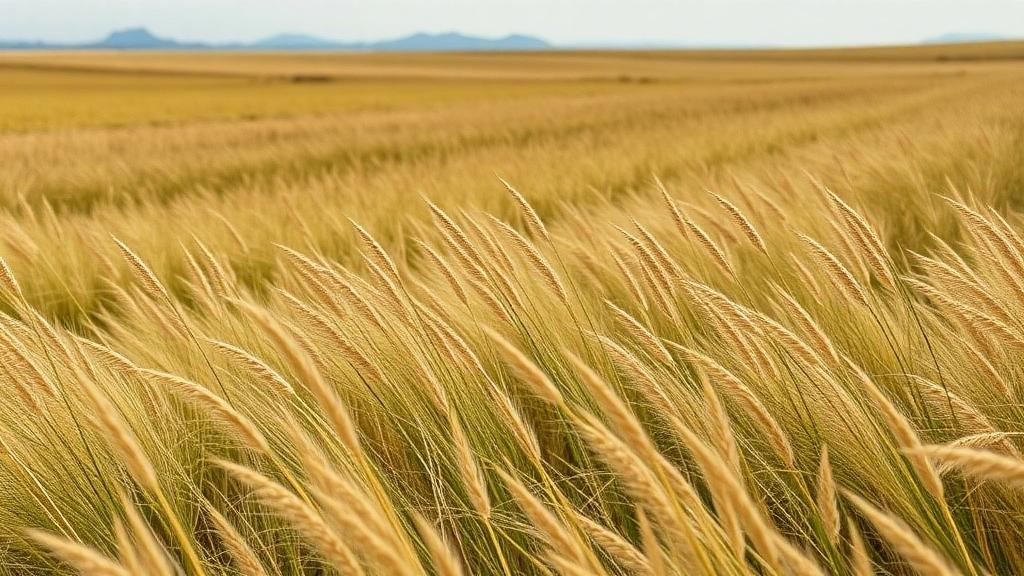
A quiet but consequential dispute over a single botanical name has landed before the community of vegetation scientists, and its outcome will shape how ecologists across the Iberian Peninsula label one of their most characteristic landscapes. In a formal proposal published in Vegetation Classification and Survey, a team of researchers asks the phytosociological community to conserve the alliance name Agrostion castellanae, which has been applied for nearly sixty years to acidophilous perennial grasslands on sandy-loamy soils across the Iberian Peninsula. The problem is that the name’s official nomenclatural type points to something entirely different: a community of short-lived annual plants that most specialists have, for two decades, classified in a completely separate class of vegetation.
The alliance concept sits at the heart of phytosociology, the discipline that classifies plant communities in a hierarchical system running from individual associations up through alliances, orders and classes. Each name in this system must be anchored to a type, a specific association that fixes its meaning. When Rivas Goday validly published the alliance in 1958 under the name Agrostion castellano-tenuis, his original diagnosis included three associations and one provisional fourth. Two name-giving species anchored the name: Agrostis tenuis, now correctly known as Agrostis capillaris, and Agrostis castellana. The two bentgrasses are so similar morphologically, and hybridize so readily, that Rivas Goday listed them together in his tables without distinguishing them, a practice that would later generate decades of nomenclatural confusion.
By 1964, Rivas Goday had corrected the alliance name to Agrostion castellanae, recognizing that the name-giving taxon had been misidentified. The correction was legitimate under the rules of the International Code of Phytosociological Nomenclature, because before 2002 an explicit citation of the corrected name was not required; an author citation accompanied by an unambiguous reference to the original publication sufficed. The corrected name Agrostion castellanae Rivas Goday 1958 corr. 1964 therefore stands as the proper citation, and over the following decades it became the standard label for the silicicolous perennial grasslands of the western Iberian Peninsula, appearing in major syntheses such as the EuroVegChecklist.
The trouble began when the nomenclatural type of the alliance was designated. In 1986, Rivas-Martínez and Belmonte selected the association Anthoxantho aristati-Holcetum setiglumis, equivalent to the Holco setiglumis-Anthoxanthetum aristati of Rivas Goday’s 1958 diagnosis, as the lectotype of the alliance. That typification remains effective under the Code, even though the intermediate name it was attached to was itself invalidly published. The consequence is unavoidable: the official type of Agrostion castellanae is a therophytic grassland dominated by annual species such as Anthoxanthum aristatum and Holcus annuus subsp. setiglumis, in which Agrostis castellana never exceeds modest cover values on the Braun-Blanquet scale.
For the past twenty years, Iberian vegetation scientists have consistently placed that association within the alliance Helianthemion guttati and the class Helianthemetea guttati, a grouping of annual therophytic communities entirely distinct from the perennial grasslands that Agrostion castellanae is understood to represent. A strict application of the nomenclatural rules would therefore drag the alliance name into the class Helianthemetea guttati, upending its established meaning and forcing the adoption of a different name for the perennial grasslands. The order name Agrostietalia castellanae, whose type is the alliance itself, would be destabilized along with it, and the class Stipo giganteae-Agrostietea castellanae would be affected in turn.
The authors of the proposal examined the other candidates within the original diagnosis and found none suitable. The association Agrostis truncatula et Aster aragonensis, published as Astero aragonensis-Agrostietum truncatulae, carries only low cover values of the name-giving species and has been assigned to the Molinerion laevis, another alliance of annual grasslands in the class Helianthemetea guttati. The association Agrostis truncatula et Periballia laevis is transitional between xerophytic annual grasslands dominated by Agrostis truncatula, now treated as Neoschischkinia truncatula, and the mesophytic grasslands of Agrostis castellana; its name has never been taken up by later authors and was suggested as a dubious name in 2011. Neither association can serve as a conserved type that would preserve current usage.
Earlier editions of the Code offered no remedy. The third edition, in force until recently, did not allow the designation of a conserved type to prevent unnecessary changes to widely used names. When the EuroVegChecklist was compiled, the names Agrostion castellano-tenuis and Agrostion castellanae were accordingly proposed as nomina ambigua, and an unpublished replacement, Festuco amplae-Agrostion castellanae, was suggested but never validly published. The fourth edition of the Code changed the situation decisively. Its new Article 53 explicitly permits the designation of a conserved type other than the original lectotype, giving the community a formal mechanism to stabilize long-standing names whose types conflict with their accepted meaning.
Seizing that mechanism, the authors propose to designate the association Festuco amplae-Agrostietum castellanae, described by Rivas-Martínez in 1986, as the conserved type of the alliance. This association was conceived to represent the meso- to supramediterranean perennial grasslands dominated by Agrostis castellana, known locally as vallicares, distributed across the northern half of the Mediterranean Iberian-Atlantic province. It has been widely accepted by subsequent authors and is currently classified within the Agrostion castellanae, making it a fitting anchor for the name in its established sense. The proposal simultaneously invokes Article 52, which would conserve the corrected name against its homotypic synonym Agrostion castellano-tenuis.
The proposal also anticipates a residual uncertainty. Because Agrostis capillaris and Agrostis castellana are difficult to distinguish and can hybridize, the authors note that the presence of Agrostis capillaris in the original relevés of the association Agrostis truncatula et Periballia laevis, collected in the provinces of León and Zamora in northwestern Spain, cannot be entirely excluded. If it were proven that Agrostis capillaris occurred in those original samples, the 1964 correction itself would become illegitimate under Article 43 of the Code. The proposal is therefore framed to preserve the name in either scenario, covering both the corrected legitimate name and the corrected illegitimate name that would result from such a finding.
For the working ecologist, the stakes are practical as much as theoretical. The name Agrostion castellanae underpins the classification of the order Agrostietalia castellanae and the class Stipo giganteae-Agrostietea castellanae, units used in habitat mapping, conservation assessment and vegetation databases across the peninsula. If the rules were applied strictly without conservation, maps, habitat directives and decades of published relevés would need to be reinterpreted under a name belonging to annual therophytic vegetation. The formal proposal now goes to the relevant nomenclatural bodies for consideration, and its acceptance would lock in the meaning that sixty years of field research has attached to one of Iberia’s most distinctive grassland alliances.
Subject of Research: Nomenclatural conservation of the plant alliance name Agrostion castellanae
Article Title: Proposal (32) to conserve the name Agrostion castellanae with a conserved type
Article References: Terzi, M., Fernández-González, F., Di Pietro, R., & Theurillat, J.-P. (2023). Proposal (32) to conserve the name Agrostion castellanae with a conserved type. Vegetation Classification and Survey, 4, 127-130. https://doi.org/10.3897/vcs.105269
Image Credits: AI Generated
DOI: 10.3897/VCS.105269
Keywords: phytosociology, Agrostion castellanae, nomenclature, Iberian Peninsula, grasslands, vegetation classification, Agrostis castellana, Helianthemetea guttati, conserved type, International Code of Phytosociological Nomenclature, Rivas Goday, syntaxonomy
Cite Scienmag News
Margaret Porter. (October 18, 2026). Botanists move to save a sixty-year-old name for Iberian grasslands. Scienmag. https://scienmag.com/botanists-move-to-save-a-sixty-year-old-name-for-iberian-grasslands/
Margaret Porter. "Botanists move to save a sixty-year-old name for Iberian grasslands." Scienmag, 18 October 2026, https://scienmag.com/botanists-move-to-save-a-sixty-year-old-name-for-iberian-grasslands/. Accessed 18 October 2026.
Margaret Porter. "Botanists move to save a sixty-year-old name for Iberian grasslands." Scienmag. October 18, 2026. https://scienmag.com/botanists-move-to-save-a-sixty-year-old-name-for-iberian-grasslands/


