

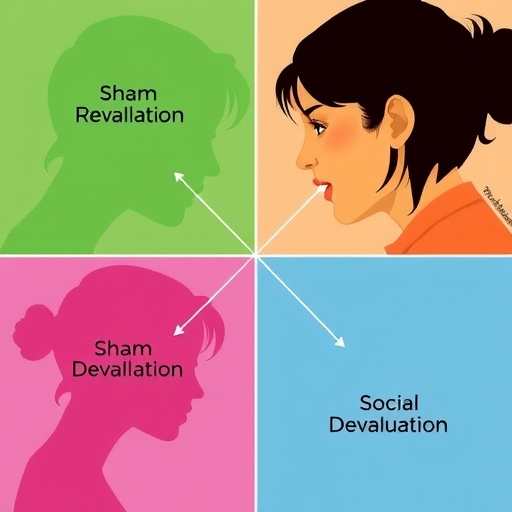
In the ever-evolving landscape of psychological research, a provocative study has emerged that delves into the intricate interplay between borderline personality traits and the dynamic nature of shame and social devaluation. Conducted by a team of researchers led by Allaire, Rancourt, and Sznycer, this study offers groundbreaking insights into how individuals with borderline personality traits experience and process feelings of shame, especially in the context of perceived social harm or rejection. As we navigate through the nuances of this study, we discover the profound implications it carries not just for clinical psychology, but also for our broader understanding of human emotion and interpersonal relationships.
The essence of this research rests on the concept of borderline personality traits, which encompass a spectrum of emotional dysregulation, unstable interpersonal relationships, and impulses that can lead to significant distress. Individuals exhibiting these traits often grapple with intense feelings of shame, particularly when they perceive themselves as devalued or rejected by their social circles. This study posits that the ability to effectively calibrate feelings of shame in response to social devaluation is intricately linked to the severity of borderline traits, revealing a complex relationship that merits deeper investigation.
Through a carefully designed methodology, the researchers sought to isolate the effects of social devaluation on feelings of shame among participants with varying levels of borderline traits. Utilizing a series of psychological assessments, they evaluated participants’ emotional responses to situations where social devaluation was simulated. What emerged was a striking pattern: individuals with pronounced borderline traits exhibited heightened levels of shame, significantly more than their counterparts with fewer symptoms of this disorder. This illuminating finding suggests that for these individuals, shame is a heightened, almost instinctual response to any form of social judgment.
The implications of these findings extend beyond theoretical frameworks. They invite a fundamental reconsideration of therapeutic strategies for individuals with borderline personality traits. Traditional therapeutic approaches often focus on the stabilization of emotions and relationship dynamics. However, understanding the functional calibration of shame could lead therapists to develop tailored strategies that address this emotional response more explicitly. By helping individuals learn to moderate their feelings of shame, therapy may pave the way for more effective management of emotions and improved interpersonal relationships.
Moreover, the researchers underscore the societal context within which these emotional processes unfold. Social devaluation does not occur in a vacuum; it is influenced by cultural norms and expectations that shape how individuals perceive themselves in relation to others. Individuals with borderline traits might be particularly vulnerable to societal pressures, which can magnify feelings of inadequacy and shame. Therefore, addressing not only the individual’s emotional responses but also the societal frameworks that contribute to these feelings becomes paramount in treatment.
A crucial aspect of the study examines the neurobiological underpinnings of shame, particularly in individuals with borderline traits. Previous research has indicated that emotional and cognitive responses are intricately linked to brain activity, particularly within the limbic system. The researchers speculate that heightened shame responses observed in participants may correlate with specific neurological activations associated with emotion processing. This presents an exciting avenue for future research, as exploring the brain’s intricacies could yield further insights into the ways emotional responses are shaped and how they can be modified through therapeutic interventions.
Furthermore, the findings call attention to the necessity of early intervention strategies. Recognizing the patterns of shame and social devaluation in young individuals exhibiting borderline traits may lead to preemptive measures that could alter the trajectory of their emotional development. By fostering resilience and self-compassion early on, mental health practitioners can help mitigate the risk of intense shame responses in the face of social challenges, ultimately enriching their clients’ quality of life.
The study also raises important considerations regarding the stigmas associated with borderline personality disorder. Individuals who experience overwhelming feelings of shame often internalize societal perceptions, leading to a cycle of self-defeating behaviors. By bringing to light the profound impact of shame in the context of borderline traits, this research advocates for a shift in how society perceives emotional vulnerability. A more empathetic understanding can not only foster compassion for those grappling with these feelings but also serve to dismantle the stigma surrounding mental health disorders.
Social media further complicates this environment. In an age where social evaluation is incessantly magnified by digital platforms, individuals with borderline traits may find themselves trapped in a feedback loop of shame and social comparison. The study’s implications highlight the urgent need for individuals, especially the younger population, to cultivate critical media literacy skills that can empower them to navigate these digital landscapes with resilience and self-awareness.
By emphasizing the interplay between emotional experience and social context, the research contributes to a more comprehensive understanding of emotional health. As the ripple effects of borderline traits manifest in various life domains, such insight is invaluable not only for clinicians but also for educators, policy makers, and individuals seeking to foster supportive environments. Ultimately, this aligns with the growing recognition that psychological well-being is inextricably linked to the quality of social relationships and the cultural narratives that shape our emotional landscapes.
In conclusion, the insightful work by Allaire, Rancourt, and Sznycer shines a necessary light on the complex relationship between borderline personality traits, shame, and social devaluation. It invites a fresh perspective on therapeutic interventions, societal attitudes, and the critical importance of understanding emotional responses in a broader cultural context. As we continue to grapple with the complexities of human emotion, this research serves as a reminder of the necessity for compassion-based approaches that honor the unique experiences of individuals navigating the tumultuous waters of social interaction and emotional regulation.
As we reflect on the profound implications of this study, it becomes clear that a greater understanding of the calibrations of shame can lead to transformative changes in how society approaches mental health. By bridging the gap between research and practice, we can work towards a future where emotional vulnerabilities are recognized and addressed, fostering a more inclusive and understanding world for all.
Subject of Research: The influence of borderline personality traits on the functional calibration of shame with social devaluation.
Article Title: Borderline personality traits influence the functional calibration of shame with social devaluation.
Article References:
Allaire, MA., Rancourt, CA., Sznycer, D. et al. Borderline personality traits influence the functional calibration of shame with social devaluation.
Discov Psychol (2026). https://doi.org/10.1007/s44202-026-00593-y
Image Credits: AI Generated
DOI: 10.1007/s44202-026-00593-y
Keywords: borderline personality traits, shame, social devaluation, emotional regulation, therapeutic strategies, neurobiological underpinnings, early intervention, stigma, social media, emotional health.


