

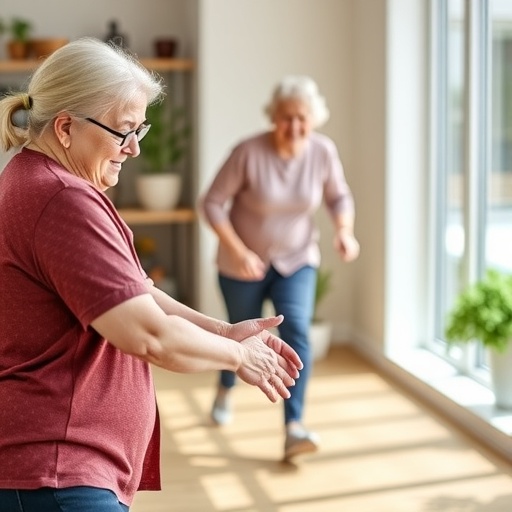
As societies worldwide confront the mounting challenges posed by aging populations, maintaining functional independence among older adults has become a critical public health priority. Among older adults aged 75 and above, especially those residing in rural communities, mobility limitations profoundly impact quality of life, social engagement, and access to essential services. A groundbreaking study published in BMC Geriatrics in 2026 shines a spotlight on a novel intervention designed to enhance out-of-home mobility through a physiotherapist-led motivational counselling approach. The MOBILE randomized controlled trial (RCT), spearheaded by Haeger, Mümken, Spang, and colleagues, delivers compelling evidence that could revolutionize community care for the elderly.
Mobility restriction in older adults is a multifaceted issue influenced by physical, psychological, and environmental factors. Traditional rehabilitation approaches have focused heavily on physical therapy aimed at improving strength, balance, and physical resilience. However, motivational components that address behavioral change and psychosocial barriers have often been underexplored. The MOBILE RCT has taken a paradigm-shifting approach by integrating physiotherapy with motivational counselling to comprehensively address these intertwined dimensions of mobility decline.
The intervention developed by the research team involves physiotherapist-led sessions that go beyond conventional exercises. These sessions incorporate structured motivational counselling techniques aimed at fostering self-efficacy, enhancing motivation, and helping participants overcome mental barriers related to fear of falling or social isolation. By targeting psychological readiness and behavior change alongside physical functioning, the program is uniquely positioned to promote sustainable improvements in mobility.
Participants in the MOBILE trial were older adults aged 75 and older living in rural areas, a demographic notoriously underserved in mobility-focused interventions. Rural settings often present additional obstacles such as limited transportation, scarce healthcare resources, and reduced social networks, exacerbating the risk of mobility decline and its deleterious effects. This study’s emphasis on rural communities addresses a crucial gap in geriatric healthcare research, bringing vital insights to an underrepresented population.
Detailed assessment protocols were employed to measure the efficacy of the intervention. Mobility outcomes were evaluated using objective performance-based tests, self-reported mobility scales, and frequency of out-of-home excursions tracked over time. The multiplicity of evaluation tools ensured a robust understanding of how the intervention influenced both capacity and participation dimensions of mobility, which are essential for real-world functionality.
Crucially, the trial’s design controlled for potential confounding variables by random assignment to intervention and control groups. This rigorous methodology strengthens the validity of findings and supports causal inferences about the effect of the physiotherapist-led motivational counselling on mobility outcomes. The control group received usual care without the motivational counselling component, serving as a baseline for comparison.
Results from the MOBILE RCT demonstrated statistically significant improvements in out-of-home mobility among participants who received the intervention compared to controls. These improvements encompassed longer distances ambulated outside, increased frequency of community outings, and enhanced confidence in navigating challenging environments. Such findings highlight the critical role of psychological and behavioral support in conjunction with physical therapy to effect meaningful change.
The mechanistic underpinnings of the intervention’s success are multifactorial. Motivational counselling likely enhanced participants’ intrinsic motivation, reduced avoidance behaviors, and empowered them to self-manage barriers to mobility. Physiotherapists’ expertise enabled tailored exercise regimens that matched individual abilities, reinforcing physical competence while the counselling nurtured mental resilience and proactive engagement.
Importantly, the intervention’s benefits extended beyond mobility metrics. Participants reported improved social connection, reduced feelings of loneliness, and greater satisfaction with daily living activities. These psychosocial outcomes are vital determinants of overall well-being and may contribute to sustaining mobility gains over the long term by reinforcing positive feedback cycles between activity and mood.
The MOBILE trial also offers valuable insights into implementation feasibility in rural healthcare contexts. The intervention was delivered within community settings using accessible resources, aligning with principles of scalable and sustainable healthcare. The involvement of physiotherapists as dual facilitators of physical and motivational strategies exemplifies an efficient use of professional expertise amid resource constraints typical of rural environments.
Moreover, the trial underscores the importance of interdisciplinary approaches in geriatric care, integrating principles from physical therapy, psychology, and behavioral science. This holistic model challenges siloed care paradigms and advocates for a patient-centered framework tailored to the complex needs of aging adults with mobility impairments.
These findings hold significant implications for policymakers and practitioners aiming to enhance aging populations’ independence and reduce the cascading health consequences of mobility loss. Incorporating motivational counselling alongside physiotherapy could be adopted in community health programs, rehabilitation centers, and home-based care initiatives targeting older adults.
While the MOBILE study marks a substantial advance, ongoing research is warranted to explore long-term maintenance of mobility improvements and to delineate which components of the intervention drive the most benefit. Future trials might also explore adaptations for urban populations, diverse cultural contexts, or integration with digital health technologies to broaden reach and impact.
In conclusion, the MOBILE randomized controlled trial provides robust evidence that physiotherapist-led motivational counselling substantially enhances out-of-home mobility among rural community-dwelling older adults aged 75 and above. This innovative, multifaceted intervention addresses both physical and psychological determinants of mobility, producing meaningful improvements in functionality and quality of life. As aging populations grow globally, such interventions herald a new era of holistic, patient-centered care poised to transform geriatric rehabilitation and promote healthier aging trajectories.
The significance of this research extends beyond clinical outcomes to societal benefits, potentially reducing healthcare costs by preventing mobility-related complications and fostering continued community participation. As healthcare systems grapple with the complexities of aging, the MOBILE study exemplifies the need for integrated, evidence-based strategies driving impactful change in the lives of older adults.
Subject of Research: Enhancement of out-of-home mobility in rural community-dwelling older adults aged 75 and over through physiotherapist-led motivational counselling.
Article Title: Out-of-home mobility enhancement by a physiotherapist-led motivational counselling intervention among rural community-dwelling older adults 75+: the MOBILE RCT.
Article References:
Haeger, C., Mümken, S.A., Spang, R.P. et al. Out-of-home mobility enhancement by a physiotherapist-led motivational counselling intervention among rural community-dwelling older adults 75+: the MOBILE RCT. BMC Geriatr (2026). https://doi.org/10.1186/s12877-026-07244-w
Image Credits: AI Generated


