

Thursday, September 3, 2026
Science
No Result
View All Result
  • Login
  • HOME
  • SCIENCE NEWS
  • CONTACT US
  • HOME
  • SCIENCE NEWS
  • CONTACT US
No Result
View All Result
Scienmag
No Result
View All Result
Home Science News Cancer

Boosting antitumor immunity by triggering cancer cell pyroptosis

July 27, 2026
in Cancer
Nathaniel Bowman
By Nathaniel Bowman Scienmag Editorial Profile - Precision Oncology
Reading Time: 2 mins read
0
Boosting antitumor immunity by triggering cancer cell pyroptosis

Boosting antitumor immunity by triggering cancer cell pyroptosis

65
SHARES
587
VIEWS
Share on FacebookShare on Twitter
ADVERTISEMENT

Gasdermins (GSDMs) are pore-forming executioners of pyroptosis, a highly inflammatory form of programmed cell death that culminates in membrane rupture. The pathway that first linked GSDMs to antitumour immunity emerged from studies of gasdermin D (GSDMD), whose activation depends on cleavage by inflammatory caspases downstream of inflammasome signaling. Yet, the field has moved beyond a single trigger, showing that GSDM family members can be activated through inflammasome-independent routes.

Recent work highlights the broader biochemical logic: pathogen-encoded proteases, host proteases other than inflammatory caspases, and diverse post-translational modifications can all switch on GSDMs. Importantly, these activation mechanisms have been observed across multiple cell types, including cancer cells—suggesting that pyroptosis is not merely an immune-system accident, but a tunable cellular program.

A key immunological insight is that pyroptosis can be driven directly by immune effector functions. T cells can deliver granzymes that cleave and activate GSDMs, converting cytotoxic encounters into a burst of inflammasome-like damage signals. In parallel, experimental approaches that exogenously supply active GSDMs, or that use small molecules to trigger GSDM activation, can force tumour pyroptosis in cancer cells.

Mechanistically, pyroptosis does more than kill. By rupturing membranes and releasing danger-associated signals, it promotes the recruitment and activation of immune cells within the tumour microenvironment. This immune reshaping can translate into improved control of tumour growth in preclinical settings.

Notably, an “all-or-nothing” model is unnecessary. Evidence suggests that only a fraction of tumour cells must undergo pyroptosis to initiate immune infiltration and generate antitumour immunity, while maintaining tolerable toxicity. This fraction-based effect points to a therapeutic window for exploiting lysis without catastrophic systemic inflammation.

Pyroptosis also intersects with other lytic cell-death modalities, raising questions about pathway specificity and redundancy. Comparing pyroptosis to necroptosis and other terminal cell fates suggests that common features—such as membrane disruption and inflammatory release—may converge on similar immune outcomes, even when initiation signals differ.

As immunotherapies advance, pyroptosis is emerging as a potential “force multiplier.” Combining GSDM activation strategies with existing treatments may enhance antigen presentation, strengthen innate immune priming, and convert immunologically cold tumours into responsive ones.

Overall, current evidence reframes cancer cell pyroptosis as an actionable immunotherapy lever. By understanding how GSDMs are activated and how partial pyroptosis reshapes the microenvironment, researchers may design interventions that harness inflammation with precision—igniting immunity rather than merely causing cell death.

Subject of Research: Pyroptosis and cancer immunotherapy via Gasdermin (GSDM) activation

Article Title: Boosting antitumor immunity by triggering cancer cell pyroptosis

Article References: Liu, X., Goldberg, E., Kagan, J. C., & Wu, H. (2026). Igniting antitumour immunity with cancer cell pyroptosis. Nature Reviews Cancer. https://doi.org/10.1038/s41568-026-00959-3

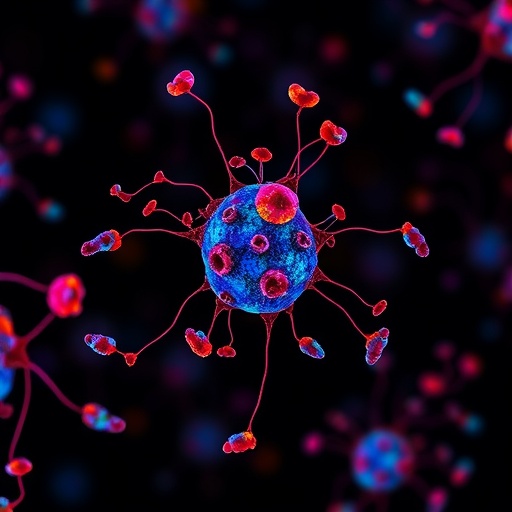
Image Credits: AI Generated

DOI: 10.1038/s41568-026-00959-3

Keywords: cancer microenvironment, enhancing antitumor immune responses, gasdermin family proteins in cancer therapy, harnessing pyroptosis for cancer immun, immune cell-mediated tumor cell death, inflammasome-independent gasdermin activation, inflammatory cell death in cancer immunotherapy, pyroptosis signaling pathways in tumor cells, role of granzymes in tumor pyroptosis, small molecule inducers of pyroptosis, therapeutic targeting of gasdermins in cancer, tumor microenvironment modulation through pyroptosis

Cite Scienmag News

Nathaniel Bowman. (July 27, 2026). Boosting antitumor immunity by triggering cancer cell pyroptosis. Scienmag. https://scienmag.com/boosting-antitumor-immunity-by-triggering-cancer-cell-pyroptosis/

Nathaniel Bowman. "Boosting antitumor immunity by triggering cancer cell pyroptosis." Scienmag, 27 July 2026, https://scienmag.com/boosting-antitumor-immunity-by-triggering-cancer-cell-pyroptosis/. Accessed 3 September 2026.

Nathaniel Bowman. "Boosting antitumor immunity by triggering cancer cell pyroptosis." Scienmag. July 27, 2026. https://scienmag.com/boosting-antitumor-immunity-by-triggering-cancer-cell-pyroptosis/


Tags: cancer microenvironmentenhancing antitumor immune responsesgasdermin family proteins in cancer therapyharnessing pyroptosis for cancer immunimmune cell-mediated tumor cell deathinflammasome-independent gasdermin activationinflammatory cell death in cancer immunotherapypyroptosis signaling pathways in tumor cellsrole of granzymes in tumor pyroptosissmall molecule inducers of pyroptosistherapeutic targeting of gasdermins in cancertumor microenvironment modulation through pyroptosis
Share26Tweet16
Previous Post

Pusan National University Scientists Create Smart Adaptive Vibration Isolator System

Next Post

HK1–LDHA feedback boosts Wnt5a histone lactylation, linking prenatal acetaminophen to male OA

Related Posts

A heterogeneous multimodal ensemble framework for multi-omics breast cancer prognosis
Cancer

A heterogeneous multimodal ensemble framework for multi-omics breast cancer prognosis

September 3, 2026
Largest Study of Its Kind Reveals How Australian Dogs Fare Against Lymphoma
Cancer

Largest Study of Its Kind Reveals How Australian Dogs Fare Against Lymphoma

September 3, 2026
New Animal Model Tests Chemotherapy Efficacy and Toxicity
Cancer

New Animal Model Tests Chemotherapy Efficacy and Toxicity

September 3, 2026
Treating Paradoxical Deep Vein Thrombosis in Congenital Afibrinogenemia
Cancer

Treating Paradoxical Deep Vein Thrombosis in Congenital Afibrinogenemia

September 3, 2026
China’s CACA Guidelines Redefine Cancer Care With Holistic Integrative Assessment
Cancer

China’s CACA Guidelines Redefine Cancer Care With Holistic Integrative Assessment

September 3, 2026
Electric Pulse Therapy Shows Disappointing Results for Lung Cancer
Cancer

Electric Pulse Therapy Shows Disappointing Results for Lung Cancer

September 3, 2026
Next Post
HK1–LDHA feedback boosts Wnt5a histone lactylation, linking prenatal acetaminophen to male OA

HK1–LDHA feedback boosts Wnt5a histone lactylation, linking prenatal acetaminophen to male OA

  • Mothers who receive childcare support from maternal grandparents show more optimized

    Mothers who receive childcare support from maternal grandparents show more parental warmth, finds NTU Singapore study

    27656 shares
    Share 11059 Tweet 6912
  • University of Seville Breaks 120-Year-Old Mystery, Revises a Key Einstein Concept

    1061 shares
    Share 424 Tweet 265
  • Bee body mass, pathogens and local climate influence heat tolerance

    682 shares
    Share 273 Tweet 171
  • Researchers record first-ever images and data of a shark experiencing a boat strike

    546 shares
    Share 218 Tweet 137
  • Groundbreaking Clinical Trial Reveals Lubiprostone Enhances Kidney Function

    531 shares
    Share 212 Tweet 133
Science

Embark on a thrilling journey of discovery with Scienmag.com—your ultimate source for cutting-edge breakthroughs. Immerse yourself in a world where curiosity knows no limits and tomorrow’s possibilities become today’s reality!

RECENT NEWS

  • Velocity surfaces method speeds analysis of Earth–Moon transfer orbit controllable sets
  • Mindfulness Program Quality Key to Teen Mental and Metabolic Health
  • Bayesian adaptive testing with variable lengths and new stopping rules
  • Machine Learning Predicts Microplastic Aging and Environmental Risks

Categories

  • Agriculture
  • Anthropology
  • Archaeology
  • Athmospheric
  • Biology
  • Biotechnology
  • Blog
  • Bussines
  • Cancer
  • Chemistry
  • Climate
  • Earth Science
  • Editorial Policy
  • Marine
  • Mathematics
  • Medicine
  • Pediatry
  • Policy
  • Psychology & Psychiatry
  • Science Education
  • Social Science
  • Space
  • Technology and Engineering

Subscribe to Blog via Email

Enter your email address to subscribe to this blog and receive notifications of new posts by email.

Join 5,151 other subscribers

© 2025 Scienmag - Science Magazine

Welcome Back!

Login to your account below

Forgotten Password?

Retrieve your password

Please enter your username or email address to reset your password.

Log In
No Result
View All Result
  • HOME
  • SCIENCE NEWS
  • CONTACT US

© 2025 Scienmag - Science Magazine

Discover more from Science

Subscribe now to keep reading and get access to the full archive.

Continue reading