

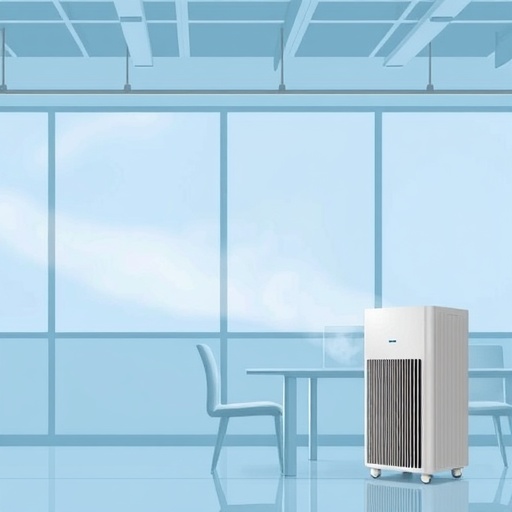
In the ongoing quest for improved indoor air quality, a recent study published in the journal Discover Sustainability has shed light on behavioral intentions toward the adoption of air purifiers in Thai municipal offices. As urbanization accelerates and pollution levels rise, air purifiers have emerged as a critical line of defense against air quality deterioration. Researchers A. Taghipour, A. Saengnoree, and W. Sangmanee have explored the attitudes and intentions of office workers towards the use of these devices, underscoring their potential role in fostering healthier indoor environments within public institutions.
The study is particularly timely, considering the heightened focus on sustainability and public health in recent years. Municipal offices represent significant workplaces where numerous individuals congregate daily, making them crucial sites for implementing air purification technologies. The efficiency of air purifiers in mitigating the negative effects of poor air quality cannot be understated, and understanding the behavioral dynamics that influence their adoption is paramount for promoting a culture of health-consciousness in public administration settings.
Surveying a broad demographic of office workers across various municipalities in Thailand, the researchers deployed a comprehensive questionnaire aimed at assessing the perceptions, attitudes, and intentions regarding air purifier use. The findings reveal a clear dichotomy in awareness levels among employees, with those exposed to information about air quality and health risks exhibiting a higher propensity to consider adopting air purifiers. This distinction highlights the crucial role of education and information dissemination in shaping health-related behaviors in workplaces.
Another significant aspect of the study revolves around understanding the perceived benefits versus the costs associated with air purifier adoption. Many office workers expressed concerns regarding the initial financial investment, maintenance expenses, and noise levels of these devices. Interestingly, those who were informed about the long-term health benefits, such as reduced respiratory issues and enhanced cognitive functions, were more likely to endorse the idea of integrating air purifiers into their workspace. This suggests that effective communication strategies are essential for mitigating apprehensive attitudes related to costs.
Moreover, the researchers delved into the role of organizational support in influencing individuals’ decisions to adopt air purifiers. The study indicated that employees working in environments where management actively promotes health and well-being are more inclined to accept air purification technologies. This creates a positive feedback loop where management not only advocates for health measures but also witnesses improvements in worker morale and productivity, thereby reinforcing the importance of investing in air quality solutions.
Technological advancements in air purification systems have also played a vital role in influencing behavioral intentions. With the market saturated with a variety of options—from HEPA filters to UV light purification systems—individuals reported feeling overwhelmed by the choices. Interestingly, the researchers found that individuals who received guidance on selecting the right systems for their specific needs exhibited greater confidence in their intentions to adopt air purifiers. This underscores a growing trend in consumer behavior where informed decision-making can significantly increase the likelihood of product adoption.
A critical insight from the study relates to the influence of social norms and peer behavior on individual intentions. In workplaces where air purifiers were already in use, new adopters reported feeling more inclined to follow suit, demonstrating the powerful effects of social influence on technology adoption. This creates opportunities for peer-led initiatives and campaigns to encourage wider acceptance of air purifiers as standard fixtures in municipal offices.
The implications of adopting air purifiers extend beyond individual health benefits to consider wider societal outcomes. Poor indoor air quality has been linked to diminished productivity, increased absenteeism, and long-term health consequences for employees and their families. By fostering a collective shift towards improved air quality through air purifier adoption, municipalities can enhance overall public health, showcasing a commitment to sustainable practices that prioritize employee welfare.
Additionally, this research emphasizes the importance of adapting cultural contexts when discussing health technology adoption. In Thailand, where collectivism often influences behavior, aligning public health messages with communal values may enhance acceptance rates. Strategies that emphasize community benefits alongside personal health advantages could be pivotal in ensuring widespread adoption of air purifiers.
As public health challenges evolve, so too must our responses. The findings from this study signal a crucial step towards understanding how to navigate the complexities of behavioral intentions and technological adoption in the realm of indoor air quality management. It underscores a complex web of factors, including education, organizational support, social norms, and market dynamics, all of which converge to shape individual decisions in municipal environments.
In conclusion, the research presented in Discover Sustainability offers vital insights into the behavioral intentions of air purifier adoption among office workers in Thailand. By emphasizing the interconnections between information access, social influence, and organizational leadership, we foster a greater understanding of how to promote healthier indoor environments in municipal settings. While air purifiers alone cannot resolve air quality issues, they represent a tangible step towards sustainable indoor health, ultimately paving the way for healthier workplaces and thriving communities.
With growing awareness around the implications of indoor air quality, the urgency for action is greater than ever. By aligning insights from this study with actionable strategies, stakeholders can work collaboratively to elevate air purification from an afterthought to an essential component of public health infrastructure. As the journey towards improved sustainability continues, the adoption of air purifiers may very well be a cornerstone in creating healthier, more livable spaces for all.
Subject of Research: Behavioral intentions toward air purifier adoption in Thai municipal offices for sustainable indoor air quality.
Article Title: Behavioral intentions toward air purifier adoption in Thai municipal offices for sustainable indoor air quality.
Article References:
Taghipour, A., Saengnoree, A. & Sangmanee, W. Behavioral intentions toward air purifier adoption in Thai municipal offices for sustainable indoor air quality.
Discov Sustain (2025). https://doi.org/10.1007/s43621-025-02352-w
Image Credits: AI Generated
DOI: 10.1007/s43621-025-02352-w
Keywords: air quality, air purifiers, indoor air pollution, behavioral intentions, sustainable practices, public health, Thailand.


