

Tuesday, October 27, 2026
Science
No Result
View All Result
  • Login
  • HOME
  • SCIENCE NEWS
  • CONTACT US
  • HOME
  • SCIENCE NEWS
  • CONTACT US
No Result
View All Result
Scienmag
No Result
View All Result
Home Science News

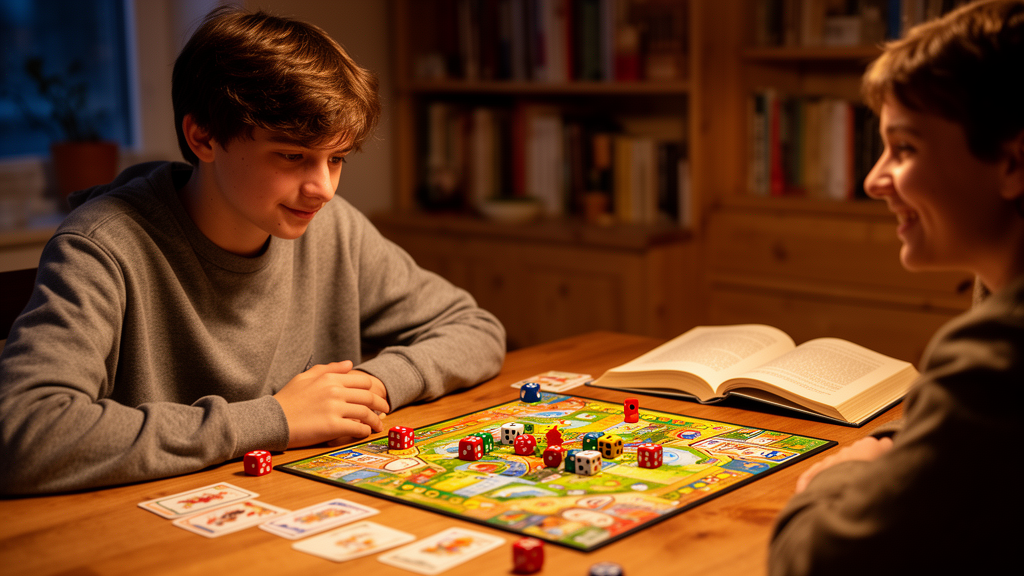
Board Games and Reading Linked to Lower Substance Use in Czech Teens

October 27, 2026
in Science News
Kristina Jarvis
By Kristina Jarvis Scienmag Editorial Profile - Infectious Disease Medicine
Reading Time: 3 mins read
0
Board Games and Reading Linked to Lower Substance Use in Czech Teens

Board Games and Reading Linked to Lower Substance Use in Czech Teens

65
SHARES
587
VIEWS
Share on FacebookShare on Twitter
ADVERTISEMENT

Adolescents who spend their free time reading or playing board and card games report notably lower rates of smoking, vaping, drinking, and drunkenness, while those who hang out with friends, visit shopping centres, or nap during the day report higher rates, according to a new analysis of more than 14,500 Czech schoolchildren. The study, led by Petra Potmesilova of Palacký University Olomouc and published in the journal Frontiers in Education, drew on the 2022 Czech Health Behaviour in School-aged Children (HBSC) survey. They then tested how each activity related to four separate outcomes measured over the previous 30 days: cigarette smoking, e-cigarette use, alcohol consumption, and drunkenness.

The team used survey-adjusted multivariable logistic regression models, meaning the estimates account for the complex sampling design of the HBSC survey. Each model adjusted for gender, school grade, and—crucially—for participation in all of the other leisure activities. The headline result is heterogeneity.

Associations between leisure and substance use were not uniform but varied substantially from one activity to another, and sometimes from one substance to another. Two activities, however, stood out for their consistency: regular reading and playing board or card games were associated with lower odds of all four substance-use outcomes, a pattern that held across smoking, e-cigarette use, alcohol consumption, and drunkenness alike. At the opposite end of the spectrum, three activities showed consistently elevated odds.

Hanging out with friends, visiting shopping centres, and daytime sleeping were each associated with higher odds of the substance-use outcomes. Three further activities produced mixed results. Playing a musical instrument, engaging in creative or craft activities, and relaxing or doing nothing showed associations that were less consistent across the four outcomes, sometimes aligning with lower odds for one substance and not for another.

The authors argue that these findings carry a methodological warning for the field. Broad leisure categories—"screen time," "sports," "socialising"—may obscure meaningful differences between the individual activities nested within them. It is important to read the results as associations, not causes.

The data come from a single cross-sectional survey wave, so adolescents were asked about their activities and their substance use at the same point in time. The study also covers Czech adolescents aged 11 to 15 in 2022, and patterns may differ in other countries, age groups, or post-pandemic periods. If the goal is to understand which leisure contexts travel with lower substance use, the evidence suggests the answer depends on the specific activity, not on leisure in general.

The authors call for further activity-specific investigation of adolescent leisure contexts, arguing that the differences between reading a book at home and wandering a shopping centre with friends are too large to be averaged away by a single composite variable.

Subject of Research: Associations between specific leisure activities and substance use among Czech adolescents

Article Title: Specific leisure activities and adolescent substance use: an activity-specific analysis of Czech adolescents

Article References: Potmesilova, P., Badura, P., Potmesil, M., Žídková, R., & Sarnikova, G. (2026). Specific Leisure Activities and Adolescent Substance Use: An Activity-Specific Analysis of Czech Adolescents. Frontiers in Education, 11, 1959606. https://doi.org/10.3389/feduc.2026.1959606

Image Credits: AI Generated

DOI: 10.3389/feduc.2026.1959606

Keywords: adolescent substance use, leisure activities, HBSC study, cigarette smoking, e-cigarette use, alcohol consumption, drunkenness, Czech adolescents, cross-sectional study, logistic regression, reading, board games

Cite Scienmag News

Kristina Jarvis. (October 27, 2026). Board Games and Reading Linked to Lower Substance Use in Czech Teens. Scienmag. https://scienmag.com/board-games-and-reading-linked-to-lower-substance-use-in-czech-teens/

Kristina Jarvis. "Board Games and Reading Linked to Lower Substance Use in Czech Teens." Scienmag, 27 October 2026, https://scienmag.com/board-games-and-reading-linked-to-lower-substance-use-in-czech-teens/. Accessed 27 October 2026.

Kristina Jarvis. "Board Games and Reading Linked to Lower Substance Use in Czech Teens." Scienmag. October 27, 2026. https://scienmag.com/board-games-and-reading-linked-to-lower-substance-use-in-czech-teens/


Tags: adolescent smoking and vaping reductionadolescent substance usealcohol consumptionboard gamescigarette smokingcross-sectional studyCzech adolescentsCzech youth behavioral studydrunkennesse-cigarette useeffects of daily naps and shopping outings on teen healthHBSC studyimpact of reading and board games on adolescent healthinfluence of recreational activities on teen substance habitsleisure activitiesleisure activities and substance use correlationlogistic regressionmultivariable analysis of youth lifestyle factorsprotective factors against teen alcohol and drug useReadingrole of social activities in teenage substance avoidancesurvey-based research on adolescent behaviorteen substance use preventionyouth health promotion through engaging hobbies
Share26Tweet16
Previous Post

Biallelic ATM Variants Behind Decades-Long Familial Dystonic Choreoathetosis

Next Post

National registry data reveal stroke burden concentrated in older Saudi men

Related Posts

Neonatal testicular torsion: Doppler flow and contralateral fixation need careful interpretation
Science News

Neonatal testicular torsion: Doppler flow and contralateral fixation need careful interpretation

October 27, 2026
TIGIT receptor drives NKT-like cell exhaustion in high-HBV liver cancer patients
Cancer

TIGIT receptor drives NKT-like cell exhaustion in high-HBV liver cancer patients

October 27, 2026
Understory Vegetation, Not Canopy, Drives Soil Protection in Degraded Forests
Science News

Understory Vegetation, Not Canopy, Drives Soil Protection in Degraded Forests

October 27, 2026
National registry data reveal stroke burden concentrated in older Saudi men
Science News

National registry data reveal stroke burden concentrated in older Saudi men

October 27, 2026
Biallelic ATM Variants Behind Decades-Long Familial Dystonic Choreoathetosis
Medicine

Biallelic ATM Variants Behind Decades-Long Familial Dystonic Choreoathetosis

October 27, 2026
Time-Restricted Eating Plus Exercise Cuts Fat Mass, Network Meta-Analysis Finds
Science News

Time-Restricted Eating Plus Exercise Cuts Fat Mass, Network Meta-Analysis Finds

October 27, 2026
Next Post
National registry data reveal stroke burden concentrated in older Saudi men

National registry data reveal stroke burden concentrated in older Saudi men

  • Mothers who receive childcare support from maternal grandparents show more optimized

    Mothers who receive childcare support from maternal grandparents show more parental warmth, finds NTU Singapore study

    27656 shares
    Share 11059 Tweet 6912
  • University of Seville Breaks 120-Year-Old Mystery, Revises a Key Einstein Concept

    1061 shares
    Share 424 Tweet 265
  • Bee body mass, pathogens and local climate influence heat tolerance

    682 shares
    Share 273 Tweet 171
  • Researchers record first-ever images and data of a shark experiencing a boat strike

    546 shares
    Share 218 Tweet 137
  • Groundbreaking Clinical Trial Reveals Lubiprostone Enhances Kidney Function

    531 shares
    Share 212 Tweet 133
Science

Embark on a thrilling journey of discovery with Scienmag.com—your ultimate source for cutting-edge breakthroughs. Immerse yourself in a world where curiosity knows no limits and tomorrow’s possibilities become today’s reality!

RECENT NEWS

  • Neonatal testicular torsion: Doppler flow and contralateral fixation need careful interpretation
  • TIGIT receptor drives NKT-like cell exhaustion in high-HBV liver cancer patients
  • Understory Vegetation, Not Canopy, Drives Soil Protection in Degraded Forests
  • National registry data reveal stroke burden concentrated in older Saudi men

Categories

  • Agriculture
  • Anthropology
  • Archaeology
  • Athmospheric
  • Biology
  • Biotechnology
  • Blog
  • Bussines
  • Cancer
  • Chemistry
  • Climate
  • Earth Science
  • Editorial Policy
  • Marine
  • Mathematics
  • Medicine
  • Pediatry
  • Policy
  • Psychology & Psychiatry
  • Science Education
  • Science News
  • Social Science
  • Space
  • Technology and Engineering

Subscribe to Blog via Email

Enter your email address to subscribe to this blog and receive notifications of new posts by email.

Join 5,151 other subscribers

© 2025 Scienmag - Science Magazine

Welcome Back!

Login to your account below

Forgotten Password?

Retrieve your password

Please enter your username or email address to reset your password.

Log In
No Result
View All Result
  • HOME
  • SCIENCE NEWS
  • CONTACT US

© 2025 Scienmag - Science Magazine

Discover more from Science

Subscribe now to keep reading and get access to the full archive.

Continue reading