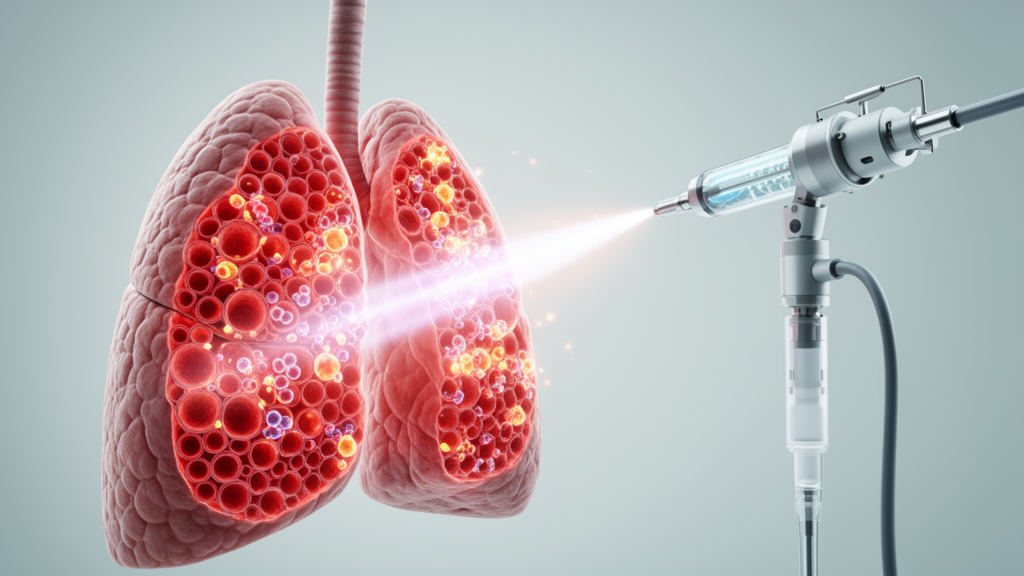
Children hospitalized with severe Mycoplasma pneumoniae pneumonia often face a difficult treatment question: when is bronchoalveolar lavage, a procedure in which fluid is instilled and suctioned from the airways to clear mucus and inflammatory debris, actually necessary? A retrospective cohort study published in BMC Infectious Diseases analyzed 294 pediatric patients with severe disease to compare treatment regimens and to build a model that identifies which children are most likely to undergo lavage. In the study, 159 patients, or 54.1 percent, underwent bronchoalveolar lavage.
After adjusting for treatment assignment using inverse probability of treatment weighting, the researchers found that lavage was associated with a significantly shorter time to cough relief and a higher rate of significant improvement on pulmonary imaging, with p-values below 0.05. These associations suggest that for selected children, the procedure may accompany faster recovery from the persistent cough and lung inflammation that characterize severe infection with this bacterium. To determine who should receive lavage, the team used multivariable logistic regression and identified four independent predictors: pulmonary imaging findings, C-reactive protein (CRP), fibrinogen (FIB), and interleukin-6 (IL-6).
The combined model achieved a bootstrap-corrected area under the curve of 0.754, with a 95 percent confidence interval of 0.728 to 0.847, indicating moderate discriminative ability in this cohort. Decision curve analysis, a method that weighs the net benefit of acting on a model's predictions across different risk thresholds, showed that the combined model delivered greater net benefit than any of the single indicators alone across a wide range of thresholds. In practical terms, the model may help clinicians weigh the invasiveness of lavage against the likelihood of benefit, rather than relying on a single blood test or radiograph.
The study also compared systemic anti-inflammatory and antibiotic strategies. Methylprednisolone sodium succinate (MSS), a corticosteroid, was associated with faster clinical improvement, but also with a higher rate of fever recurrence, a trade-off that reached statistical significance. To address this, the researchers conducted an exploratory subgroup analysis in children under 8 with severe pneumonia, comparing azithromycin plus MSS against a strategy of switching from azithromycin to doxycycline without corticosteroids.
In that exploratory comparison, no significant differences were observed between the two strategies. The authors caution that this finding is preliminary, but it suggests that combining macrolide antibiotics with corticosteroids may be considered a potential therapeutic approach for younger children, while tetracyclines remain the best option for children aged 8 and older or when first-line treatment has failed. The study's design imposes important limitations.
As a retrospective cohort, it relied on data collected during routine care rather than randomized assignment, which is why the researchers used inverse probability weighting to balance the treatment groups. The prediction model was validated internally by bootstrap resampling only, and the authors explicitly state it should be regarded as an exploratory tool rather than a settled decision instrument. These caveats matter because external validation in independent cohorts, ideally across different hospitals and Mycoplasma pneumoniae strains, is required before such a model can guide bedside decisions.
The clinical trial number was listed as not applicable, confirming that no prospective interventional testing was performed. Even so, the study offers a practical synthesis for clinicians managing a common and sometimes severe pediatric infection. It links measurable inflammatory markers and imaging findings to the use of airway lavage, quantifies the benefits and trade-offs of corticosteroid therapy, and provides exploratory evidence on antibiotic sequencing in young children, all of which can inform future prospective trials aimed at standardizing care for severe Mycoplasma pneumoniae pneumonia.
Subject of Research: Prediction model and treatment strategies for severe Mycoplasma pneumoniae pneumonia in children
Article Title: Indications for bronchoalveolar lavage and therapeutic strategies in children with severe Mycoplasma pneumoniae pneumonia: a retrospective study
Article References: Feng, Y., Lu, X., Sun, F., Deng, H., Zhou, Y., & Li, H. (2026). Indications for bronchoalveolar lavage and therapeutic strategies in children with severe Mycoplasma pneumoniae pneumonia: a retrospective study. BMC Infectious Diseases. https://doi.org/10.1186/s12879-026-14695-4
Image Credits: AI Generated
DOI: 10.1186/s12879-026-14695-4
Keywords: Mycoplasma pneumoniae, severe pneumonia, bronchoalveolar lavage, children, doxycycline, azithromycin, corticosteroids, prediction model, retrospective cohort, C-reactive protein, interleukin-6, decision curve analysis
Cite Scienmag News
Ophelia Keating. (October 24, 2026). Blood Markers and Imaging May Flag Lavage Need in Severe Mycoplasma Pneumonia. Scienmag. https://scienmag.com/blood-markers-and-imaging-may-flag-lavage-need-in-severe-mycoplasma-pneumonia/
Ophelia Keating. "Blood Markers and Imaging May Flag Lavage Need in Severe Mycoplasma Pneumonia." Scienmag, 24 October 2026, https://scienmag.com/blood-markers-and-imaging-may-flag-lavage-need-in-severe-mycoplasma-pneumonia/. Accessed 24 October 2026.
Ophelia Keating. "Blood Markers and Imaging May Flag Lavage Need in Severe Mycoplasma Pneumonia." Scienmag. October 24, 2026. https://scienmag.com/blood-markers-and-imaging-may-flag-lavage-need-in-severe-mycoplasma-pneumonia/