


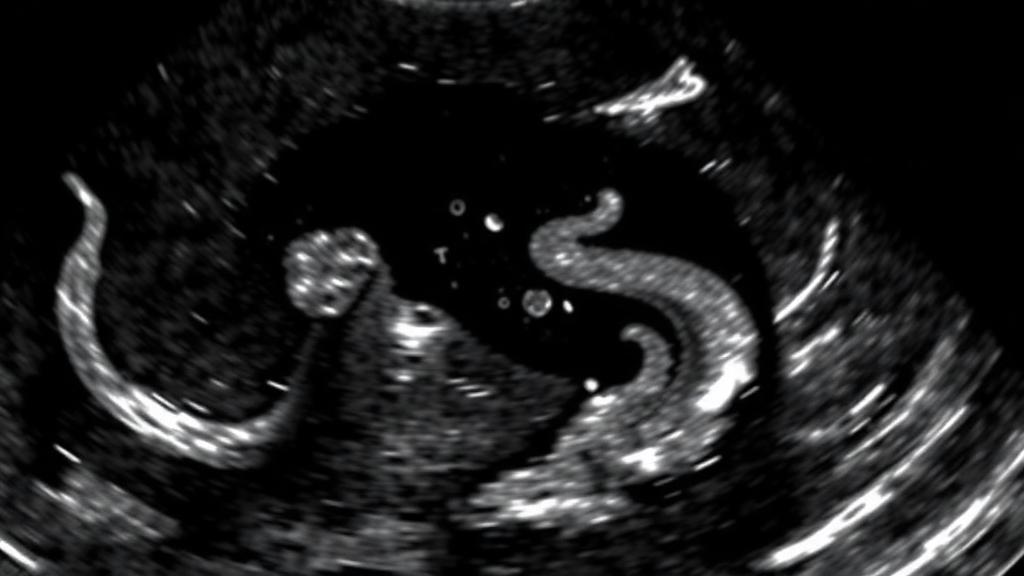
Every day, in pediatric radiology suites around the world, ultrasound machines flag a curious finding: floating, echogenic particles drifting within a child’s bladder. Radiologists call it bladder debris, and for decades it has been treated as a soft clue that something might be brewing in the urinary tract, most often a urinary tract infection. But how much diagnostic weight does this finding actually deserve? A new large-scale retrospective cohort study, published in BMC Pediatrics, set out to answer that question with a scale and statistical rigor that previous small studies could not match, and its conclusions are more nuanced than the simple intuition that debris equals infection.
The research team, led by Nilsun Kuas of the Department of Pediatric Urology at Eskişehir City Hospital in Turkey, together with Ergün Bahadırhan Karkın of Osmangazi University, mined a decade of clinical records from a tertiary training and research hospital. Between January 2015 and December 2024, they assembled a primary cohort of 9,083 children who had undergone urinary tract ultrasonography and urinalysis within seven days of each other. Of these, 6,413 children also had a valid paired urine culture, the microbiological gold standard against which any imaging or laboratory finding must ultimately be judged. A same-day subgroup of 6,000 patients with valid cultures served as the basis for the study’s most sophisticated statistical modeling.
The scale matters here. Earlier investigations into bladder debris as a marker of pediatric urinary tract infection were typically small, heterogeneous in design, and unable to disentangle the contribution of debris from that of standard urinalysis parameters such as pyuria, nitrite, and leukocyte esterase. The new study is, according to its authors, the largest pediatric cohort with paired urine culture ever assembled to address this question, and it deliberately framed two distinct clinical scenarios rather than one.
The first scenario is the one that matters most for diagnostic accuracy: when a child is being worked up for a suspected urinary tract infection and urinalysis is already available, does the presence of bladder debris on ultrasound add anything? To answer this, the researchers built logistic regression models predicting culture positivity, first using urinalysis parameters alone and then adding debris to the model. They quantified any improvement using a battery of modern diagnostic metrics: the change in the area under the receiver-operating-characteristic curve, integrated discrimination improvement, continuous net reclassification improvement, and decision curve analysis, which estimates net clinical benefit across a range of probability thresholds.
The unadjusted picture looked promising. Debris was present in 20.2 percent of the 9,083 patients, and children with debris were substantially more likely to have a positive urine culture, with an odds ratio of 2.81 and a 95 percent confidence interval of 2.46 to 3.22. As a stand-alone test, debris showed high specificity, between 83.9 and 84.3 percent, meaning that when debris was absent, infection was unlikely to be confirmed. But its sensitivity was low, between 33.6 and 35.0 percent, so many infected children had clean-appearing bladders on ultrasound. Debris alone, in other words, was a specific but insensitive signal.
Once the researchers adjusted for urinalysis parameters, the association weakened considerably, dropping to an adjusted odds ratio of 1.39 with a confidence interval of 1.12 to 1.72. More tellingly, adding debris to a urinalysis-based model produced essentially no gain in discrimination. The change in the area under the curve was a negligible 0.001, with a P value of 0.143, and the integrated discrimination improvement was 0.0011 with a P value of 0.076. Decision curve analysis showed differences in net clinical benefit within plus or minus 0.003 across the clinically relevant 10 to 30 percent probability threshold range, meaning that no group of patients would have been managed better with the debris-informed model than with urinalysis alone.
The reclassification analysis added a subtle but important layer of interpretation. The overall net reclassification improvement of 0.357 was statistically significant, but the direction of the effect was split: debris shifted risk estimates favorably for uninfected patients, with an NRI for non-events of plus 0.686, while shifting them unfavorably for infected patients, with an NRI for events of minus 0.328. In practical terms, debris made some healthy children look more infected and some infected children look less infected, producing no consistent clinical advantage. This kind of mixed reclassification is exactly the pattern that arises when a new marker carries information that is largely redundant with what the existing model already captures.
The second scenario, however, tells a different and more actionable story. In real-world practice, ultrasound is often performed before anyone has thought to order a urinalysis, and debris is discovered incidentally. The researchers therefore asked a practice-oriented question: when debris is found in a child who has not yet been tested, does it justify reflex urinalysis? Here the answer was clearly yes. Among patients with incidentally detected debris, 44.6 percent, or 817 of 1,831, had at least one positive infection marker on urinalysis, whether pyuria, nitrite, or leukocyte esterase. Among debris-negative patients, the figure was 24.2 percent, or 1,755 of 7,252. The odds ratio of 2.53, with a confidence interval of 2.27 to 2.81, translates into roughly a twofold higher probability of an abnormal urinalysis when debris is present.
The dual-perspective framework that emerges from these findings is what gives the study its practical punch. Bladder debris is not a diagnostic finding, and clinicians should not treat it as one when urinalysis is already in hand, because it adds nothing to models that already include the standard laboratory markers. But debris is a meaningful trigger for further testing when it appears on an ultrasound obtained for other reasons, such as abdominal pain evaluation, enuresis workup, or anatomical screening. In that incidental setting, the roughly doubled probability of an abnormal urinalysis supports pursuing urinalysis rather than dismissing the finding as an artifact. The authors suggest that incorporating this framework into pediatric clinical decision support could help avoid both excessive workup in children who do not need it and missed indications in those who do.
For a finding as visually striking as floating debris in a child’s bladder, the study’s message is one of disciplined restraint paired with targeted vigilance. Ultrasound debris is a real biological signal, likely reflecting cells, crystals, mucus, or bacterial aggregates suspended in urine, but its information content overlaps almost entirely with the urinalysis that pediatric medicine already relies upon. The value of this research lies not in elevating debris to a new diagnostic standard but in precisely locating where it fits in the clinical workflow: after urinalysis, it is redundant; before urinalysis, it is a reasonable prompt. In an era of growing concern about overdiagnosis and unnecessary testing in children, that kind of calibrated, evidence-based guidance, drawn from nearly a decade of paired imaging and laboratory data, is exactly what evidence-based pediatric practice needs.
Subject of Research: The diagnostic value of bladder debris on ultrasonography for detecting urinary tract infection in children
Article Title: The relationship between bladder debris on ultrasonography and urine analysis anomalies and culture positivity in children: a large-scale retrospective cohort study
Article References: Kuas, N., & Bahadırhan Karkın, E. (2026). The relationship between bladder debris on ultrasonography and urine analysis anomalies and culture positivity in children: a large-scale retrospective cohort study. BMC Pediatrics. https://doi.org/10.1186/s12887-026-07854-8
Image Credits: AI Generated
DOI: 10.1186/s12887-026-07854-8
Keywords: bladder debris, urinary tract infection, pediatrics, ultrasonography, urinalysis, urine culture, diagnostic accuracy, retrospective cohort study, pyuria, clinical decision support, logistic regression, BMC Pediatrics
Cite Scienmag News
Ophelia Keating. (October 16, 2026). Bladder Debris on Ultrasound in Children: A Clue, Not a Diagnosis, for Urinary Tract Infection. Scienmag. https://scienmag.com/bladder-debris-on-ultrasound-in-children-a-clue-not-a-diagnosis-for-urinary-tract-infection/
Ophelia Keating. "Bladder Debris on Ultrasound in Children: A Clue, Not a Diagnosis, for Urinary Tract Infection." Scienmag, 16 October 2026, https://scienmag.com/bladder-debris-on-ultrasound-in-children-a-clue-not-a-diagnosis-for-urinary-tract-infection/. Accessed 16 October 2026.
Ophelia Keating. "Bladder Debris on Ultrasound in Children: A Clue, Not a Diagnosis, for Urinary Tract Infection." Scienmag. October 16, 2026. https://scienmag.com/bladder-debris-on-ultrasound-in-children-a-clue-not-a-diagnosis-for-urinary-tract-infection/


