

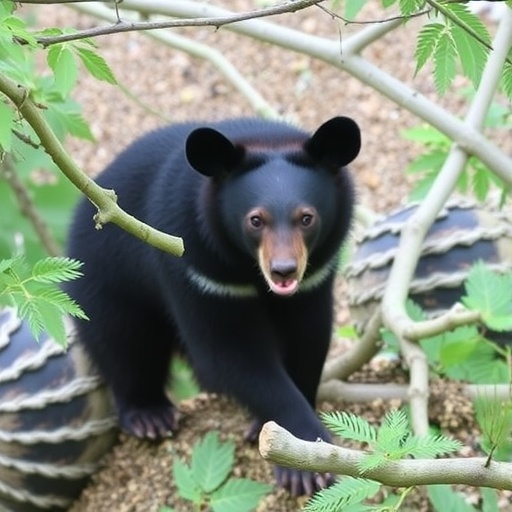
In recent years, the conservation of wildlife species has become an increasingly pressing issue, particularly as human encroachment into natural habitats accelerates. The black bear, scientifically known as Ursus americanus, is a prime example of a species that grapples with these challenges. A groundbreaking study conducted by Zarco-González and colleagues sheds new light on the spatial ecology of black bears in northeastern Mexico, aiming to unravel the complexities of their home ranges and habitat preferences. This vital research not only enhances our understanding of black bear behavior but also informs conservation strategies necessary for their survival.
Understanding the home range concept is fundamental in wildlife ecology. Home range refers to the area that an animal uses for its daily activities, including foraging, mating, and resting. For black bears, these ranges can be extensive and are influenced by factors such as food availability, environmental conditions, and human activities. The study conducted in northeastern Mexico reveals critical insights into how these variables affect bear movements and spatial distribution. Researchers utilized advanced tracking technology and statistical models to define the home ranges of several bear populations in the region.
The habitat preferences of black bears are intricately tied to seasonal fluctuations. These bears exhibit a diverse diet that includes fruits, nuts, insects, and even small mammals. As seasons shift, the availability of food sources changes as well, prompting bears to adjust their movements and habitat choices accordingly. The researchers meticulously documented these changes throughout the year, showcasing the adaptability of black bears in response to their environment. This adaptability is key to their survival, especially in a landscape that is continuously altered by human activity.
An essential element of this study was the consideration of human-bear interactions. In recent years, as urbanization spreads, black bears have increasingly ventured into human-dominated landscapes. Understanding how these interactions affect bear behavior and distribution is critical in shaping effective management practices. Zarco-González and colleagues highlight the importance of preserving connectivity between habitats, allowing bears to roam freely and access diverse resources. Fostering coexistence between bears and human populations requires an informed approach to landscape planning and wildlife management.
The study found that certain regions in northeastern Mexico serve as critical corridors for black bear movements. These corridors provide essential connectivity between fragmented habitats, enabling genetic exchange between populations and enhancing their chances of survival in the face of environmental changes. Identifying and protecting these corridors is vital not only for black bears but also for other wildlife species facing similar threats. This research underscores the interconnected nature of ecosystems and the importance of holistic conservation efforts.
A notable aspect of the study is its emphasis on the need for localized conservation strategies. As ecological systems are inherently unique to their geographical context, one-size-fits-all approaches may prove ineffective. The researchers advocate for tailored conservation measures that consider the specific ecological characteristics of northeastern Mexico. By engaging local communities and stakeholders, these strategies can be more effectively implemented, promoting sustainable practices that benefit both wildlife and human populations.
The implications of this research extend beyond the immediate conservation of black bears. Understanding their spatial ecology can provide a template for studying other mammalian species facing similar challenges. As habitats are increasingly compromised by human activity, the principles derived from this research can guide efforts to preserve biodiversity on a larger scale. The models and methodologies employed by Zarco-González and his team serve as a reference point for future studies, facilitating the development of a comprehensive understanding of wildlife ecology.
Additionally, this research emphasizes the urgency of conservation efforts in the face of climate change. As temperatures rise and precipitation patterns shift, the habitats that black bears rely on may undergo significant transformations. This dynamic presents a formidable challenge for conservationists who must anticipate and mitigate the impacts of climate change on wildlife populations. The findings from this study underscore the importance of adopting proactive strategies that consider both immediate ecological needs and long-term environmental changes.
Public awareness is another crucial component of successful wildlife conservation. As the study illustrates, fostering a deeper understanding of black bear ecology among community members can promote more positive human-bear interactions. Through educational initiatives and outreach programs, local populations can learn to coexist with wildlife, reducing instances of conflict and fostering appreciation for the natural world. Empowering communities to become stewards of their environment is essential in building resilient ecosystems.
In conclusion, the research conducted by Zarco-González and his colleagues contributes significantly to the understanding of black bear spatial ecology in northeastern Mexico. By examining home ranges and habitat use, this study reveals the complexities of bear behavior and the multifaceted challenges they face in a rapidly changing world. The findings not only inform targeted conservation strategies but also highlight the importance of interdisciplinary approaches that engage local communities, integrate ecological knowledge, and address the pressing impacts of climate change. The black bear’s future may depend on our ability to learn from this research and implement measures that ensure their survival and the preservation of their natural habitats.
As we navigate the challenges of wildlife conservation, this study serves as an inspiring example of how dedicated research and community engagement can bring about meaningful change. The black bears of northeastern Mexico symbolize a broader commitment to the preservation of biodiversity, reminding us that our actions today will shape the landscapes of tomorrow. By investing in informed conservation efforts and fostering coexistence between humans and wildlife, we can create a sustainable future for generations to come.
Subject of Research: Spatial ecology of black bears (Ursus americanus) in northeastern Mexico
Article Title: Spatial ecology of black bears (Ursus americanus) in northeastern Mexico: home ranges and habitat use.
Article References:
Zarco-González, Z., Carrera-Treviño, R., Balbuena-Serrano, Á. et al. Spatial ecology of black bears (Ursus americanus) in northeastern Mexico: home ranges and habitat use.
Environ Monit Assess 198, 14 (2026). https://doi.org/10.1007/s10661-025-14853-2
Image Credits: AI Generated
DOI: https://doi.org/10.1007/s10661-025-14853-2
Keywords: black bears, spatial ecology, conservation, home range, habitat use, northeastern Mexico


