


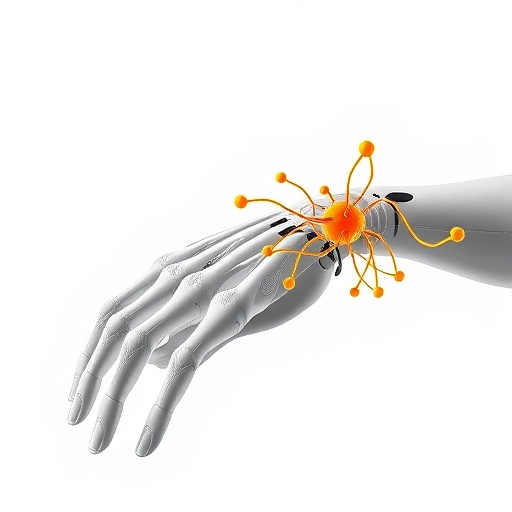
In recent years, the field of bioengineering has witnessed remarkable advancements in the development of artificial nerve systems, which promise to revolutionize bio-interactive prosthetics. Designed to emulate the functionality of biological nerves, these innovative systems present new possibilities for individuals suffering from neurological deficits or disorders. As the global population ages, the demand for effective prosthetic solutions has surged, making the importance of artificial nerve technology increasingly critical. Traditional prosthetic devices, primarily based on conventional semiconductor technology, have largely focused on restoring physiological functions without sufficient regard for neurological compatibility. This oversight has created an urgent need for more integrated solutions that consider the complexities of biological signal processing.
The primary limitation of existing prosthetic systems lies in their reliance on traditional digital computing architectures that prioritize electronic functionality over biological interaction. These systems often fail to adequately mimic the dynamic nature of human nerve signals, leading to suboptimal user experiences. As prosthetics become more sophisticated, their design must align with the intricacies of human neurophysiology to ensure fluid interactions between users and their environments. This represents a fundamental shift in approach—moving from merely replacing lost functions to ensuring that prosthetic technologies can engage users’ existing neural frameworks in meaningful ways.
Artificial nerve systems emerge as a solution to this fundamental challenge. By utilizing neuromorphic devices designed to replicate the firing patterns and signaling mechanisms of biological nerves, artificial nerves can effectively bridge the gap between impaired physiological systems and prosthetic technologies. These neuromorphic devices process information in ways that align more closely with natural nerve signals, allowing for better communication between the nervous system and prosthetics. This regeneration of functional links within the body paves the way for significant improvements in the quality of life for individuals with motor and sensory deficiencies.
One of the major advantages of employing artificial nerve systems in prosthetics is their power-efficient processing capabilities. Unlike conventional systems that often consume substantial energy, artificial nerves operate with a focus on efficiency, enabling longer usage times and less frequent charging cycles. This characteristic is particularly advantageous for users who rely heavily on their prosthetic devices for daily activities. Minimizing power consumption also aligns with growing concerns over the environmental impact of electronic waste generated by battery-operated devices, making artificial nerves not only a practical solution but also a sustainable one.
The ability of artificial nerves to seamlessly integrate with biological tissues further enhances their appeal. Unlike traditional prosthetics that often present discomfort or rejection issues due to material incompatibility, artificial nerve systems can be designed with materials that promote a more natural response from the body. This compatibility is vital in ensuring that users experience less pain and greater functionality when using their prosthetics. The organic interface created by these systems can greatly enhance the acceptance and usability of prosthetic devices by enabling more intuitive interactions.
In addition to improving user interface and comfort, the introduction of artificial nerve systems allows for the restoration of advanced sensory feedback, an area where traditional prosthetics have struggled. By integrating sensory modalities such as touch, temperature, and pressure, users can receive real-time feedback, making their interactions with the environment more immersive and human-like. This heightened sense of sensory awareness fosters a more integrated approach to rehabilitation, as it encourages users to engage in adaptive practices that can lead to greater independence and enhanced outcomes in their daily lives.
Moreover, the implications of artificial nerve systems extend beyond the realm of prosthetics to include potential applications in neuroprosthetics, brain-computer interfaces, and even regenerative medicine. These devices could provide new avenues for treating neurological conditions, helping to restore lost functionalities in patients with spinal cord injuries or traumatic brain injuries. The versatility of artificial nerve technology holds the potential to reshape therapeutic practices, offering innovative solutions that improve patient outcomes.
Further research and development in the field of artificial nerve systems is essential if we are to realize fully their transformative potential. There remains a significant gap between current technological capabilities and the ultimate goal of creating prosthetic devices that can perfectly mimic the intricacies of human neural function. As such, collaborative efforts among engineers, neuroscientists, and clinical practitioners will be crucial in advancing the science behind artificial nerves to ensure that they meet the diverse needs of users.
In conclusion, the integration of artificial nerve systems into the field of bio-interactive prosthetics represents a pivotal advancement in technology aimed at improving the lives of individuals with neurological impairments. By focusing on neurological compatibility and mimicking the natural processes of biological nerves, artificial nerves provide an innovative pathway toward more effective and user-friendly prosthetic devices. The evolution of this technology has the potential not only to transform the field of rehabilitation but also to change societal perceptions of disability and the capacities of prosthetic solutions. We are on the brink of a new era where the possibilities of human-machine interactions could expand exponentially, improving quality of life and empowering users in ways previously thought unattainable.
Cite Scienmag News
Denise Maddox. (November 16, 2025). Bio-Interactive Prostheses Powered by Artificial Nerve Systems. Scienmag. https://scienmag.com/bio-interactive-prostheses-powered-by-artificial-nerve-systems/
Denise Maddox. "Bio-Interactive Prostheses Powered by Artificial Nerve Systems." Scienmag, 16 November 2025, https://scienmag.com/bio-interactive-prostheses-powered-by-artificial-nerve-systems/. Accessed 5 September 2026.
Denise Maddox. "Bio-Interactive Prostheses Powered by Artificial Nerve Systems." Scienmag. November 16, 2025. https://scienmag.com/bio-interactive-prostheses-powered-by-artificial-nerve-systems/


