


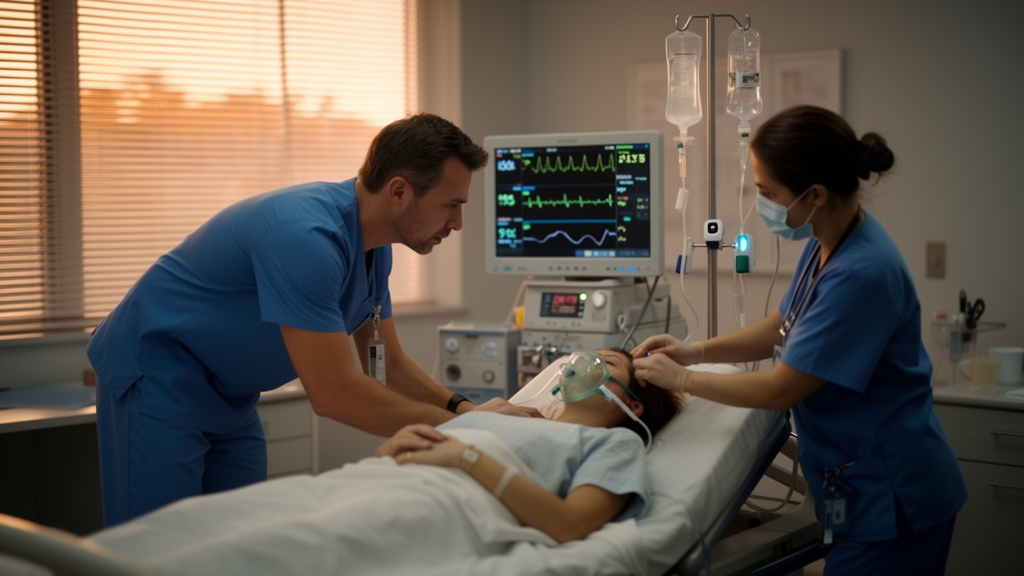
For most people, the anesthesiologist is the physician whose job ends the moment consciousness returns. A new perspective article published in Frontiers in Anesthesiology argues that this familiar image is now the specialty’s greatest liability. Written by Anne-Françoise Rousseau of the University Hospital of Liège and McGill University and Thomas Schricker of McGill University’s Department of Anesthesia, the grand challenge article contends that anesthesiology has become so successful at delivering patients safely through surgery that its defining mission must change. Survival, once the central ambition of the field, is now an expected outcome for the vast majority of surgical patients. The authors argue that the discipline’s future depends on influencing what happens after the operation: whether patients think clearly, walk independently, return to work, and resume lives that feel worth living.
To understand why this reframing matters, it helps to trace how anesthesiology arrived at its current crossroads. The specialty’s first transformation came in the 1930s and 1940s, when anesthesia matured into a recognized clinical discipline. By abolishing pain and consciousness as barriers to surgery, it made modern operative medicine possible. But the field quickly grew beyond the administration of hypnotic and analgesic drugs. Anesthesiologists became the guardians of metabolic and hemodynamic homeostasis during one of the most profound physiological stresses the human body can endure. Advances in pharmacology and monitoring technology steadily increased the precision and quality of that guardianship, converting what had been an improvised craft into a rigorous, quantitative practice built on ventilator management, fluid stewardship, and real-time physiological control.
The second transformation was driven by a cultural shift within the profession. Anesthesiologists recognized that excellence depended not only on individual skill, the practice of anesthesia as an art, but also on evidence-based knowledge, effective teamwork, communication, and the systematic study of error. Standardized monitoring, airway and crisis management algorithms, simulation-based education, human factors engineering, surgical checklists, international safety standards, and continuous quality improvement programs have together pushed anesthesia-related mortality in many healthcare systems to historically low levels. Artificial intelligence, predictive analytics, closed-loop drug delivery systems, and increasingly sophisticated monitoring promise further gains in intraoperative decision-making. Yet that very success creates the problem the article confronts: when safety is nearly solved, what justifies the specialty’s existence?
The authors’ answer rests on a stark epidemiological reality. Millions of patients each year still experience postoperative complications, prolonged disability, persistent pain, cognitive decline, psychological distress, delayed return to work, and loss of independence. A technically flawless anesthetic can be followed by a patient who never regains the function that surgery was supposed to preserve or restore. People do not undergo operations to survive them; they undergo surgery to live longer, preserve independence, remain cognitively intact, return to their families, resume work, or regain activities that give their lives meaning. The greatest challenge facing anesthesiology, the article argues, is therefore no longer how to guide a patient safely through an operation, but how to shape the weeks, months, and years that follow.
The demographic and clinical context makes this shift urgent. The surgical population is aging and increasingly frail, burdened by multiple chronic diseases, while operative techniques are growing more ambitious and complex. Healthcare systems face unprecedented pressure to deliver high-quality care with limited resources. Meeting these demands requires what the authors call a transition from a process-oriented technical specialty to comprehensive, outcome-oriented perioperative medicine. In this vision, anesthetic care no longer begins in the operating room and ends at the recovery room door. It starts weeks before surgery, with optimization of co-morbid conditions, nutrition, and frailty through shared multidisciplinary decision-making, and continues through individualized physiological management during the operation, then extends beyond discharge with pain management, rehabilitation, functional assessment, complication surveillance, and coordination with primary care and rehabilitation teams. Anesthesiology, in short, has evolved from facilitating an operation to managing a trajectory.
Measurement is a central thread of this argument. The authors emphasize that frailty scores, nutritional screening, functional tests, biomarkers, cognitive evaluations, and patient-reported outcomes only become valuable when they trigger meaningful interventions rather than sitting in charts as passive data. Equally, they challenge the traditional endpoints of perioperative research. Clinical studies have long relied on physiological variables, laboratory parameters, and relatively short-term complications, but these often fail to capture what patients themselves hope to gain. Preserving cognitive function, maintaining independence, returning to work, avoiding chronic pain, recovering physical capacity, and achieving satisfactory quality of life are frequently more meaningful outcomes than conventional clinical measures. The research agenda the authors propose includes refining the evidence linking depth of anesthesia and electroencephalographic monitoring to postoperative cognitive outcomes, individualized hemodynamic management to cardiac and neurological outcomes, perioperative glycemic control to infectious complications, and nutritional interventions to functional recovery and metabolic resilience.
Beneath the clinical questions lies a deeper scientific one: what is recovery, biologically speaking? Despite decades of progress in perioperative medicine, the mechanisms that determine why some patients rapidly regain function while others do not remain incompletely understood. The article describes recovery as a complex, dynamic physiological process involving inflammation, metabolic alteration, resilience, psychological adaptation, and social reintegration. Better characterization of these mechanisms, the authors argue, would open the door to interventions that actively promote recovery rather than merely responding to complications after they appear. They also call for an end to the search for universal perioperative strategies. Future research, they contend, should identify which intervention works best for which patient, under which circumstances, and at which stage of the perioperative journey, an approach that mirrors the precision-medicine revolution already reshaping oncology and cardiology.
Technology and teamwork emerge as accelerants of this third transformation. Artificial intelligence may support risk prediction and real-time decision-making, while wearable devices and digital platforms could enable continuous monitoring beyond hospital walls. Predictive analytics may identify patients who would benefit most from prehabilitation, nutritional intervention, or enhanced postoperative surveillance. But the authors are equally clear that perioperative care has grown too complex for any single discipline. Surgeons, intensivists, nurses, physiotherapists, nutrition specialists, psychologists, geriatricians, primary care physicians, engineers, and data scientists all contribute complementary expertise. Within that constellation, anesthesiologists occupy a unique leadership position: their training in physiology, pharmacology, pain management, critical care, and risk assessment naturally equips them to coordinate multidisciplinary perioperative pathways and ensure continuity across the surgical journey.
Perhaps the most sobering observation in the article concerns evidence that already exists. The greatest challenge, the authors suggest, may not be discovering new interventions at all, but ensuring that proven ones consistently reach patients. Enhanced Recovery After Surgery pathways, standardized bundles of evidence-based perioperative care, have repeatedly demonstrated that coordinated management can substantially improve recovery. Meta-analytic evidence links ERAS guideline adherence to shorter hospital stays, fewer complications, and reduced readmissions, yet implementation remains highly variable across institutions and healthcare systems. Closing this evidence-to-practice gap, the authors argue, should itself become a research priority, treated with the same methodological seriousness as drug trials or device studies. They also make a case for publishing well-conducted negative studies, which refine understanding, prevent unnecessary interventions, and redirect research efforts toward more promising strategies.
The article doubles as a mission statement for Frontiers in Anesthesiology, which the editors hope will serve as a multidisciplinary forum spanning basic and translational science, clinical trials, implementation research, quality improvement, digital health innovation, health systems research, precision perioperative medicine, artificial intelligence, and strategies for empowering patients and their relatives to enhance recovery. For clinicians and patients alike, the message is deceptively simple: putting patients to sleep safely was only ever the first act. The third act of anesthesiology will be judged not by how smoothly an operation goes, but by whether a person walks out of the hospital with their mind, independence, and life intact. As the authors conclude, the specialty should aspire to research that not only explains perioperative physiology but changes clinical practice, informs health policy, and improves the outcomes that matter most to patients.
Subject of Research: Redefining anesthesiology as an outcome-oriented perioperative medicine specialty focused on postoperative recovery
Article Title: Field grand challenge: beyond putting patients asleep: redefining the mission of anesthesiology
Article References: Rousseau, A.-F., & Schricker, T. (2026). Field grand challenge: beyond putting patients asleep: redefining the mission of anesthesiology. Frontiers in Anesthesiology, 5, Article 1967244. https://doi.org/10.3389/fanes.2026.1967244
Image Credits: AI Generated
DOI: 10.3389/fanes.2026.1967244
Keywords: anesthesiology, perioperative medicine, postoperative outcomes, patient safety, ERAS pathways, enhanced recovery, artificial intelligence, cognitive decline, frailty, patient-reported outcomes, prehabilitation, evidence-to-practice gap
Cite Scienmag News
Beatrice Stafford. (October 15, 2026). Beyond Sleep: Anesthesiology’s Third Transformation Toward Recovery That Patients Can Feel. Scienmag. https://scienmag.com/beyond-sleep-anesthesiologys-third-transformation-toward-recovery-that-patients-can-feel/
Beatrice Stafford. "Beyond Sleep: Anesthesiology’s Third Transformation Toward Recovery That Patients Can Feel." Scienmag, 15 October 2026, https://scienmag.com/beyond-sleep-anesthesiologys-third-transformation-toward-recovery-that-patients-can-feel/. Accessed 15 October 2026.
Beatrice Stafford. "Beyond Sleep: Anesthesiology’s Third Transformation Toward Recovery That Patients Can Feel." Scienmag. October 15, 2026. https://scienmag.com/beyond-sleep-anesthesiologys-third-transformation-toward-recovery-that-patients-can-feel/


