


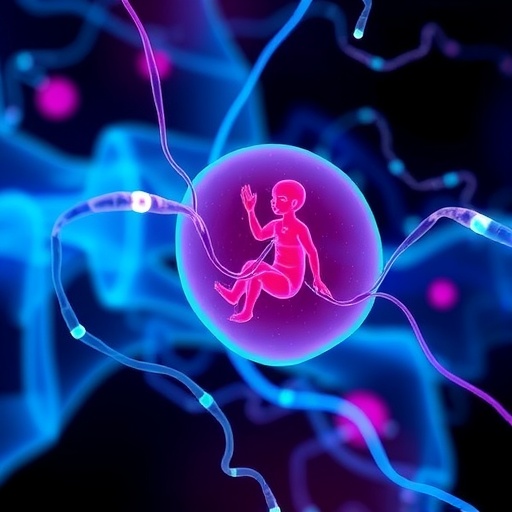
In the intricate ballet of human reproduction, the early stages of pregnancy demand an extraordinary coordination between the developing embryo and the maternal environment. This carefully timed dialogue is paramount for successful implantation, the process by which the embryo embeds itself into the uterine lining. Achieving this synchronization is no trivial feat: it requires the embryo to mature to a receptive stage while the uterus simultaneously enters a transient receptive phase known as the “window of implantation.” Failure in this coordination often culminates in infertility, early pregnancy loss, or unsuccessful outcomes in assisted reproductive technologies such as in vitro fertilization (IVF).
Recent advances in reproductive biology have unveiled a pivotal role for metabolites—not merely as sources of cellular energy—but as dynamic signaling entities that orchestrate cellular functions during implantation. These small molecules, traditionally viewed through the lens of metabolism, have now emerged as critical communicators that regulate the complex interactions between embryonic and maternal tissues, ensuring that implantation proceeds efficiently.
Among the key metabolites implicated in this process, glucose stands out for its multifaceted roles. Beyond fueling cellular processes, glucose availability influences the differentiation of embryonic cells that contribute to placental formation. Simultaneously, glucose metabolism modulates the restructuring of the endometrium, rendering the uterine lining receptive to implantation. This metabolic signaling is crucial in coordinating embryonic readiness with uterine receptivity, laying the foundation for a successful pregnancy.
Equally intriguing is the role of lactate, a metabolic byproduct of glucose. Once dismissed as metabolic waste, lactate has gained recognition as an essential signaling molecule in the implantation milieu. It fosters a local microenvironment conducive to embryo invasion by modulating extracellular matrix remodeling and promoting immune tolerance—an imperative during the delicate phase when the maternal immune system must accept the semi-allogenic embryo. These functions position lactate as a key mediator that bridges metabolic activity with immune and structural adaptations of the uterine tissue.
Lipid-derived mediators also enter the scene as crucial actors. Molecules such as prostaglandins and lysophosphatidic acids participate in the regulation of both embryonic development and maternal vascular adaptation. These lipids influence angiogenesis within the uterus, facilitate decidualization (the transformation of stromal cells to support pregnancy), and precisely time the implantation process. Their role underscores the importance of lipid metabolism in reproductive success and highlights a sophisticated level of metabolic control in fetal-maternal cross-talk.
Beyond carbohydrates and lipids, amino acids contribute significantly to implantation through dual roles. Apart from supplying the building blocks for protein synthesis, amino acids activate intracellular signaling pathways within the embryo and uterine cells. These signals promote cellular differentiation, proliferation, and the establishment of a receptive uterine environment. This dual functionality underscores the complexity of metabolic regulation during early pregnancy.
Adding further complexity, several neurotransmitters—classically associated with neural communication—have emerged as potential modulators of implantation. Molecules such as serotonin, gamma-aminobutyric acid (GABA), and endocannabinoids, though primarily known for their roles in the nervous system, are increasingly recognized for influencing embryonic development and uterine receptivity. While their exact mechanisms remain to be fully elucidated, accumulating evidence suggests they participate in a multifaceted network of signals that fine-tunes the implantation process.
Technological advancements in metabolomics, single-cell analysis, and imaging have revolutionized how researchers study implantation. These tools enable the identification of unique metabolic signatures associated with successful embryo implantation and unveil metabolic discrepancies underlying implantation failures. By dissecting cellular metabolism at unprecedented resolution, these methodologies bring researchers closer to decoding the metabolic language controlling the earliest stages of human development.
This emerging perspective on metabolic signaling transforms our understanding of early pregnancy from a purely physiological event to a finely tuned biochemical orchestra. Metabolites operate not only as fuel but as messengers that synchronize the dynamic interactions between embryo and uterus. This reconceptualization opens new avenues for fertility diagnostics and therapies aimed at improving implantation outcomes.
The implications of these discoveries extend into clinical practice, where metabolic profiling might become an invaluable tool in assessing uterine receptivity and embryonic viability. Personalized infertility treatments could harness metabolic markers to tailor interventions, increasing the likelihood of successful pregnancies. Such approaches hold promise for overcoming implantation failures that currently pose significant challenges in reproductive medicine.
Furthermore, elucidating the roles of these metabolites deepens our understanding of immune modulation during implantation. The immune system’s delicate balance between tolerance and defense is critical in early pregnancy, and metabolites like lactate contribute to shaping this environment. This insight may pave the way for novel immunometabolic therapies that safeguard pregnancy establishment.
As research continues to unravel the multifactorial signaling networks driven by metabolites, future studies may reveal additional molecules that participate in implantation. The integration of systems biology approaches will be essential to comprehend how metabolic, immune, and hormonal signals converge to regulate this vital reproductive event.
In conclusion, the landscape of embryo implantation is being redefined through the lens of metabolic signaling. Metabolites are indispensable messengers that support embryo development, uterine preparedness, immune adaptations, and the intricate timing of implantation. Recognizing their multifaceted roles not only enriches fundamental biology but also heralds a new era in reproductive medicine focused on refining implantation success and addressing infertility.
Web References:
10.1097/RD9.0000000000000158
Keywords
Embryo implantation, Metabolites, Glucose metabolism, Lactate signaling, Lipid mediators, Amino acids, Neurotransmitters, Uterine receptivity, Immune modulation, Decidualization, Metabolomics, Reproductive biology
Cite Scienmag News
Bethany Barker. (June 23, 2026). Beyond Energy: How Metabolites Orchestrate Embryo Implantation. Scienmag. https://scienmag.com/beyond-energy-how-metabolites-orchestrate-embryo-implantation/
Bethany Barker. "Beyond Energy: How Metabolites Orchestrate Embryo Implantation." Scienmag, 23 June 2026, https://scienmag.com/beyond-energy-how-metabolites-orchestrate-embryo-implantation/. Accessed 3 September 2026.
Bethany Barker. "Beyond Energy: How Metabolites Orchestrate Embryo Implantation." Scienmag. June 23, 2026. https://scienmag.com/beyond-energy-how-metabolites-orchestrate-embryo-implantation/


