

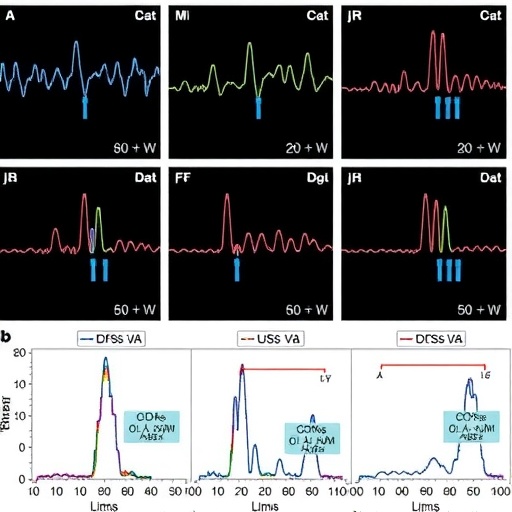
In the ever-evolving landscape of Parkinson’s disease research, novel insights into the neural mechanisms underpinning motor dysfunctions continue to emerge, illuminating new pathways for therapeutic intervention. A groundbreaking study led by Kondrataviciute, Kapadia, and Skelin, set to be published in the prestigious journal npj Parkinson’s Disease in 2026, offers a deep dive into the complex interplay between cortical and basal ganglia beta oscillations and their modulation through frequency-dependent deep brain stimulation (DBS) in an innovative A53T rat model of Parkinson’s disease. This work not only propels our understanding of the pathological beta rhythms characteristic of this neurodegenerative disorder but also refines the therapeutic efficacy of DBS, potentially revolutionizing treatment paradigms.
Parkinson’s disease, characterized primarily by motor symptoms such as bradykinesia, rigidity, and tremor, has long been linked to aberrant neural oscillatory activity, particularly within the beta frequency range (approximately 13–30 Hz). These beta oscillations, observed prominently in both cortical and basal ganglia circuits, have been hypothesized to contribute directly to the motor impairments seen in patients. The study in discussion delves into the neurophysiological dynamics and modulation of this pathological oscillatory activity, leveraging the genetic A53T rat model, which expresses a mutant form of α-synuclein implicated in familial Parkinson’s disease, thereby providing a robust platform to mimic the disease’s progression and symptomology.
Central to this research is the application of deep brain stimulation, a neuromodulatory technique that delivers electrical impulses to specific brain regions, thus altering dysfunctional neural activity patterns. While DBS has established efficacy in mitigating motor symptoms of Parkinson’s disease, the precise mechanisms by which different stimulation frequencies influence pathological beta oscillations remain insufficiently understood. Kondrataviciute and colleagues meticulously investigate how varying the DBS frequency modulates these oscillations within the cortical and basal ganglia networks, thereby revealing frequency-dependent effects critical for optimizing therapeutic strategies.
Employing sophisticated electrophysiological recording techniques, the researchers captured local field potentials from both the motor cortex and basal ganglia structures of the A53T rats during rest and stimulated conditions. The data revealed that elevated beta oscillations were significant markers of motor dysfunction, consistent with human clinical observations. Intriguingly, when DBS was administered at selected frequencies, a marked suppression of these aberrant beta rhythms was observed, accompanied by measurable improvements in motor function. These findings underscore the potential of frequency-tuned stimulation in restoring more physiological oscillatory patterns and improving clinical outcomes.
A particularly striking aspect of this investigation is the decoupling of cortical and basal ganglia beta oscillations in response to DBS frequency modulation. The study documents that low-frequency stimulation yielded differential effects within these regions, suggesting disparate susceptibility or circuit dynamics between cortical and subcortical nodes. This nuanced understanding challenges prevailing notions of uniform DBS effects and emphasizes the need for tailored stimulation protocols that consider the unique oscillatory characteristics and connectivity patterns of the targeted neural networks.
The study also probes the pathophysiological role of the A53T α-synuclein mutation in altering network oscillations and neuronal excitability. It appears that this genetic mutation exacerbates beta oscillatory synchronization, potentially through mechanisms involving synaptic plasticity, neurotransmitter release, and ion channel function. Through a combination of in vivo and ex vivo analyses, the authors elucidate the molecular underpinnings that may prime the motor circuits for pathological oscillations, providing new molecular targets for pharmacological adjuncts to DBS.
Notably, the temporal precision of stimulation emerged as a critical modulator of network activity. DBS pulses delivered at beta frequency ranges could paradoxically enhance pathological oscillations, thereby worsening motor symptoms, while higher-frequency stimulation (>100 Hz) was found to disrupt these rhythms effectively. This phenomenon captures the intricate balancing act between therapeutic intervention and disease pathology, highlighting the risk of suboptimal stimulation parameters in clinical settings.
Moreover, the research trajectories outlined here bridge the gap between preclinical models and clinical applicability. By validating findings in the A53T rat model, which recapitulates key aspects of human Parkinson’s disease pathology, the study lays a formidable foundation for translational research that aims to refine DBS protocols. This could manifest as individualized DBS settings tailored not only to patient symptom profiles but also to their specific neurophysiological oscillatory signatures.
Complementing electrophysiological insights, the authors employed computational modeling to simulate network responses to varying DBS frequencies. These models corroborated experimental data, reinforcing the notion that network resonance and synaptic connectivity modulate the impact of DBS on beta oscillations. Such integrative approaches advance precision neuromodulation, signifying a move toward data-driven optimization of neurostimulation therapies.
The implications of these findings extend beyond Parkinson’s disease, with potential relevance for other movement disorders characterized by pathological oscillations, such as dystonia and essential tremor. Understanding the mechanisms governing frequency-dependent network modulation opens avenues for broader applications of neuromodulation therapies and redefines the conceptual framework of brain rhythm-targeted interventions.
Furthermore, these discoveries carry significant weight in the context of emerging closed-loop DBS systems. Unlike conventional open-loop devices, closed-loop systems monitor neural activity in real-time and adjust stimulation parameters dynamically. The elucidation of cortical and basal ganglia beta oscillatory patterns sensitive to stimulation frequency paves the way for developing algorithms that precisely tune DBS output, potentially enhancing efficacy while reducing adverse effects.
This study also probes the longitudinal effects of DBS, noting that chronic stimulation at optimized frequencies may induce plastic changes in the neural circuits, potentially leading to durable symptom relief. Such neuroplasticity-related phenomena are essential considerations for future clinical trial designs and patient management strategies.
Importantly, the authors acknowledge technical limitations, including the inherent variability of animal models and the complexities of translating electrophysiological markers across species. However, by integrating multi-modal approaches and robust statistical analysis, the study stands as a landmark contribution to the field, fostering new hypotheses that are ripe for clinical validation.
In summary, Kondrataviciute and colleagues’ pioneering work advances our comprehension of Parkinson’s disease pathophysiology and therapeutic modulation through a sophisticated exploration of cortical and basal ganglia beta oscillations in the A53T rat model. Their findings elucidate the nuanced frequency-dependent effects of DBS, providing critical insights that may steer the next generation of neuromodulation therapies toward greater precision and efficacy. The study not only intensifies scientific discourse but also galvanizes hope for millions affected by this debilitating disorder, signaling a promising horizon in the quest to alleviate motor symptoms and improve quality of life.
As Parkinson’s disease continues to challenge clinicians and researchers alike, studies such as this underscore the importance of harnessing advanced neurophysiological tools and translational models. By intricately dissecting the neurocircuitry through which pathological beta oscillations arise and can be modulated, this research embodies the cutting edge of neuroscience — blending genetics, electrophysiology, and computational approaches to forge new therapeutic frontiers.
The potential for clinical impact is vast. Personalized DBS programming informed by patient-specific beta oscillatory profiles could not only optimize efficacy but also minimize side effects, leading to a paradigm shift in how movement disorders are managed. As the field moves toward this individualized neuroscience, integrating detailed mechanistic knowledge promises to transform Parkinson’s disease from a nuissance of aging into a manageable neurological condition with tailored interventions.
In reflection, this study exemplifies the synthesis of fundamental research and clinical ambition, illuminating pathways toward sophisticated, brain rhythm-focused therapies. As the scientific community embraces these insights, the future lies in enhanced neurostimulation technologies, refined disease models, and a deeper grasp of the oscillatory foundations of neurological disorders. Kondrataviciute and colleagues have thus set a new benchmark in Parkinson’s disease research and neuromodulation, heralding a transformative era in therapeutic neuroscience.
Subject of Research: Neural oscillations and deep brain stimulation effects in Parkinson’s disease, focusing on cortical and basal ganglia beta oscillations in the A53T rat model.
Article Title: Cortical and basal ganglia beta oscillations and frequency-dependent DBS effects in the A53T Parkinson’s disease rat model.
Article References:
Kondrataviciute, L., Kapadia, M., Skelin, I. et al. Cortical and basal ganglia beta oscillations and frequency-dependent DBS effects in the A53T Parkinson’s disease rat model. npj Parkinsons Dis. (2026). https://doi.org/10.1038/s41531-026-01304-z
Image Credits: AI Generated


