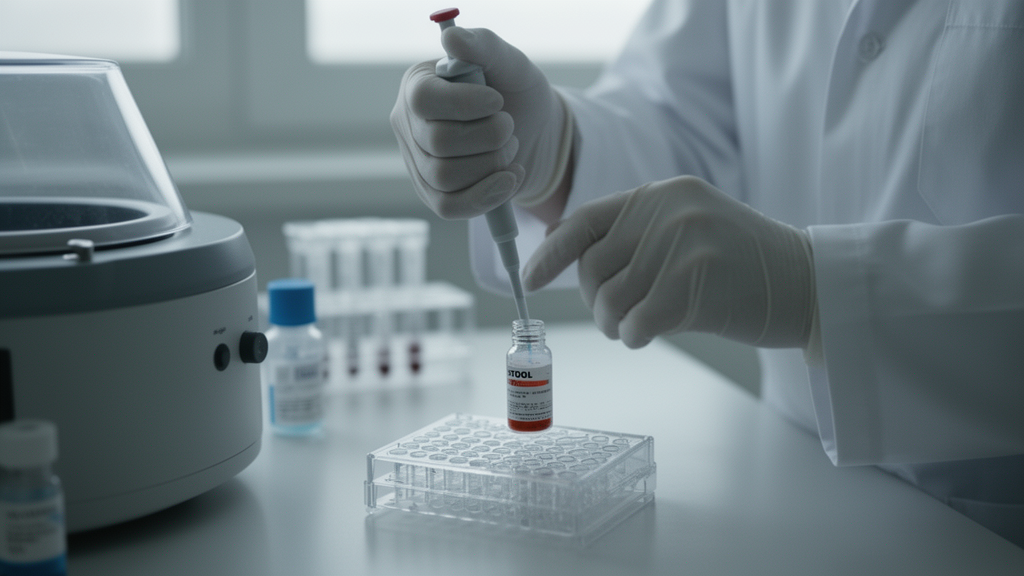
Cryptosporidium, a parasite that causes diarrhea and high mortality in young children in Africa and southern Asia, has long been difficult to study genetically because low oocyst counts in stool often prevent whole-genome sequencing from clinical samples. A new study published in Nature Communications describes a capture-based method that overcomes this barrier, enriching Cryptosporidium genomic DNA directly from stool samples.
The approach relies on a panel of 74,973 RNA baits, called CryptoCap_75K and spanning 8.2 megabases, which were derived from gene-rich areas covering the full coding capacity of the Cryptosporidium parvum genome. Using this bait set, the researchers produced genome-wide sequence data with sufficient depth and breadth of coverage from samples containing as few as 25 oocysts. The method also worked on divergent species, including Cryptosporidium ubiquitum, extending its usefulness beyond the most common clinical species.
To minimize reference bias, a common problem when sequencing reads are aligned to a single reference genome, the team used a dual-mapping strategy that integrates reads aligned to both C. parvum and C. ubiquitum. This allowed them to capture lineage-specific variation across the sampled parasites.
Phylogenetic networks, haplotype analyses, and admixture analyses identified three groups within C. ubiquitum. Groups A and B were found exclusively in humans, with group B showing evidence of admixture, whereas group C was zoonotic. Group-specific polymorphisms clustered within discrete genomic regions, suggesting that conserved haploblocks are associated with host adaptation.
The authors state that this capture-based genomics approach provides high-resolution insights into Cryptosporidium population genetics and lays the groundwork for studies of zoonotic transmission, anthroponosis, and genome-wide association studies performed directly from clinical material. Because the method works from small numbers of oocysts in stool, it could broaden genomic surveillance of this parasite in the regions where it burdens young children most.
Subject of Research: Capture-based whole-genome sequencing of Cryptosporidium directly from patient stool samples
Article Title: Phylogenomics of captured Cryptosporidium sequenced directly from patient samples identifies clade-specific genomic architecture and host-adapted lineages
Article References: Alves-Ferreira, E. V. C., Khan, A., Tettey, M. D., Ihara, F., Vogel, H., Botchie, S., Ayi, I., Pawlowic, M. C., Robinson, G., Chalmers, R. M., Lorenzi, H. A., & Grigg, M. E. (2026). Phylogenomics of captured Cryptosporidium sequenced directly from patient samples identifies clade-specific genomic architecture and host-adapted lineages. Nature Communications. https://doi.org/10.1038/s41467-026-78927-6
Image Credits: AI Generated
DOI: 10.1038/s41467-026-78927-6
Keywords: Cryptosporidium, phylogenomics, bait capture, whole-genome sequencing, host adaptation, zoonotic transmission, population genetics, stool samples, reference bias, C. ubiquitum, captured, sequenced
Cite Scienmag News
Juliet Wilcox. (October 29, 2026). Bait capture unlocks Cryptosporidium genomes directly from patient stool samples. Scienmag. https://scienmag.com/bait-capture-unlocks-cryptosporidium-genomes-directly-from-patient-stool-samples/
Juliet Wilcox. "Bait capture unlocks Cryptosporidium genomes directly from patient stool samples." Scienmag, 29 October 2026, https://scienmag.com/bait-capture-unlocks-cryptosporidium-genomes-directly-from-patient-stool-samples/. Accessed 29 October 2026.
Juliet Wilcox. "Bait capture unlocks Cryptosporidium genomes directly from patient stool samples." Scienmag. October 29, 2026. https://scienmag.com/bait-capture-unlocks-cryptosporidium-genomes-directly-from-patient-stool-samples/