


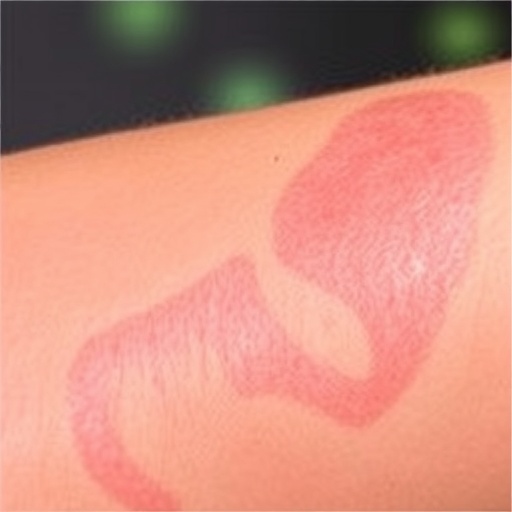
In a groundbreaking study published in Nature Communications, researchers have unveiled a novel molecular mechanism by which soluble bacterial lipopeptides modulate inflammatory responses in skin cells, offering promising implications for treatment strategies against atopic dermatitis. This discovery sheds light on the complex interplay between microbial components and host immune signaling pathways that govern skin inflammation and barrier function. The investigation, led by Williams, H., Muko, R., Wright, E., and colleagues, delves deep into the role of gasdermin D-mediated interleukin-33 (IL-33) release and its regulation by bacterial lipopeptides in keratinocytes, the predominant cell type in the epidermis.
Atopic dermatitis (AD) is a chronic inflammatory skin disorder characterized by intense itching, barrier dysfunction, and recurrent infections. Despite its prevalence, the molecular pathways contributing to its pathogenesis remain incompletely understood, limiting the development of targeted therapies. Central to the inflammatory cascade in AD is IL-33, a nuclear cytokine released by stressed or damaged keratinocytes. IL-33 acts as an ‘alarmin’ that alerts the immune system, promoting type 2 immune responses that exacerbate skin inflammation. However, the precise mechanisms regulating IL-33 secretion have remained elusive — until now.
The study focuses on gasdermin D, a pore-forming protein known for mediating a pro-inflammatory form of programmed cell death called pyroptosis. Upon activation by inflammatory caspases, gasdermin D forms pores in the plasma membrane, facilitating the release of cytokines like IL-33. Intriguingly, while pyroptosis has been mostly studied in immune cells, this work highlights gasdermin D activation within keratinocytes as a pivotal event in skin inflammation. The researchers demonstrate that gasdermin D-dependent IL-33 release is a critical driver of inflammatory signaling in AD models.
Crucially, Williams and colleagues identify a suppressive effect of soluble bacterial lipopeptides on gasdermin D-associated IL-33 secretion. These lipopeptides, derived from commensal or environmental bacteria, act as modulators of keratinocyte inflammatory responses. Using in vitro keratinocyte cultures, the team found that treatment with specific lipopeptides reduced the activation of gasdermin D and subsequent IL-33 release in response to inflammatory stimuli. This suggests a bacterial mechanism capable of dampening the overactive immune responses characteristic of atopic skin.
The molecular underpinnings of this suppression involve modulation at multiple signaling axes within the keratinocyte. Detailed biochemical analyses reveal that soluble lipopeptides interfere with upstream inflammasome activation, which is necessary for caspase-mediated gasdermin D cleavage. By tempering inflammasome activity, these bacterial molecules effectively prevent the membrane permeabilization that drives IL-33 exit from keratinocytes. This intricate crosstalk between microbial components and cell death pathways underscores a previously unrecognized layer of immune regulation in the skin.
Extending beyond cell culture, the study employed a murine model of atopic dermatitis to demonstrate therapeutic potential. Mice exposed to bacterial lipopeptides exhibited significantly reduced skin inflammation, epidermal thickening, and mast cell infiltration—hallmarks of AD pathology. Correspondingly, tissue measurements confirmed decreased levels of extracellular IL-33 and downstream type 2 cytokines, indicating effective suppression of the inflammatory cascade. These in vivo results provide compelling evidence that bacterial lipopeptides can attenuate AD symptoms by modulating keratinocyte gasdermin D signaling.
This research has far-reaching implications for understanding host-microbe interactions in skin immunity. The skin microbiota, previously implicated in AD, may harbor beneficial bacteria capable of secreting lipopeptides that maintain immune homeostasis. Perturbations in this microbial equilibrium, often seen in AD patients, could lead to unchecked gasdermin D activation and excessive IL-33 release, fueling chronic inflammation. Targeting this pathway via microbial or synthetic lipopeptides represents a novel therapeutic avenue with potential beyond atopic dermatitis.
From a clinical perspective, the identification of soluble bacterial lipopeptides as inhibitors of gasdermin D and IL-33 release opens new doors for treatment strategies. Current AD therapies predominantly focus on broad immunosuppression or symptom management, with variable efficacy and notable side effects. In contrast, harnessing natural microbial molecules or designing analogues may provide a more precise approach to restoring immune balance without compromising host defense. Moreover, topical formulations containing lipopeptides could offer a non-invasive, patient-friendly intervention.
The mechanistic insights documented in this study align with recent advances in inflammasome biology and pyroptosis, expanding their relevance to non-immune epithelial cells. By demonstrating gasdermin D’s functional role in keratinocytes, Williams et al. underscore the versatility of pyroptotic pathways in diverse tissues and disease contexts. The ability of bacterial lipopeptides to selectively modulate these pathways suggests a paradigm in which microbial products exert immunoregulatory effects through direct interaction with host cell death machinery.
Importantly, the researchers also explored the structural features of lipopeptides responsible for their bioactivity. Detailed structure-function analyses identified specific lipid motifs critical for binding and signaling modulation. This knowledge facilitates the development of optimized synthetic lipopeptides with enhanced stability and potency for therapeutic use. Future studies are poised to leverage these findings for drug discovery and precision medicine applications, potentially revolutionizing the management of chronic inflammatory skin diseases.
At a broader level, this study emphasizes the intricate symbiosis between humans and their microbiome. The discovery that microbial molecules can subtly influence host cell fate decisions and cytokine release emphasizes the dynamic molecular dialogue shaping immune homeostasis. Such insights pave the way for microbiome-informed intervention strategies in multiple inflammatory disorders, highlighting the potential of microbial therapeutics as a frontier in medicine.
Despite the exciting findings, the authors acknowledge several challenges and unanswered questions. The precise microbial species producing effective lipopeptides in healthy skin remain to be identified, as does the full spectrum of host signaling pathways affected. Additionally, long-term safety and efficacy of lipopeptide-based interventions require rigorous evaluation in clinical settings. Nonetheless, this study lays a strong foundation for future translational research.
In conclusion, the elucidation of soluble bacterial lipopeptides as suppressors of gasdermin D-dependent IL-33 release marks a landmark advance in dermatological immunology. By bridging microbiology, cell death biology, and inflammation, this work offers a novel framework for understanding and treating atopic dermatitis. As interest grows in microbiome-centered therapies, these findings could catalyze a new era of targeted, mechanism-based interventions for chronic skin inflammation and beyond, reshaping clinical paradigms and improving patient outcomes.
Cite Scienmag News
Morgan Morrow. (May 13, 2026). Bacterial Lipopeptides Block IL-33 Release, Easing Dermatitis. Scienmag. https://scienmag.com/bacterial-lipopeptides-block-il-33-release-easing-dermatitis/
Morgan Morrow. "Bacterial Lipopeptides Block IL-33 Release, Easing Dermatitis." Scienmag, 13 May 2026, https://scienmag.com/bacterial-lipopeptides-block-il-33-release-easing-dermatitis/. Accessed 5 September 2026.
Morgan Morrow. "Bacterial Lipopeptides Block IL-33 Release, Easing Dermatitis." Scienmag. May 13, 2026. https://scienmag.com/bacterial-lipopeptides-block-il-33-release-easing-dermatitis/


