
Friday, October 30, 2026
Science
No Result
View All Result
  • Login
  • HOME
  • SCIENCE NEWS
  • CONTACT US
  • HOME
  • SCIENCE NEWS
  • CONTACT US
No Result
View All Result
Scienmag
No Result
View All Result
Home Science News Psychology & Psychiatry

Autistic behaviours in eating disorder care need interpretation by function, commentary argues

October 29, 2026
in Medicine, Psychology & Psychiatry
Glenn Wilkins
By Glenn Wilkins Scienmag Editorial Profile - Clinical Psychology
Reading Time: 2 mins read
0
Autistic behaviours in eating disorder care need interpretation by function, commentary argues

Autistic behaviours in eating disorder care need interpretation by function, commentary argues

65
SHARES
587
VIEWS
Share on FacebookShare on Twitter
ADVERTISEMENT

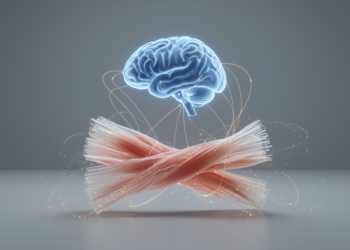
A commentary published in the Journal of Eating Disorders argues that autistic behaviours seen in eating disorder care should be interpreted through their context and function rather than their outward appearance. The piece, authored by Laurence Cobbaert and published on 28 October 2026 as a Matters Arising contribution, responds to a review by Passarini and colleagues on restricted and repetitive behaviours in autism and eating disorders, which proposed possible roles for such behaviours in the onset and persistence of an eating disorder.

The commentary raises several concerns about how the reviewed findings are interpreted. It argues that describing autistic routines as “rigid” without establishing their function may conflate behaviours that sustain dietary restriction with those that actually make eating possible. According to the author, this distinction matters clinically, because the same visible behaviour could support very different assessments depending on what it does for the individual person.

The commentary also points to research on stimming and masking, which it says complicates inferences drawn from changes in visible behaviour. If outward presentation can be masked or modified, observers may misread what is happening internally, and apparent changes in behaviour may not straightforwardly reflect changes in underlying states or symptoms.

A further point concerns causal reasoning. The commentary notes that predominantly cross-sectional findings cannot determine whether such behaviours predispose people to eating disorders or maintain them once established. It acknowledges that the original review recognises this limitation and calls for longitudinal research to address the question.

On clinical practice, the commentary questions the review’s recommendation to assess autism only after the acute eating disorder phase, arguing that this risks delaying recognition of support needs and appropriate accommodations. The author draws on research in eating disorder care illustrating the potential consequences of unmet needs, including situations where concerns about treatment may be dismissed rather than investigated.

Overall, the commentary argues for interpretations grounded in behavioural function and context, cautious causal reasoning, attention to treatment-related harm, and meaningful involvement of autistic people and people with lived experience of eating disorders in developing clinical recommendations. As a Matters Arising commentary, the piece presents the author’s argument about the interpretation of the reviewed evidence rather than new empirical data, and its conclusions rest on the existing literature it discusses.

Subject of Research: A commentary on interpreting autistic behaviours in eating disorder care through context, function and lived experience

Article Title: Beyond appearances: understanding autistic behaviours through context, function and lived experience in eating disorder care

Article References: Cobbaert, L. (2026). Beyond appearances: understanding autistic behaviours through context, function and lived experience in eating disorder care. Journal of Eating Disorders, 14(1), Article 253. https://doi.org/10.1186/s40337-026-01810-8

Image Credits: AI Generated

DOI: 10.1186/s40337-026-01810-8

Keywords: autism, eating disorders, restricted and repetitive behaviours, stimming, masking, cross-sectional studies, longitudinal research, clinical assessment, accommodations, lived experience, Matters Arising, Journal of Eating Disorders

Cite Scienmag News

Glenn Wilkins. (October 29, 2026). Autistic behaviours in eating disorder care need interpretation by function, commentary argues. Scienmag. https://scienmag.com/autistic-behaviours-in-eating-disorder-care-need-interpretation-by-function-commentary-argues/


Glenn Wilkins. "Autistic behaviours in eating disorder care need interpretation by function, commentary argues." Scienmag, 29 October 2026, https://scienmag.com/autistic-behaviours-in-eating-disorder-care-need-interpretation-by-function-commentary-argues/. Accessed 30 October 2026.

Glenn Wilkins. "Autistic behaviours in eating disorder care need interpretation by function, commentary argues." Scienmag. October 29, 2026. https://scienmag.com/autistic-behaviours-in-eating-disorder-care-need-interpretation-by-function-commentary-argues/
Tags: accommodationsautismAutistic behaviors in eating disorder carechallenges in observing masking and stimmingclinical assessmentclinical assessment of autistic routinescomplexities of behavior observation in mental healthcross-sectional studiesdifferentiation between rigid routines and supportive behaviorseating disordersimpact of behavior interpretation on clinical outcomesimplications for treatment strategiesimportance of behavior function in diagnosisinterpreting autistic behaviors by functionJournal of Eating Disorderslived experiencelongitudinal researchmaskingmatters arisingresearch on behavior function in autismrestricted and repetitive behavioursrole of restricted and repetitive behaviors in eating disordersstimmingunderstanding behavior context in autism and eating disorders
Share26Tweet16
Previous Post

Plastic Pollution Found Across Every Water Sample in Brazil’s São Francisco Estuary

Next Post

More Home Care Hours Linked to Lower Nursing Home Risk Only for Mildly Dependent Older Adults

Related Posts

Integrated job support program keeps people with schizophrenia employed longer, three-year trial finds
Psychology & Psychiatry

Integrated job support program keeps people with schizophrenia employed longer, three-year trial finds

October 30, 2026
Imaging Replaces Biopsy in U.S. Cardiac Amyloidosis Diagnosis
Medicine

Imaging Replaces Biopsy in U.S. Cardiac Amyloidosis Diagnosis

October 30, 2026
Stroke sarcopenia risk models show promise but lack validation
Medicine

Stroke sarcopenia risk models show promise but lack validation

October 30, 2026
HIV and STI testing coverage stays low in Hong Kong as age and sex shape preferences
Medicine

HIV and STI testing coverage stays low in Hong Kong as age and sex shape preferences

October 30, 2026
Contrast-Enhanced Ultrasound Sharpens Diagnosis of Ovarian Tumors That Leave Experts Unsure
Medicine

Contrast-Enhanced Ultrasound Sharpens Diagnosis of Ovarian Tumors That Leave Experts Unsure

October 30, 2026
Echocardiographic markers distinguish combined from isolated postcapillary pulmonary hypertension in systemic sclerosis
Medicine

Echocardiographic markers distinguish combined from isolated postcapillary pulmonary hypertension in systemic sclerosis

October 30, 2026
Next Post
More Home Care Hours Linked to Lower Nursing Home Risk Only for Mildly Dependent Older Adults

More Home Care Hours Linked to Lower Nursing Home Risk Only for Mildly Dependent Older Adults

  • Mothers who receive childcare support from maternal grandparents show more optimized

    Mothers who receive childcare support from maternal grandparents show more parental warmth, finds NTU Singapore study

    27656 shares
    Share 11059 Tweet 6912
  • University of Seville Breaks 120-Year-Old Mystery, Revises a Key Einstein Concept

    1061 shares
    Share 424 Tweet 265
  • Bee body mass, pathogens and local climate influence heat tolerance

    682 shares
    Share 273 Tweet 171
  • Researchers record first-ever images and data of a shark experiencing a boat strike

    546 shares
    Share 218 Tweet 137
  • Groundbreaking Clinical Trial Reveals Lubiprostone Enhances Kidney Function

    531 shares
    Share 212 Tweet 133
Science

Embark on a thrilling journey of discovery with Scienmag.com—your ultimate source for cutting-edge breakthroughs. Immerse yourself in a world where curiosity knows no limits and tomorrow’s possibilities become today’s reality!

RECENT NEWS

  • Cancer Cells Steal Mitochondria From Immune Cells to Survive and Evade Therapy
  • Gut bacterium Blautia sp. MRG-PMF1 cleaves bulkier isoflavone ether bonds
  • Integrated job support program keeps people with schizophrenia employed longer, three-year trial finds
  • Mangrove restoration creates jobs, but hybrid finance decides whether they last

Categories

  • Agriculture
  • Anthropology
  • Archaeology
  • Athmospheric
  • Biology
  • Biotechnology
  • Blog
  • Bussines
  • Cancer
  • Chemistry
  • Climate
  • Earth Science
  • Editorial Policy
  • Marine
  • Mathematics
  • Medicine
  • Pediatry
  • Policy
  • Psychology & Psychiatry
  • Science Education
  • Science News
  • Social Science
  • Space
  • Technology and Engineering

Subscribe to Blog via Email

Enter your email address to subscribe to this blog and receive notifications of new posts by email.

Join 5,151 other subscribers

© 2025 Scienmag - Science Magazine

Welcome Back!

Login to your account below

Forgotten Password?

Retrieve your password

Please enter your username or email address to reset your password.

Log In
No Result
View All Result
  • HOME
  • SCIENCE NEWS
  • CONTACT US

© 2025 Scienmag - Science Magazine

Discover more from Science

Subscribe now to keep reading and get access to the full archive.

Continue reading