


Computational method predicts thousands of new exfoliable 2D materials from ordinary crystals
A new computational method from HZDR and TU Dresden predicts separable atomic layers in any crystal, identifying 2,531 promising two-dimensional...

A new computational method from HZDR and TU Dresden predicts separable atomic layers in any crystal, identifying 2,531 promising two-dimensional...
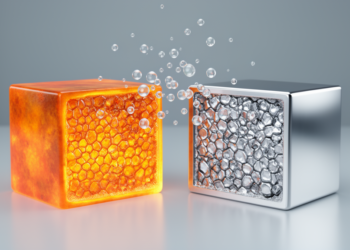
Researchers showed that rearranging the phases of a dual-phase high-entropy alloy, without changing its composition, alters its high-temperature oxidation rate...

A failure analysis traced a fire extinguisher's catastrophic shell-bottom separation to under-coating corrosion that thinned the wall to roughly 0.05...
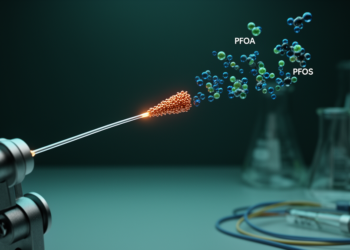
A trimesic acid-functionalized copper oxide nanoparticle coating enabled a fiber-optic surface plasmon resonance sensor to detect PFOA and PFOS with...
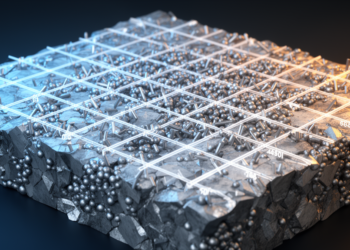
A Journal of Materials Science review organizes multiscale computational modelling evidence to show which precipitate parameters control the cutting-to-bypass transition...

Researchers at the Technion and in Germany report in Nature Physics the first direct optical control of electrons in a...
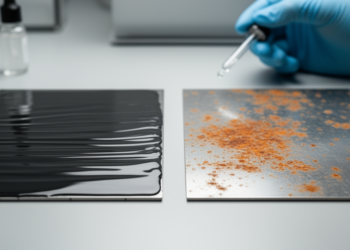
Corrosion quietly devours the world's steel infrastructure, and the coatings long used to stop it carry a dark legacy. Hexavalent...

Researchers at the University of Arkansas and the University of Michigan report a graphene-based energy harvester that converts ambient 60...

An experimental graphene optical system uses red, green and blue light challenges, transformer-assisted image analysis and binary codes to create...

A computationally optimized graphene-oxide optical sensor modeled resonance shifts associated with mercury, lead and zinc, but the device has not...


Embark on a thrilling journey of discovery with Scienmag.com—your ultimate source for cutting-edge breakthroughs. Immerse yourself in a world where curiosity knows no limits and tomorrow’s possibilities become today’s reality!