

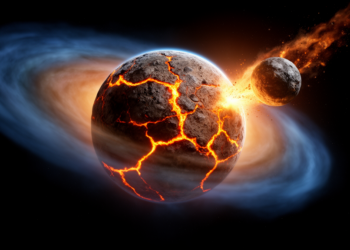
Giant impacts may help rocky planets keep their primordial atmospheres
New modelling suggests giant impacts increase a planet's gravitational binding energy more than its mantle heat, favouring retention of primordial...

New modelling suggests giant impacts increase a planet's gravitational binding energy more than its mantle heat, favouring retention of primordial...

The new open-access sister journal of the Chinese Journal of Aeronautics is recruiting Editorial Board Members and Young Editorial Board...
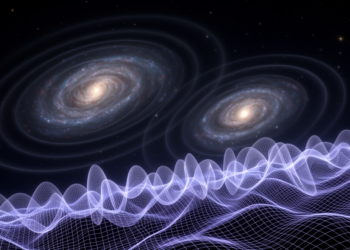
Gravitational waves have become one of the most powerful independent probes of gravity beyond General Relativity, and a new theoretical...
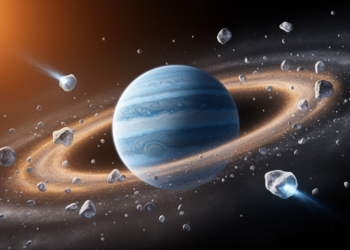
New modeling and ALMA observations of carbon monoxide indicate that Neptune's deep atmosphere is richer in oxygen than Uranus's, suggesting...
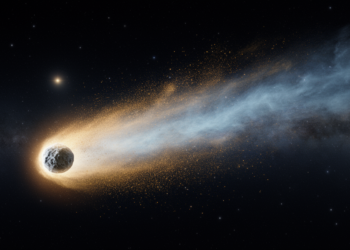
JWST observations of interstellar comet 3I/ATLAS reveal micron-sized, dust-rich water ice grains whose spectra resemble icy bodies beyond Neptune, suggesting...
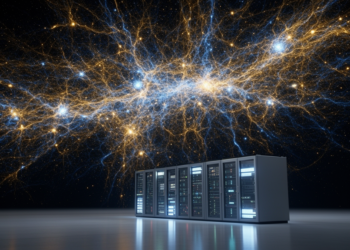
Researchers at the Center for Astrophysics | Harvard & Smithsonian have created Lumina, the largest cosmological radiation-hydrodynamics simulation ever built,...
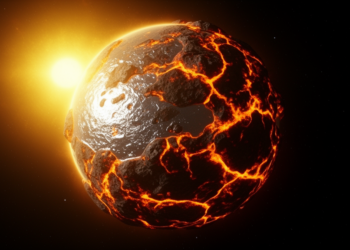
James Webb Space Telescope phase-curve observations show the lava planet TOI-561 b reflects about three-quarters of its starlight, suggesting a...
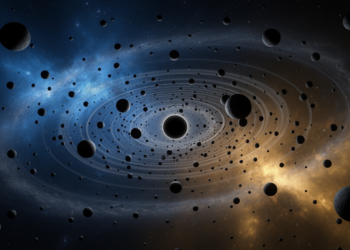
A quantitative comparison of 12 dark-matter models found that primordial black holes can be as natural as some particle candidates,...
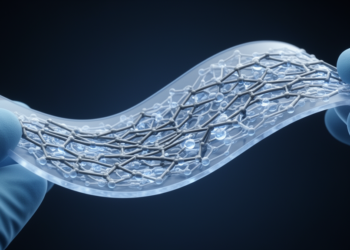
A COF-anchored carbon nanotube reinforced polyimide film with a density of 0.73 g cm−3 supports flexible GaAs solar cells reaching...
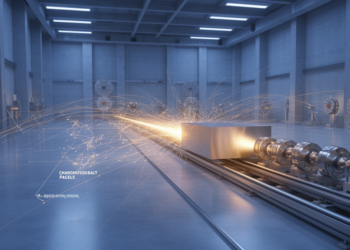
The SHiP Collaboration measured J/psi production from 400 GeV protons in a thick molybdenum-tungsten target and found a charmonium rate...


Embark on a thrilling journey of discovery with Scienmag.com—your ultimate source for cutting-edge breakthroughs. Immerse yourself in a world where curiosity knows no limits and tomorrow’s possibilities become today’s reality!