

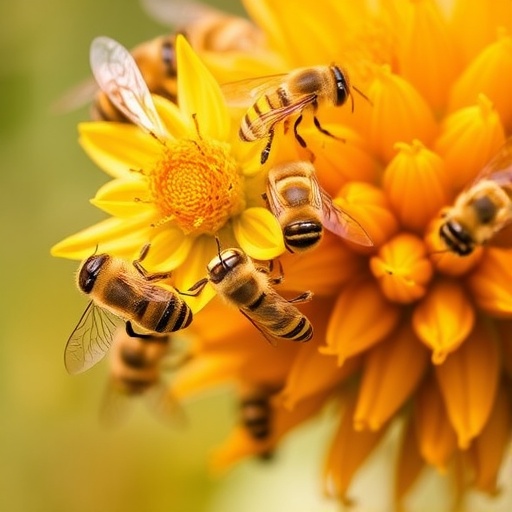
In an era where the conversation surrounding sustainable agriculture and food security has never been more critical, the plight of honeybees takes center stage. A recent study by Sattler, Barron, and Colin, published in the journal Ambio, sheds light on the complex attitudes of Australian beekeepers toward managing one of the most devastating pests to the bee population: Varroa destructor. This microscopic mite poses serious threats not only to honeybees but also to the entire ecosystem, making the insights from this study vital for both environmentalists and policymakers alike.
The Varroa destructor mite, an external parasitic arachnid, is notorious for infesting honeybee colonies. Its introduction to Australia is relatively recent compared to other countries, resulting in a relatively unprepared bee population. The study reveals that beekeepers in Australia are grappling with a dual challenge: the immediate devastation wrought by Varroa destructor and the longer-term implications of its management strategies. The researchers conducted surveys and interviews, providing a window into the mindset of those who tend to these vital pollinators.
The findings of this research indicate a dichotomy between traditional beekeeping practices and the emerging necessity to adopt more scientific, evidence-based approaches to pest management. Many Australian beekeepers have relied on organic practices and minimal intervention, believing that these methods preserve the integrity of their bees and the honey they produce. However, the data suggests that as the Varroa destructor populations escalate, many beekeepers are starting to reconsider their stances. The study captures a transitional mindset—one that reflects both cultural values attached to traditional beekeeping and the pressing need for adaptive management.
Interestingly, the survey revealed that a considerable portion of beekeepers expressed skepticism towards chemical treatments, fearing potential harm to not just their bees but also the environment. This hesitation may stem from a broader concern about chemical residues in honey and the potential for these practices to undermine the organic branding that many Australian honey producers rely on. Despite this, some beekeepers reported a willingness to explore integrated pest management approaches, recognizing that their options may be limited if Varroa destructor continues its relentless advance.
Notably, the management strategies highlighted in the study are not uniform across the board. Beekeepers located in urban areas often exhibit different attitudes towards chemical treatments compared to their rural counterparts. Urban beekeepers tend to be more open to the idea of using synthetic pesticides, primarily due to the higher commercial pressures they face in densely populated areas with significant competition. In contrast, rural beekeepers tend to emphasize community values and local ecosystems, which steers their reluctance toward chemical use.
Another significant finding from the study relates to the levels of support and information beekeepers feel they have access to. Many have expressed a desire for more educational resources concerning Varroa destructor and its management. The research noted that beekeepers who actively participated in community workshops and training were better equipped to make informed choices regarding pest management. This highlights the critical role of education and shared knowledge in empowering beekeepers to tackle the impending threat of Varroa destructor more effectively.
Various stakeholders, including governmental agencies and environmental organizations, are beginning to recognize the importance of supporting Australian beekeepers through education and research initiatives. The study advocates for a collaborative approach where academic insights are merged with practical experience. This can lead to new methods that can both safeguard the bee populations and support the livelihoods of those who depend on them.
The emotional aspect of beekeeping cannot be overlooked. Many beekeepers view their colonies as extensions of themselves, often forming deep emotional bonds with their bees. The emotional toll of pest invasion often manifests as stress, anxiety, and even despair. The study emphasizes the need for mental health support for beekeepers, who may feel overwhelmed by the constant battle against Varroa destructor. Addressing these emotional challenges alongside practical management strategies can create a more holistic approach to beekeeping that promotes resilience.
Furthermore, the effects of climate change compound the challenges presented by Varroa destructor. Fluctuating temperatures and unpredictable weather patterns can stress bee colonies, making them more vulnerable to pests. This intertwining of different environmental pressures calls for a comprehensive understanding of how ecology, agriculture, and beekeeping intersect. As the research suggests, beekeepers need to think beyond immediate pest management to consider broader ecological impacts.
As Australian beekeepers confront these layered challenges, the continued growth of public interest in sustainable practices and local food systems offers a glimmer of hope. Consumers are increasingly willing to support ethically sourced products, which may encourage beekeepers to adapt their practices responsibly. The study points to a potential pathway for revitalizing honey bee populations through community engagement, fostering a greater appreciation for pollinators and the critical role they play in our ecosystems.
The researchers conclude that the fight against Varroa destructor is not just a local issue but a global one that requires cooperation. Governments, non-profits, researchers, and beekeepers must unite in their efforts, sharing knowledge, resources, and strategies to combat this invasive threat. Only through collaboration and innovation can we hope to find sustainable solutions that ensure the future of beekeeping and the important ecological services that bees provide.
As the situation evolves, the lessons conveyed by Sattler, Barron, and Colin resonate with urgency and clarity. For beekeepers in Australia, the path forward will demand both introspection and adaptation. Each choice, from the treatment utilized to the community standards upheld, will shape the future landscape of honeybee health. In understanding the attitudes reflected in their work, we can foster a more supportive environment that propels beekeeping into a resilient future, ultimately safeguarding not just honeybees but the intricate web of life they sustain.
Subject of Research: Beekeeper attitudes towards the management of Varroa destructor in Australia
Article Title: Beekeeper attitudes towards the management of Varroa destructor in Australia
Article References:
Sattler, C., Barron, A.B. & Colin, T. Beekeeper attitudes towards the management of Varroa destructor in Australia.
Ambio (2025). https://doi.org/10.1007/s13280-025-02307-5
Image Credits: AI Generated
DOI:
Keywords: Beekeeping, Varroa destructor, pest management, sustainability, Australia, honeybees, environmental impact, community education.


