


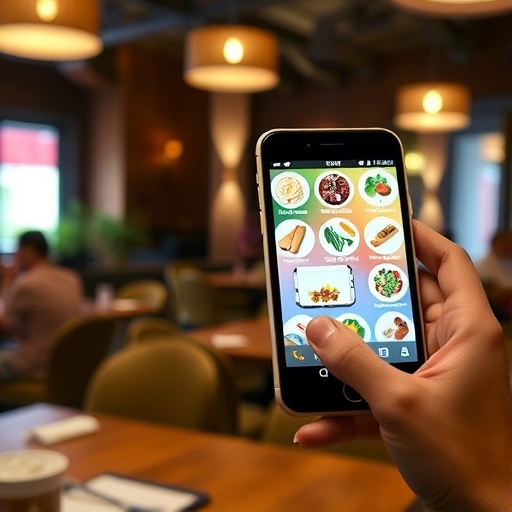
In the rapidly evolving landscape of restaurant marketing and customer engagement, augmented reality (AR) technology is emerging as a transformative force. A groundbreaking study from Washington State University sheds new light on how AR can revolutionize the way restaurants communicate farm-to-table information, profoundly influencing diner behavior and perceptions. Published in the International Journal of Hospitality Management, this research reveals that AR-driven menus not only boost customers’ interest in visiting restaurants but also amplify positive word-of-mouth, surpassing the effects of traditional printed or QR-code menus.
At the heart of this study lies the question of transparency—a topic increasingly important to modern consumers. Led by Soobin Seo, professor of hospitality business management at WSU’s Carson College of Business, the research team explored whether immersive AR experiences could enhance the presentation of ingredient sourcing and food production details. Seo emphasized that it’s not enough to simply provide information; the mode of delivery plays a crucial role in engaging consumers and fostering trust. AR’s dynamic and interactive nature offers a more vivid storytelling platform, compelling diners to delve deeper into the origins of their meals.
The study’s methodology embraced realism through two experimental designs mirroring genuine dining scenarios. In the initial experiment, participants were exposed to one of three menu types at a simulated local restaurant environment: conventional printed menus, QR-code linked digital menus, and innovative AR menus. The AR format, accessed via smartphones, presented three-dimensional representations of menu items, with interactive hotspots revealing detailed sourcing data on individual ingredients. This hands-on engagement led to a statistically significant increase in diners’ intention to visit the restaurant and discussed the experience with others, highlighting a powerful behavioral shift induced by AR.
Participants also reported heightened cognitive absorption—a psychological state of deep involvement and immersion—when interacting with AR menus. This cognitive engagement fostered enhanced learning gains about the provenance of their food, demonstrating that AR isn’t merely a novelty but a tool that facilitates meaningful educational experiences. Seo noted that this blend of absorption and informational value creates a potent combination, strengthening both consumer knowledge and emotional connection with the restaurant brand.
In a second phase, the research extended its inquiry to chain restaurants, analyzing how AR might reshape brand perceptions where the reputation for healthfulness varies greatly. The study compared two industry giants—Panera Bread, known for its healthier image, and McDonald’s, which typically faces skepticism over its nutritional offerings. Remarkably, AR menus led to increased positive health perceptions and visit intentions for both brands, but the effect was most pronounced for McDonald’s. This suggests that when baseline expectations are low, transparent and interactive AR content can dramatically shift consumer attitudes.
Seo explained this phenomenon through the lens of expectation management: Brands with less favorable images have more to gain by leveraging AR to disclose ingredient sourcing and production practices authentically. The interactive nature of AR disrupts preconceived notions, helping these brands mitigate negative perceptions and build credibility. However, the research also cautions that the success of such technology pivots on strategic alignment with the restaurant’s overarching brand identity. Without this congruence, the technology may feel disjointed or superficial, dampening its influence.
Although AR menus remain a niche innovation within the broader restaurant industry, the technological barriers are rapidly diminishing. Seo envisions a future where even independently owned establishments harness AR’s potential through affordable, user-friendly digital tools. The goal transcends gimmickry, aiming instead to provide meaningful customer experiences that marry interactivity with responsibility. This democratization of AR technology promises wider adoption and experimentation, catalyzing new standards for transparency and engagement in dining.
The implications of AR adoption extend well beyond marketing advantages. The researchers posit that by promoting transparency, AR menus could incentivize restaurants to deepen relationships with local producers and commit to more sustainable sourcing practices. This alignment with consumer demand for authenticity and sustainability creates a triple win dynamic—benefiting restaurants, customers, and communities alike. Such integration of technology and sustainability redefines the modern dining experience, making it both informative and conscientious.
Delving into the cognitive mechanics underpinning these outcomes, the study highlights AR’s capacity to stimulate cognitive absorption. This mental state enhances focus and curiosity, making diners more receptive to complex information about food sourcing. The tactile engagement with 3D models and ingredient discovery creates an active learning environment, activating cognitive processes essential for knowledge retention. Consequently, diners leave with a richer understanding of their meals, fostering deeper trust and loyalty toward the restaurant.
The study’s interdisciplinary approach, combining expertise in hospitality management and marketing, emphasizes the multifaceted impact of AR technology. Co-authors Jennifer Han, assistant professor at the University of Massachusetts Amherst, and Elizabeth Howlett, marketing professor at WSU, complement Seo’s leadership with insights into consumer psychology and brand management. Their joint work underscores the interplay between technological innovation, consumer cognition, and brand narratives in shaping dining experiences.
As AR technology continues to mature and integrate seamlessly with mobile platforms, its potential to reshape hospitality is immense. This research paves the way for further exploration into how digital interactivity can transform passive consumption into dynamic engagement. By leveraging augmented reality not as a gimmick but as a strategic communication tool, restaurants can redefine how they connect with customers, fostering loyalty through transparent storytelling and immersive education.
In conclusion, the Washington State University study marks a significant milestone in hospitality research. It demonstrates that augmented reality menus hold the power to elevate dining experiences by deepening consumer understanding of farm-to-table practices and positively influencing restaurant patronage. As consumers crave authenticity and meaningful connections with their food sources, AR offers an innovative solution positioned at the intersection of technology, marketing, and sustainability. The future of restaurant menus may very well be augmented—inviting patrons to explore, learn, and engage like never before.
News Publication Date: 1-Jan-2026
Web References:
https://www.sciencedirect.com/science/article/pii/S0278431925002634
http://dx.doi.org/10.1016/j.ijhm.2025.104340
Keywords
Augmented Reality, AR menus, farm-to-table, restaurant marketing, cognitive absorption, sustainability, customer engagement, brand perception, interactive menus, hospitality technology
Cite Scienmag News
Denise Maddox. (February 18, 2026). Augmented Reality Menus: Enhancing Customer Attraction and Brand Perception in Restaurants. Scienmag. https://scienmag.com/augmented-reality-menus-enhancing-customer-attraction-and-brand-perception-in-restaurants/
Denise Maddox. "Augmented Reality Menus: Enhancing Customer Attraction and Brand Perception in Restaurants." Scienmag, 18 February 2026, https://scienmag.com/augmented-reality-menus-enhancing-customer-attraction-and-brand-perception-in-restaurants/. Accessed 3 September 2026.
Denise Maddox. "Augmented Reality Menus: Enhancing Customer Attraction and Brand Perception in Restaurants." Scienmag. February 18, 2026. https://scienmag.com/augmented-reality-menus-enhancing-customer-attraction-and-brand-perception-in-restaurants/


