

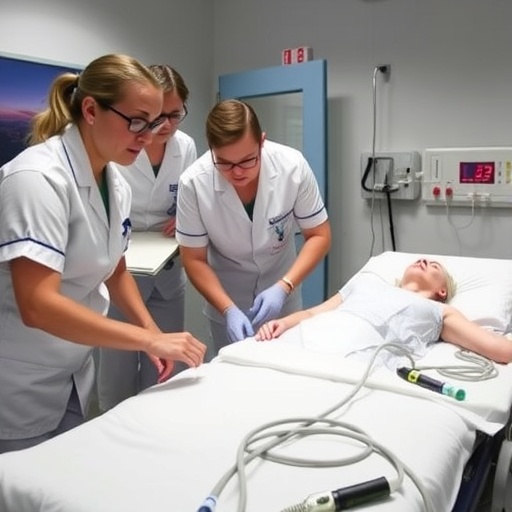
In recent years, the field of nursing education has undergone significant transformations, particularly in how students are trained to manage trauma situations. A pivotal study led by Mohebi et al. investigates the effectiveness of an advanced trauma life support (ATLS) simulation program on the clinical decision-making skills of nursing students. This compelling research, characterized by its quasi-experimental design, highlights the urgent need for innovative training methods that prepare healthcare professionals to respond effectively in critical situations.
The study offers a fresh perspective on the integration of simulation programs within nursing curricula, focusing on how immersive experiences can enhance learning outcomes. By simulating real-life trauma scenarios, students are able to engage in hands-on practice that not only builds technical skills but also fosters critical thinking and decision-making capabilities. The authors argue that traditional learning methods may not suffice in preparing nursing students for the complexities of trauma care, making a strong case for the inclusion of advanced simulations in nursing education.
While the specific methodologies and results of the study are yet to be fully explored, one cannot overlook the significance of such training programs in the modern healthcare landscape. Trauma is an unpredictable reality in emergency medicine, and nursing professionals must be equipped with the skills to act swiftly and decisively. The Mohebi et al. study posits that simulation training may be the key to bridging the gap between theoretical knowledge and practical application, providing students with a safe environment to practice their skills.
The ATLS program implemented in the study encompasses various essential components, from initial trauma assessment to advanced trauma interventions. This structured approach not only enhances the students’ technical skills but also instills a sense of confidence in their abilities. Such confidence is crucial, as it directly influences how nurses perform in high-pressure environments. Given the stakes involved in trauma care, developing proficiency through simulated experiences can lead to better patient outcomes.
Furthermore, the study’s findings are indicative of a broader trend in medical education, which increasingly values experiential learning as a cornerstone of effective practice. It is evident that healthcare systems are acknowledging the limitations of conventional teaching methods, shifting toward curricula that emphasize practical application. The upside of this approach extends beyond student learning; it has the potential to revolutionize patient care practices on a larger scale.
Additionally, the research highlights the role of feedback in the learning process. Simulation exercises, particularly those that incorporate debriefing sessions, offer students the opportunity to refine their clinical skills in real-time. This immediate feedback loop aids in solidifying understanding and allows for the identification of areas needing improvement. As healthcare educators strive to create well-rounded professionals, the emphasis on reflective practice through simulation training cannot be understated.
Moreover, the study underscores the importance of interprofessional collaboration in trauma care. Within the ATLS framework, nursing students are encouraged to work alongside peers from other disciplines, fostering a sense of teamwork that is critical in emergency settings. This collaborative practice not only enhances the educational experience but also mirrors the realities of healthcare environments where multidisciplinary teams operate.
The implications of the Mohebi et al. study extend beyond the classroom walls. By equipping nursing students with enhanced clinical decision-making skills through advanced simulation, the future of trauma care could see a marked improvement. The potential reduction in errors and better-prepared healthcare professionals may directly impact patient safety and outcomes in emergency situations.
Ultimately, the findings of this quasi-experimental study could pave the way for policy changes in nursing education. The need for revised curricula that embrace simulation training may become increasingly apparent as the evidence mounts in favor of its effectiveness. This shift could mean that more nursing programs will integrate ATLS simulations, thereby elevating the standard of training across the board.
As the healthcare landscape continues to evolve, the integration of advanced simulation training into nursing education represents a paradigm shift. It reflects a deep understanding of the necessity for practical experience in fostering critical thinking, technical skills, and confidence amongst nursing students. The Mohebi et al. study serves as a timely reminder of the power of innovative educational strategies in shaping the future of professional healthcare practice.
With these advancements, the nursing profession is positioned not just to adapt to the complexities of patient care but to lead in the development of effective trauma management strategies. This will ultimately lead to better patient experiences and healthcare outcomes, reinforcing the vital role of nurses in trauma care.
The continued exploration of simulation-based training in nursing education is paramount. As the body of research expands, so too should the commitment to enhancing nursing education with immersive, experiential learning opportunities. By investing in the next generation of healthcare professionals through advanced training methods, we are not only preparing them for the challenges ahead but also setting a new standard for excellence in trauma care.
In a world where the unpredictability of trauma remains a constant, the necessity for well-trained nursing professionals has never been more apparent. The findings from studies like those conducted by Mohebi et al. provide valuable insights that could ultimately revolutionize the way trauma care is approached, taught, and executed within our healthcare systems.
Subject of Research: Impact of an advanced trauma life support (ATLS) simulation program on nursing students’ clinical decision-making in trauma care.
Article Title: Impact of an advanced trauma life support (ATLS) simulation program on nursing students’ clinical decision-making in trauma care: a quasi-experimental study.
Article References:
Mohebi, M., Moosavi, S., Hasandoost, F. et al. Impact of an advanced trauma life support (ATLS) simulation program on nursing students’ clinical decision-making in trauma care: a quasi-experimental study.
BMC Med Educ 25, 1709 (2025). https://doi.org/10.1186/s12909-025-08210-7
Image Credits: AI Generated
DOI: https://doi.org/10.1186/s12909-025-08210-7
Keywords: nursing education, trauma care, clinical decision-making, simulation training, advanced trauma life support, experiential learning, interprofessional collaboration.


