


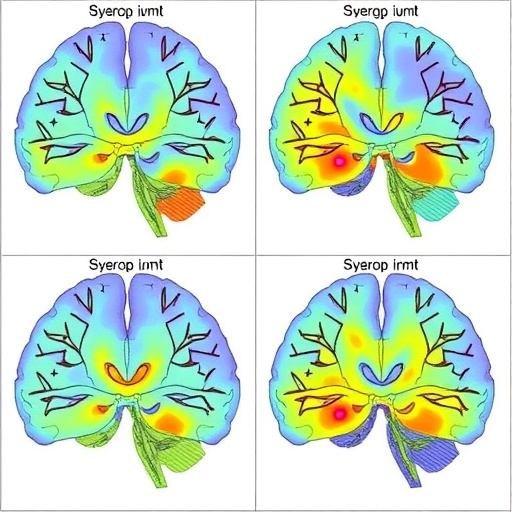
Astrocytes have long been recognized as pivotal players in the sophisticated orchestration of brain function, transcending their previous relegation to mere supportive roles. These star-shaped glial cells actively govern neurotransmitter signaling, maintain ion homeostasis, regulate vascular tone, and modulate synaptic transmission, positioning themselves at the forefront of complex neural processes. Yet, the intricate fabric of astrocytic participation in brain activity—especially concerning the spatial scales of their influence—remains only partially understood. Recent research by Oliveira et al., published in Nature Neuroscience, boldly advances our understanding by dissecting the spatial organization of astrocytic functions. Their findings propose a multilayered framework in which astrocytic functional units operate across diverse spatial scales, from the molecular and subcellular realms to broader network interactions.
Astrocytes engage in an extraordinary range of functions that affect virtually every aspect of neuronal communication. At the microscopic level, perisynaptic processes of astrocytes enwrap individual synapses, facilitating intimate, bidirectional communication with neurons. This nanoscale interface allows astrocytes to finely tune neurotransmitter concentrations and regulate the ionic environment essential for synaptic efficacy. However, whether these interactions represent discrete, independent units localized to single synapses or form integrated domains influencing synapse ensembles remains a critical question. To tackle this, the authors carefully analyzed astrocytic morphology using advanced imaging techniques and molecular profiling, unveiling an architectural complexity that blurs the boundaries between singular synaptic regulation and broader synapse population monitoring.
One of the groundbreaking insights from the study is the delineation of astrocytic domains as functional units. These domains encompass groups of synapses but are spatially restricted to specific territories, thereby enabling astrocytes to exert localized yet coordinated control over groups of neuronal connections. This concept challenges the traditional neuron-centric view of information processing by layering an astrocyte-mediated modulation over neuronal circuits. Moreover, this spatial compartmentalization extends beyond the conventional perisynaptic interface, suggesting a level of astrocytic autonomy in regulating microdomains within the brain. Such compartmentalization provides a template for how astrocytes could contribute to synaptic plasticity and local network homeostasis through spatially constrained signaling.
Beyond these local domains, astrocytes form expansive networks mediated by intercellular connections such as gap junctions, allowing them to relay signals and maintain homeostasis over larger anatomical distances. This astrocytic syncytium can coordinate vascular responses, influence widespread metabolic support, and integrate neural circuits with remarkable temporal precision. Importantly, this network-level organization implicates astrocytes as active agents in global brain function, dynamically modulating neuronal ensembles across the brain. Oliveira et al. emphasize that this multi-scale operation—ranging from perisynaptic processes to interconnected astrocytic networks—provides an enriched framework to understand astrocytic influence as both spatially nuanced and temporally dynamic.
Technological advancements in molecular profiling and imaging have been instrumental in unmasking the heterogeneity within astrocytic populations. The study highlights molecular signatures that differentiate astrocytic subtypes and their respective functional modalities. This molecular diversity aligns with the spatial domains, where distinct astrocytic populations tailor their responses to local neuronal demands. For instance, varying expression levels of neurotransmitter transporters and receptors across astrocytic compartments suggest specialized roles in neurotransmitter recycling and signaling. Such molecular heterogeneity embeds astrocytic functions within a finely tuned spatial mosaic, capable of adaptive responses to changing neuronal activity.
Intracellular signaling pathways further elaborate the complexity of astrocytic function. Calcium signaling emerges as a key mediator, with distinct spatial and temporal patterns corresponding to the defined functional scales. Localized calcium transients within perisynaptic processes can modulate specific synapses, while propagating waves across astrocytic networks influence broader circuits and vascular dynamics. These intracellular calcium dynamics exemplify how astrocytes integrate cues across disparate spatial scales, translating molecular and morphological heterogeneity into precise functional outputs. The interplay between spatial organization and intracellular signaling underscores the adaptive potential of astrocytes in brain information processing.
Neurotransmitter homeostasis is another critical arena where astrocytes demonstrate their functional versatility. By controlling the uptake and release of neurotransmitters such as glutamate, GABA, and ATP, astrocytes maintain synaptic efficacy and prevent excitotoxicity. The study reinforces that astrocytic regulation of neurotransmitter levels is spatially modulated, with distinct subcellular compartments dynamically adjusting transporter activity in response to local synaptic activity patterns. This spatially resolved neurotransmitter handling ensures optimal synaptic signaling fidelity while preventing pathological imbalances, a balance fundamental to healthy brain function.
Additionally, the bidirectional dialog between astrocytes and neurons is mediated by intricate signaling cascades involving neurotransmitters and gliotransmitters. The authors elucidate how this dialog is organized into spatially discrete functional units, ranging from microdomains localized at synaptic junctions to broader astrocytic territories interfacing with multiple neuronal populations. This gradation allows astrocytes to exert exquisite control over synaptic function, neuronal excitability, and plasticity, facilitating complex behavioral paradigms such as learning and memory. Recognizing astrocytes as active participants rather than passive supporters fundamentally alters the landscape of neural circuit models.
The vascular dimension of astrocytic function introduces yet another layer to their spatial complexity. Astrocytes contribute to cerebral blood flow regulation by linking neuronal activity to vascular tone adjustments, a process known as neurovascular coupling. Their endfeet enwrap blood vessels, serving as strategic interfaces where astrocytic networks translate neural signals into vascular responses. The spatial organization of these vascular contacts mirrors the astrocyte’s domain architecture, enabling localized blood flow modulation attuned to the metabolic demands of specific brain regions. This precise vascular control highlights the integrative role of astrocytes across structural and functional scales.
Metabolic support by astrocytes complements their synaptic and vascular roles. By supplying neurons with energy substrates such as lactate, astrocytes adaptively respond to neuronal activity patterns. This metabolic interplay is spatially tuned, with astrocytic networks dynamically redistributing resources to meet localized energetic needs. The study underscores the spatial intricacies of this metabolic support system, positing that astrocytic functional units coordinate not only information processing but also the bioenergetics essential for sustained brain activity. Such coordination challenges simplistic models that segregate metabolism from neural signaling.
The concept of multilayered functional units proposed by Oliveira et al. provides a unifying framework for understanding astrocytic contributions to brain function. These units operate over nested spatial scales, from nanoscale molecular interactions within perisynaptic microdomains to mesoscale networks that envelop entire neuronal circuits. This hierarchical structure allows astrocytes to flexibly modulate neural activity and integrate multifaceted signals, thereby enhancing the brain’s capacity for information processing. The authors argue that this complexity endows the brain with additional degrees of freedom, facilitating adaptability and cognitive sophistication.
Importantly, this paradigm shift in astrocyte research carries profound implications for neurological disease understanding and therapeutic innovation. Disorders characterized by disrupted astrocytic functions, such as epilepsy, neurodegeneration, and psychiatric conditions, may be better interrogated through the lens of multi-scale astrocytic dysfunction. Interventions targeting specific astrocytic functional units promise greater specificity and efficacy, moving beyond neuron-centered strategies. The spatial organization of astrocytic processes might offer new biomarkers and therapeutic targets, heralding an era of glia-focused neuroscience.
Furthermore, the integration of astrocytes into brain information processing models invites reconsideration of neural coding and network dynamics. Traditional models that center solely on neurons potentially overlook the rich, nuanced contributions of astrocytes as modulators and integrators. The multilayered functional unit framework offers a roadmap for developing sophisticated computational models that incorporate astrocytic heterogeneity and spatial dynamics, ultimately leading to deeper insights into cognition, behavior, and brain resilience.
As experimental methodologies evolve—combining super-resolution imaging, single-cell transcriptomics, and in vivo functional assays—our grasp of astrocytic functional architecture will undoubtedly sharpen. The work by Oliveira et al. stands as a pivotal step, providing conceptual and empirical foundations to explore astrocytes as dynamic, spatially organized partners in brain function. This research encourages a more holistic view of neural circuits, one that embraces complexity and spatial diversity to unravel the enigma of brain operation.
In summation, the study exposes astrocytes not as singular, homogeneous entities, but as complex, spatially orchestrated systems operating across multiple scales. From the nanoscopic interactions at synaptic clefts to the macroscopic networks influencing entire brain regions, astrocytes deploy specialized functional units that expand the computational and regulatory repertoire of the nervous system. This multilayered approach to understanding astrocytic function holds transformative potential, redefining glial biology and reshaping the trajectory of neuroscience research in the years to come.
Cite Scienmag News
Cassandra Pierce. (May 27, 2026). Astrocytic Functional Units Across Multiple Scales. Scienmag. https://scienmag.com/astrocytic-functional-units-across-multiple-scales/
Cassandra Pierce. "Astrocytic Functional Units Across Multiple Scales." Scienmag, 27 May 2026, https://scienmag.com/astrocytic-functional-units-across-multiple-scales/. Accessed 3 September 2026.
Cassandra Pierce. "Astrocytic Functional Units Across Multiple Scales." Scienmag. May 27, 2026. https://scienmag.com/astrocytic-functional-units-across-multiple-scales/


