


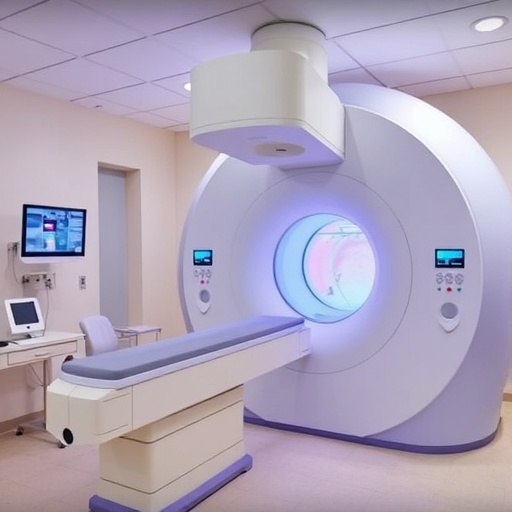
ARLINGTON, Va., August 13, 2026 — A new clinical guideline from the American Society for Radiation Oncology (ASTRO) is reshaping how physicians think about radiation therapy for adult patients with pancreatic cancer, a disease long associated with limited treatment options and exceptionally poor survival. Published in Practical Radiation Oncology, the updated guideline replaces ASTRO’s 2019 recommendations and incorporates evidence from recent clinical trials involving patients whose tumors are resectable, borderline resectable, locally advanced, recurrent or metastatic. Its central message is that radiation therapy should no longer be viewed only as a palliative tool or a treatment reserved for the final stages of disease. When integrated carefully with surgery and systemic therapy, radiation may improve local tumor control, reduce complications from tumor growth and, in selected cases, help patients reach surgery or maintain control of limited metastatic disease.
Pancreatic cancer remains one of the deadliest major cancers. Epidemiologic models estimate that it could become the second leading cause of cancer-related death in the United States by 2030. In 2026, approximately 67,500 U.S. adults are expected to receive a pancreatic cancer diagnosis, while about 52,700 are projected to die from the disease. Across all stages, the five-year survival rate is only 13%. The disease is particularly difficult to treat because it often grows silently until it has invaded nearby blood vessels or spread to distant organs. By the time of diagnosis, fewer than one in five patients are considered candidates for immediate surgery, the only established treatment with potentially curative intent. Most patients therefore require chemotherapy, with radiation increasingly being used to address tumors that remain threatening despite advances in systemic treatment.
The guideline emphasizes that pancreatic cancer treatment must begin with a multidisciplinary assessment. Surgeons, medical oncologists, radiation oncologists, radiologists, pathologists and other specialists must determine whether a tumor can be removed, whether it is close to major blood vessels, how it responds to chemotherapy and whether a patient can safely tolerate intensive treatment. For patients with tumors considered resectable at diagnosis, radiation therapy before surgery, known as preoperative or neoadjuvant radiation, is conditionally recommended. Researchers are still investigating its precise value in this group, but treatment before surgery may sterilize microscopic disease around the tumor, improve local control and increase the likelihood of removing the cancer with clear margins. For patients who do not receive radiation before surgery, postoperative chemoradiation may be considered after multiagent chemotherapy when pathology shows no cancer in the sampled lymph nodes.
The recommendations are stronger for borderline resectable disease, in which a tumor is technically close to or partially involving critical blood vessels and may be difficult to remove completely. In this setting, preoperative radiation therapy or chemoradiation is recommended to improve local control and increase the chance of a margin-negative resection. A margin-negative operation, sometimes called an R0 resection, means that no cancer cells are found at the outer edge of the removed tissue. This distinction is important because residual microscopic disease at the surgical margin can increase the risk of recurrence. Radiation can be delivered together with chemotherapy to damage tumor DNA while chemotherapy sensitizes cancer cells to radiation, although the exact regimen and sequence depend on the patient’s overall condition, tumor anatomy and response to initial treatment.
For patients with locally advanced pancreatic cancer, surgery is often impossible because the tumor has grown around major arteries or veins without yet spreading to distant organs. The updated guideline recommends chemoradiation or radiation therapy after multiagent chemotherapy as definitive treatment in appropriate patients. The goal is not necessarily to eliminate every cancer cell, which may not be realistic in advanced local disease, but to prevent the primary tumor from continuing to invade surrounding structures. Uncontrolled local progression can cause severe pain, intestinal or bile-duct obstruction, bleeding and other complications. Radiation may also help a subset of patients become candidates for surgery if the tumor pulls away from critical vessels or remains stable after treatment. Patients who are medically unable to undergo surgery, or who decline an operation, may likewise receive chemoradiation or radiation following chemotherapy. For individuals at unusually high risk of complications, radiation without initial multiagent chemotherapy may be reasonable.
The guideline also extends radiation’s potential role beyond the initial treatment course. Patients who develop an isolated recurrence near the original surgical site and have never received radiation may be candidates for definitive-intent radiation or chemoradiation. Those who were previously irradiated may be considered for reirradiation, but only after detailed review of the original treatment plan and the doses delivered to nearby organs. Reirradiation is technically demanding because the pancreas lies close to the stomach, small intestine, liver, kidneys and major blood vessels. These tissues have limits on the amount of radiation they can safely receive, and the risk of ulceration, bleeding or perforation must be weighed against the potential benefit of controlling recurrent cancer.
Another emerging area is the treatment of oligometastatic and oligoprogressive disease. Oligometastatic cancer refers to disease that has spread to a limited number of distant sites, while oligoprogressive disease describes a situation in which only a few tumors are growing despite otherwise effective systemic therapy. The guideline conditionally recommends definitive-intent radiation or chemoradiation to selected metastatic lesions and to the original pancreatic tumor when it has not already received definitive local therapy. This approach reflects a broader shift in oncology: as newer drugs, including developing RAS-targeted therapies, help some patients live longer, physicians are increasingly trying to eliminate or suppress individual sites that threaten organs or drive future progression. However, local treatment is not appropriate for every patient and requires careful selection based on tumor biology, the number and location of lesions, previous treatments and expected survival.
Radiation remains especially important when pancreatic cancer causes urgent symptoms. Palliative radiation is recommended for cancer-related bleeding, pain or obstruction, conditions that can rapidly undermine nutrition, mobility and quality of life. In selected patients with painful disease, dose-escalated radiation may provide more durable relief, although higher doses require greater precision and stricter protection of normal tissues. Treatment schedules can range from short courses designed to relieve symptoms quickly to more intensive regimens intended to maintain local control for longer periods. The choice depends on the patient’s performance status, life expectancy, symptoms, anatomy and other treatments. The guideline stresses that the purpose of palliative radiation is not simply to treat an image on a scan, but to reduce suffering and preserve function while avoiding unnecessary treatment burden.
Technological advances are central to the updated recommendations. Intensity-modulated radiation therapy, or IMRT, shapes and modulates radiation beams so that high doses conform more closely to the tumor while limiting exposure to nearby organs. Daily image guidance allows clinicians to verify the tumor’s position immediately before or during treatment. Because the pancreas moves as a person breathes, respiratory-motion assessment and motion-management strategies are also important. Stereotactic body radiation therapy, known as SBRT, delivers highly focused radiation in a small number of treatments, but its safety depends on accurate targeting and adequate separation from vulnerable organs. For dose-escalated SBRT, the guideline recommends adaptive radiation therapy, a process in which the treatment plan can be modified as the patient’s anatomy changes. Tumor shape, stomach filling, bowel position and weight loss can all alter the geometry of treatment, making adaptation a potential safeguard against excessive dose to healthy tissue.
The guideline was developed by a multidisciplinary task force that included radiation, medical and surgical oncologists, a radiation oncology resident, a medical physicist and a patient representative. Its recommendations were based on a systematic review of research published from 2010 through June 2026 and were developed in collaboration with the American Society of Clinical Oncology, the European Society for Radiotherapy and Oncology and the Society of Surgical Oncology. The authors identify major unanswered questions, including how radiation should be combined with rapidly evolving systemic therapies and whether radiation plus RAS inhibitors can improve outcomes. Future research will also need to determine which patients benefit from intensified local treatment and which are more likely to experience harm. For now, ASTRO presents radiation therapy as one component of individualized pancreatic cancer care—neither a universal solution nor a last resort, but a precisely delivered treatment whose value depends on tumor stage, biology, anatomy, previous therapy and the expertise of the team delivering it.
News Publication Date: August 13, 2026
Web References: https://doi.org/10.1016/j.prro.2026.07.002; https://www.practicalradonc.org/article/S1879-8500(26)00217-1/fulltext; https://www.astro.org/
References: American Society for Radiation Oncology (ASTRO) clinical guideline; Practical Radiation Oncology, article publication date August 11, 2026; DOI: 10.1016/j.prro.2026.07.002
Cite Scienmag News
Nathaniel Bowman. (August 14, 2026). ASTRO updates radiation therapy guidelines for pancreatic cancer. Scienmag. https://scienmag.com/astro-updates-radiation-therapy-guidelines-for-pancreatic-cancer/
Nathaniel Bowman. "ASTRO updates radiation therapy guidelines for pancreatic cancer." Scienmag, 14 August 2026, https://scienmag.com/astro-updates-radiation-therapy-guidelines-for-pancreatic-cancer/. Accessed 3 September 2026.
Nathaniel Bowman. "ASTRO updates radiation therapy guidelines for pancreatic cancer." Scienmag. August 14, 2026. https://scienmag.com/astro-updates-radiation-therapy-guidelines-for-pancreatic-cancer/


