

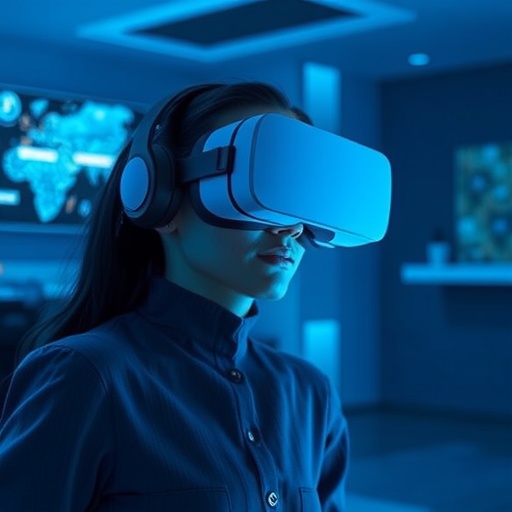
In the rapidly evolving landscape of healthcare and education, the integration of virtual and mixed reality technologies has emerged as a powerful tool. The substantial potential for these immersive experiences to enhance learning, engagement, and patient outcomes is now being scrutinized through a scientific lens. A recent study titled “Virtual & Mixed Reality Fatigue Questionnaire” by Cintora-Sanz et al. has shed light on an often-overlooked aspect of these groundbreaking technologies: the potential for user fatigue.
The exploration of physiological and psychological responses to virtual environments has become increasingly important as these technologies are adopted in various fields, particularly in medical education. The study meticulously examines the fatigue that can result from prolonged engagement with virtual and mixed reality platforms. Fatigue in this context can encompass a spectrum of experiences, including visual strain, cognitive overload, and emotional exhaustion, all of which can impact a learner’s ability to absorb information effectively.
Utilizing a comprehensive approach, the authors developed a questionnaire tailored specifically to identify and quantify the levels of fatigue experienced by users. By incorporating both qualitative and quantitative measures, the research team aimed to provide a nuanced understanding of how sustained interaction with virtual environments affects users. This methodology is vital as it not only captures the immediate effects of immersion but also considers long-term implications for educators and learners alike.
The primary motivation behind the study stems from the increasing prevalence of virtual and mixed reality tools in medical training programs across the globe. These innovative platforms offer unparalleled opportunities for trainees to practice skills in a safe and controlled environment, reducing the risk of real-world errors. However, as these technologies gain traction in curriculums, it becomes paramount to address any adverse effects that may arise from their use, particularly the fatigue that can impede learning and retention.
One of the most fascinating findings of the study reveals the difference in fatigue levels experienced by users based on the type of virtual environments they engage with. The research indicates that immersive, highly interactive simulations may lead to increased physical and mental fatigue compared to less interactive, more passive experiences. This information is invaluable to educators, as it underscores the importance of balancing engagement with user well-being.
Furthermore, the implications of the research extend beyond educational settings. In the clinical realm, practitioners using virtual simulations to enhance their skills may also experience fatigue, potentially influencing their performance and decision-making during critical situations. Understanding this relationship is crucial in refining training methodologies and ensuring that healthcare professionals remain effective even after extended periods of simulated practice.
Moreover, the study invites further inquiry into the underlying mechanisms of fatigue caused by virtual engagement. For instance, how do visual stimuli, auditory feedback, and interactive elements contribute to a user’s sense of fatigue? A multidisciplinary approach involving psychologists, neuroscientists, and educators could provide deeper insights into these questions and lead to the development of more user-friendly technologies.
The insights gleaned from Cintora-Sanz’s research not only illuminate the challenges posed by virtual and mixed reality platforms but also pave the way for potential solutions. Adjustments to the design of these experiences, including more frequent breaks, varied activities, or adaptive interfaces that respond to users’ fatigue levels, could potentially mitigate negative outcomes. Developing standardized guidelines is essential, especially as educational institutions increasingly rely on technology for training future healthcare professionals.
In the context of advancing the field of medical education, addressing user fatigue is not simply a matter of improving comfort; it is fundamentally linked to the effectiveness of training. Fatigue can diminish a learner’s capacity to engage meaningfully with content, thereby undermining the very benefits that virtual tools are meant to provide. Thus, fostering an awareness of fatigue is vital to maximizing the effectiveness of these innovative educational resources.
As educators, researchers, and technology developers collaborate to craft better immersive experiences, the importance of user feedback must not be underestimated. It is the user—be it a medical student, resident, or physician—whose experiences will ultimately shape the evolution of these technologies. Listening to their insights regarding fatigue can lead to significant innovations that enhance the efficacy of virtual and mixed reality training.
The growing body of literature surrounding user experiences in virtual environments will undoubtedly serve to inform best practices moving forward. Each study, including the crucial work by Cintora-Sanz and colleagues, contributes to a broader understanding of not only how these tools can be used but also how they can be improved for optimal user engagement and well-being.
As we look ahead, the intersection of healthcare education and technology will continue to deepen, revealing new opportunities and challenges. Key to leveraging the potential of virtual and mixed reality is a commitment to a user-centered approach that prioritizes the well-being and efficacy of learners. In doing so, we can ensure that future generations of healthcare professionals are well-equipped to deliver exemplary care, grounded in comprehensive training experiences that nurture both knowledge and resilience.
With the ever-changing technological landscape, it is imperative that research into user engagement and fatigue in virtual settings remains a priority. The insights uncovered by Cintora-Sanz et al. mark a significant step in this direction and will likely inspire further studies that explore the intricate dynamics of user experience in virtual education environments. As the dialogue continues, we stand on the brink of a new era in education and training, one that harmoniously blends technological advancements with human-centered approaches.
In conclusion, as we embrace the power of virtual and mixed reality in shaping the future of medical education, we must remain vigilant in addressing the nuances of user experience. The studies that illuminate the effects of fatigue are not mere observations; they are the catalysts for change that have the potential to revolutionize how we think about learning in immersive environments. As we harness the potential of these groundbreaking technologies, we must also commit to understanding and improving the user experience, ensuring that every learner can navigate these exciting new landscapes without experiencing detrimental fatigue.
Subject of Research: User fatigue in virtual and mixed reality environments
Article Title: Virtual & mixed reality fatigue questionnaire
Article References:
Cintora-Sanz, A.M., Muñoz-Romo, R., Schrom-Feiertag, H. et al. Virtual & mixed reality fatigue questionnaire. BMC Med Educ (2026). https://doi.org/10.1186/s12909-026-08641-w
Image Credits: AI Generated
DOI: 10.1186/s12909-026-08641-w
Keywords: Virtual reality, mixed reality, fatigue, medical education, user experience


