

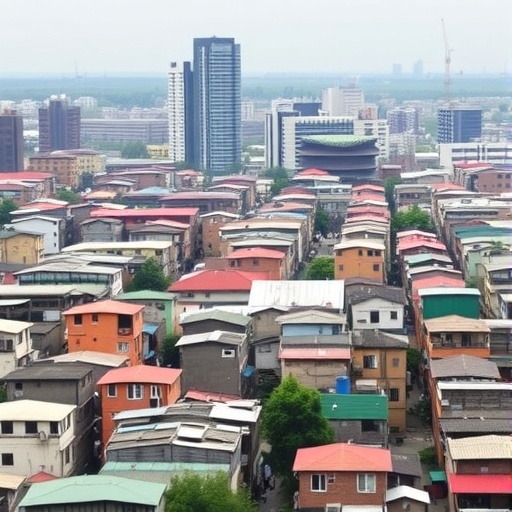
In a groundbreaking study published in Discov Cities, researchers have embarked on an innovative journey to explore the intricate dynamics of urban environmental quality, particularly within coastal slum settlements in Lagos. The research team, consisting of Okimiji O.P., Atoro T., and Fasona M.I., utilized an integrated spatiotemporal approach to not only evaluate the current state of these vulnerable urban communities but also to unveil the various factors influencing their environmental realities.
Urban areas, especially those that juggle the dual challenges of rapid population growth and inadequate infrastructure, often face dire environmental issues. Lagos, as one of the largest cities in Africa, serves as a prime example of this phenomenon. With a significant portion of its population residing in slum settlements, understanding the nuances and dynamics of urban environmental quality becomes essential. The researchers identified that these settlements are often neglected in urban planning and policy-making, further exacerbating environmental degradation.
The study harnesses advanced data analytics and geographical information systems (GIS) to paint a more cohesive picture of the environmental conditions faced by these communities. By adopting a spatiotemporal framework, the researchers can assess not only the spatial distribution of various environmental hazards but also how these hazards evolve over time. This dual focus is critical in understanding the ripple effects of urbanization in informal settlements.
One of the pivotal findings of the study relates to the correlation between socio-economic conditions and environmental quality. The research illuminates how impoverished neighborhoods in Lagos endure the brunt of pollution, inadequate waste management, and vulnerability to climate change effects. These factors combine to create a vicious cycle where low environmental quality perpetuates socio-economic challenges, thereby hindering development efforts and public health outcomes.
The authors also delve into the role of local governance and community engagement in mitigating these challenges. They underscore that successful interventions and improved quality of life in coastal slum settlements are contingent upon inclusive governance that prioritizes the voices of the marginalized. This aspect of their findings places a clear emphasis on the necessity of participatory urban planning processes, which can leverage local knowledge to devise effective solutions.
Another significant aspect of the research is its examination of potential resilience strategies. With climate change pressures intensifying, coastal slum settlements face increasing risks from rising sea levels and extreme weather events. The study proposes adaptive measures such as improved drainage systems, green infrastructure initiatives, and community-led resilience programs that seek to empower residents to actively participate in safeguarding their environment. By fostering a culture of local resilience, these communities could better withstand environmental shocks.
Moreover, the paper highlights the critical importance of continuous monitoring and evaluation as part of urban management. The researchers advocate for the establishment of a robust data collection system that not only tracks environmental quality but also integrates socio-economic indicators. This comprehensive data framework could support evidence-based policy-making and inform targeted interventions to improve urban resilience against environmental degradation.
The findings presented provide invaluable insights into the urgent need for action in urban coastal areas. Policymakers, urban planners, and community leaders must take heed of these revelations to rethink their strategies on urban development. The integration of scientific research into policy discussions is paramount if we are to foster sustainable urban environments and successfully uplift marginalized communities.
As cities continue to grow, understanding the interaction between environmental quality and urban dynamics will become increasingly critical. The insights gained from this research on Lagos may hold lessons for other coastal cities grappling with similar issues. The potential for cross-case analyses could lead to a wider appreciation of how various urban strategies can be tailored to different contexts while still addressing common environmental challenges.
In conclusion, this research not only contributes to academic knowledge on urban environmental dynamics but also serves as a clarion call for action. Addressing the environmental challenges faced by coastal slum settlements demands collaborative efforts from various stakeholders, all motivated by a shared vision of sustainable urban futures. Implementing the recommendations derived from this study could lead to tangible improvements, enhancing the living conditions for countless families in Lagos and beyond.
By raising awareness around the interplay of sociocultural, economic, and environmental dimensions in urban studies, the authors of this study successfully reinforce the argument for integrated approaches to urban planning. Their work paves the way for future explorations into how practices can evolve in the face of mounting urban pressures, making a compelling case for sustained interdisciplinary research.
For more details about this fascinating study, open the full article at the provided DOI link to dive deeper into the methodologies and findings that could reshape urban resilience narratives worldwide.
Subject of Research: Urban environmental quality in coastal slum settlements
Article Title: Exploring the dynamics of urban environmental quality using an integrated Spatiotemporal approach to evaluate coastal slum settlements in Lagos.
Article References: Okimiji, O.P., Atoro, T., Fasona, M.I. et al. Exploring the dynamics of urban environmental quality using an integrated Spatiotemporal approach to evaluate coastal slum settlements in Lagos. Discov Cities 3, 17 (2026). https://doi.org/10.1007/s44327-026-00194-3
Image Credits: AI Generated
DOI: https://doi.org/10.1007/s44327-026-00194-3
Keywords: Urbanization, Environmental Quality, Coastal Slum Settlements, Lagos, Spatiotemporal Analysis, Sustainable Development, Community Engagement, Climate Resilience, Data Analytics, Urban Planning.


