


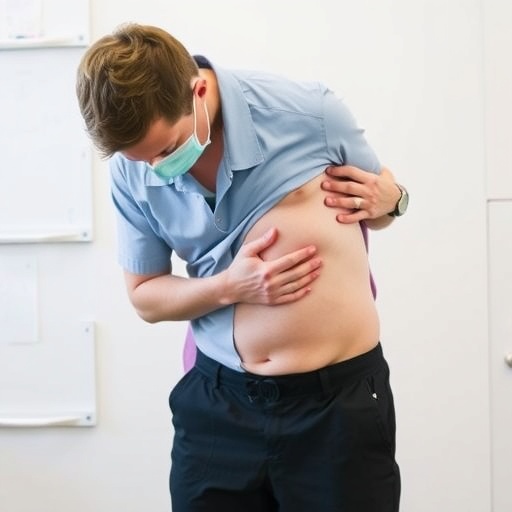
In a groundbreaking study that promises to reshape the traditional landscape of medical education, researchers have delved into the efficacy of various instructional methods for teaching abdominal examinations to first-semester medical students. The study, conducted by Krishnasamy et al., rigorously evaluates three distinct modalities: video-only instruction, video paired with constructive group discussion, and an innovative collaborative 360-degree virtual reality (360VR) experience. As many medical schools strive to enhance students’ practical skills through advanced pedagogical techniques, this research holds significant implications for the future of medical training.
The objective of the study was clear: to ascertain which teaching modality fosters the most effective learning and skill acquisition among incoming medical students. Given that the abdominal examination is a fundamental component of patient diagnosis and care, the stakes are particularly high. It is paramount that medical students not only grasp theoretical knowledge but also develop the hands-on skills necessary for their future careers. Thus, understanding how these different instructional strategies cater to diverse learning styles becomes crucial.
The researchers implemented a comprehensive methodology that involved a randomized control trial with first-semester medical students. Participants were divided into three groups: one receiving only video instructions, another engaging in both video-based lessons and group discussions, and the last experiencing the immersive 360VR environment. Each group underwent the same assessment criteria after their respective sessions to evaluate their proficiency in conducting abdominal examinations.
Findings revealed intriguing insights into student engagement and knowledge retention across the three modalities. The group that participated in the collaborative 360VR training demonstrated significantly higher skill acquisition rates compared to the traditional video-only cohort. The immersive qualities of the virtual reality experience offered an unparalleled opportunity for students to rehearse abdominal examination techniques in a safe, controlled setting, which might explain the enhanced retention of knowledge and skills.
The crucial takeaway from this study is not merely the efficacy of 360VR over traditional instructional methods but also the importance of adaptive learning environments. As medical education evolves, embracing technologies like 360VR could prepare students better than conventional means. This research underscores the necessity for fearlessness in integrating technological advancements into educational frameworks that prioritize practical skill development.
Furthermore, the study accentuates the value of collaborative learning. The video with group discussion method provided students with a platform to verbalize their thought processes and clarify doubts collaboratively. Such arrangements may contribute to deeper understanding and, when combined with immersive training, could maximize skill acquisition. This combination effectively engages students while addressing potential areas of confusion that may arise during traditional video learning.
The implications extend beyond just teaching methodologies; they strike at the very core of how medical professionals are trained. As we grapple with increasing healthcare demands and the necessity for higher-quality patient interactions, equipping future doctors with superior diagnostic skills becomes essential. Studies like Krishnasamy’s open avenues for educators and institutions to continually assess and refine their teaching strategies, ensuring that they remain ahead of the curve in a rapidly changing educational landscape.
Moreover, this research brings to light the often-overlooked aspect of student wellness. A modern approach to teaching not only enables skill acquisition but also supports learners’ mental and emotional well-being. A more engaging and less intimidating learning environment may encourage students to embrace the challenges of medical training rather than shy away from them.
As we step into an age where technology and healthcare intersect more profoundly, research like this serves as a catalyst for broader discussions on institutional responsibility. Medical schools, educators, and curriculum designers must wholeheartedly embrace innovative teaching strategies and acknowledge their potential for not just skill development but also the growth of self-efficacy among students.
Equally, the COVID-19 pandemic has reshaped our views on remote learning and the availability of collaborative tools. As the world navigated through unprecedented challenges, 360VR technology presents a solution that bridges the gap created by social distancing measures, allowing students to partake in realistic simulations without the risks associated with physical examinations.
In conclusion, Krishnasamy et al.’s study is poised to spark conversations that will resonate throughout medical education forums. By questioning established methodologies and advocating for evidence-based educational practices, this research could pave the way for a new era in medical training. Future educators and academic programs will likely look to this work as a precedent, potentially altering how future physicians are trained for decades to come.
As we wait for further studies and possible expansions on this research, the medical community is left with one pressing thought: how can we leverage technology today not just as a teaching tool, but as a framework for nurturing the next generation of healthcare professionals? This study invites educators and institutions alike to engage with these innovations, shaping the future of medical education for the better.
Krishnasamy, R., Hansen, M.P., Schmidt Arenholt, L.T. et al. Evaluating the impact of video-only, video with group discussion, and collaborative 360VR on abdominal examination training for first-semester medical students and medicine with industrial specialization.
BMC Med Educ 25, 1561 (2025). https://doi.org/10.1186/s12909-025-08128-0
Cite Scienmag News
Courtney Benton. (November 7, 2025). Assessing Training Methods for Abdominal Examination Skills. Scienmag. https://scienmag.com/assessing-training-methods-for-abdominal-examination-skills/
Courtney Benton. "Assessing Training Methods for Abdominal Examination Skills." Scienmag, 7 November 2025, https://scienmag.com/assessing-training-methods-for-abdominal-examination-skills/. Accessed 7 September 2026.
Courtney Benton. "Assessing Training Methods for Abdominal Examination Skills." Scienmag. November 7, 2025. https://scienmag.com/assessing-training-methods-for-abdominal-examination-skills/


