


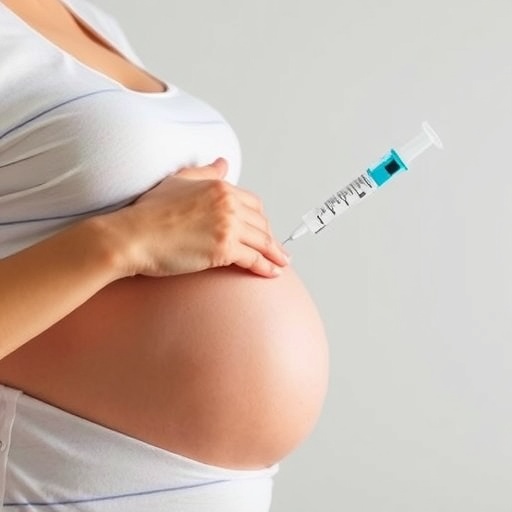
A groundbreaking decision analytical model study published in JAMA Pediatrics highlights the substantial public health benefits of COVID-19 vaccination during pregnancy, particularly emphasizing its role in protecting newborns from severe illness. The findings reinforce the ongoing importance of maternal immunization strategies within the United States, a country characterized by a high risk of severe COVID-19 outcomes among infants. This study represents a critical advancement in our understanding of how annual COVID-19 vaccination during pregnancy can shape infant health trajectories amidst the evolving pandemic landscape.
Pregnancy is a unique immunological state, during which maternal infections can have profound effects on both the mother and developing fetus. Vaccination during this vulnerable period not only safeguards the mother but also confers passive immunity to the neonate via transplacental antibody transfer. The study leverages detailed epidemiological data and predictive modeling techniques to estimate the impact of sustaining vaccination efforts in pregnant populations. Modeling outcomes consistently predict a decrease in COVID-19-related hospitalizations among infants, underscoring the indirect benefits that maternal vaccination affords to early childhood health.
The rigorous analytical model employed integrates multiple variables including vaccine efficacy, variant transmissibility, maternal antibody kinetics, and demographic risk factors specific to the U.S. population. By simulating various vaccination coverage scenarios and incorporating up-to-date viral epidemiology, the study surfaces evidence that annual immunization remains a cornerstone for preventing severe pediatric COVID-19 manifestations. This approach distinguishes itself by offering dynamic insights relevant to vaccine policy planning and resource allocation during an ongoing pandemic.
Safety concerns remain a pivotal consideration in maternal vaccination decisions. This research reinforces accumulating evidence from clinical trials and observational studies confirming the safety of COVID-19 vaccines administered during pregnancy. No elevated risks for adverse maternal or neonatal outcomes were shown, which supports clinical recommendations advocating for vaccination as a standard prenatal care component. The absence of safety signals combined with clear immunological benefits solidifies confidence in vaccination as a critical preventive health measure.
Examining global policy contexts reveals substantial heterogeneity regarding COVID-19 vaccine recommendations for pregnant individuals. While some nations maintain stringent advisories, others show cautious endorsement or delayed implementation of universal vaccination policies during pregnancy. This study’s focus on the U.S., with its distinct demographic and health system characteristics, helps illuminate localized strategies to mitigate the disproportionate COVID-19 burden seen among American newborns. The findings call for harmonized, evidence-based guidelines that address disparities and optimize maternal and infant health outcomes.
From a mechanistic perspective, the model emphasizes the pivotal role of maternally derived neutralizing antibodies in lowering viral load exposure and subsequent disease severity in infants. This immunological transfer forms an essential protective shield during the early months of life when the infant immune system is still immature and unable to mount robust responses to novel pathogens. The temporal dynamics of antibody waning also suggest periodic booster vaccinations may be necessary to sustain protective thresholds throughout future pregnancy seasons.
Beyond individual health impacts, the study reveals broad public health implications including reduced strain on hospital infrastructures. COVID-19 hospitalizations among infants carry significant clinical management challenges and resource utilization, particularly in neonatal intensive care units. By preventing these severe outcomes through widespread maternal vaccination, the healthcare system benefits from alleviated demand, permitting better preparedness for other pediatric and adult health crises concurrently affecting communities.
The model’s predictive strength is enhanced by its incorporation of social determinants of health and demographic variables such as population density, socioeconomic status, and access to healthcare services. These factors influence both exposure risks and vaccine uptake, shaping epidemic trajectories on micro and macro scales. Addressing these determinants is vital for equitable vaccine distribution and the elimination of COVID-19 morbidity disparities among vulnerable mother-infant dyads.
Technological advances in vaccine platforms have accelerated the development and deployment of immunogens suited for maternal immunization. mRNA vaccines, in particular, have demonstrated potent immunogenicity without live viral components, thus favoring use during pregnancy. The longitudinal data analyzed exemplify how contemporary vaccinology innovations can be harnessed to protect across generations, bridging gaps in neonatal vulnerability through maternal immunization.
The findings presented in this study support ongoing advocacy for robust prenatal vaccination campaigns coupled with clear communication strategies to enhance acceptance among pregnant persons. Countering vaccine hesitancy through transparency about safety data, effectiveness, and community benefits remains a fundamental public health objective. The COVID-19 pandemic, while challenging global health systems, has simultaneously catalyzed progress in maternal vaccination paradigms with implications extending beyond this single pathogen.
In conclusion, this analytical model vividly illustrates that annual COVID-19 vaccination during pregnancy is not merely advisable but essential to curtail the severe COVID-19 burden borne by infants in the United States. Implementing sustained vaccination efforts, coupled with integrated policy reforms and educational outreach, promises to reshape outcomes for at-risk newborn populations. The model offers a roadmap for aligning immunization schedules with emerging viral variants and epidemiological shifts, ensuring maternal-fetal health remains a public health priority amid ongoing pandemic uncertainties.
Future research is encouraged to expand on these findings by integrating real-world vaccine effectiveness data, exploring long-term infant developmental outcomes post-maternal vaccination, and evaluating cost-effectiveness within varying healthcare settings. Collaborative efforts bridging immunology, epidemiology, and health policy can further optimize maternal vaccination strategies to create resilient health ecosystems that protect beginning life stages against evolving infectious threats.
News Publication Date: [Not provided]
Web References: [Not provided]
References: (doi:10.1001/jamapediatrics.2025.3561)
Cite Scienmag News
Harold Sullivan. (September 29, 2025). Assessing the Health Consequences of Halting COVID-19 Vaccination During Pregnancy in the US. Scienmag. https://scienmag.com/assessing-the-health-consequences-of-halting-covid-19-vaccination-during-pregnancy-in-the-us/
Harold Sullivan. "Assessing the Health Consequences of Halting COVID-19 Vaccination During Pregnancy in the US." Scienmag, 29 September 2025, https://scienmag.com/assessing-the-health-consequences-of-halting-covid-19-vaccination-during-pregnancy-in-the-us/. Accessed 3 September 2026.
Harold Sullivan. "Assessing the Health Consequences of Halting COVID-19 Vaccination During Pregnancy in the US." Scienmag. September 29, 2025. https://scienmag.com/assessing-the-health-consequences-of-halting-covid-19-vaccination-during-pregnancy-in-the-us/


