


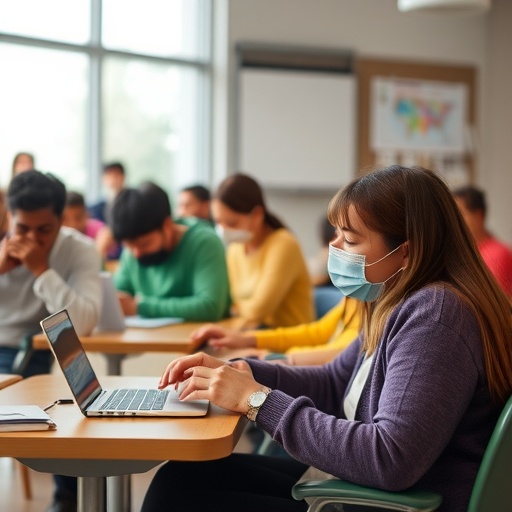
The COVID-19 pandemic has left an indelible mark on educational systems worldwide, with effects ranging from shifts in instructional methodologies to dramatic changes in student performance. A compelling study conducted by researchers Castellano, McCaffrey, Xi, and their colleagues adds depth to our understanding of these changes in the United States. By employing robust analytical tools, they explored the nuanced variations in student performance across diverse demographics and geographic regions during this unprecedented period.
As schools shuttered their doors in March 2020, educational institutions were forced to pivot rapidly to online learning platforms. This transition, though necessary, exposed a multitude of inequities ingrained within the U.S. education system. The study highlights the stratification based on socioeconomic status, race, and geographic location, which heavily influenced student access to quality educational resources during remote learning. For many students, especially those from lower-income families, the lack of reliable internet access and resources like computers impeded their ability to engage with educational content effectively.
In analyzing assessments from various states, the researchers unearthed significant differences in academic performance that appeared to correlate with the implementation of remote learning. While some districts saw a surprisingly quick adaptation to online models, others struggled significantly. This disparity indicates that not all educators were equally prepared for the shift, nor were all students equipped with the necessary skills and resources to thrive in a virtual classroom. The paper argues that this raises vital questions about the preparedness of educators and the systemic support provided to them.
Emphasizing the importance of understanding these dynamics, the researchers focused on the long-term implications of the pandemic on student achievement. By categorizing performance metrics pre- and post-pandemic, they were able to delineate trends that might have otherwise gone unnoticed. The analysis shows that while some students experienced minimal setbacks, others faced substantial declines in their academic performance. This variation suggests that targeted interventions will be necessary to assist the most adversely affected groups.
The study examines various demographic factors that bear on educational access and success. For instance, it investigates how ethnicity and socio-economic background converged to shape learning experiences. By scrutinizing standardized test scores and course completions, researchers can identify which groups are disproportionately affected by pandemic-related disruptions. Despite the widespread embrace of digital learning, this study reveals that deeper-rooted systemic inequities persist, necessitating a careful examination of educational policy and funding.
The implications of these findings extend beyond immediate academic performance; they raise significant concerns about future workforce preparedness. If students are not equipped with the skills needed for both higher education and the job market, the resultant skills gap could hinder economic recovery in the wake of the pandemic. The researchers recommend developing strategic educational policies that not only address immediate losses but also fortify the structural foundations of educational equity.
Moreover, the study delves into emotional and psychological dimensions of learning during the pandemic. Many students faced not just an academic toll, but also mental health challenges exacerbated by isolation, anxiety about health risks, and uncertainty about the future. The research poignantly highlights that educators and policymakers must consider these emotional aspects when designing curriculums, as they significantly impact student engagement and overall performance.
As educators adapt to post-pandemic realities, the question remains: how can we ensure that all students have access to the tools and resources necessary for academic success? This study serves as a critical reminder that equitable access to education must be at the forefront of recovery efforts. The findings indicate the potential for educational models that are both inclusive and flexible, allowing for personalized learning experiences that cater to diverse needs.
Looking forward, the researchers advocate for increased investment in educational resources, particularly in underserved areas. This may include not only technological upgrades but also training programs for educators to better engage students in a hybrid learning environment. The potential for innovative educational practices to emerge from the pandemic crisis is significant, provided there is a concerted effort to address structural inequities.
The study also raises a vital point regarding the importance of longitudinal research in education. By tracking student performance over multiple years, researchers can gain insights into the long-term implications of the pandemic on learning trends. Such information will be essential for developing strategies that foster resilience and adaptability in educational systems moving forward.
As schools aim to rebuild post-pandemic, the voices of students, educators, and parents must be integral to the conversation. Collaborative efforts and community engagement will be crucial to ensuring that changes not only address current challenges but also promote sustainable educational practices. This collective input could guide the construction of a more resilient educational framework that prioritizes equity and access.
In summary, the study conducted by Castellano et al. elucidates significant issues surrounding student performance during the COVID-19 pandemic, revealing disparities that must be addressed. It emphasizes the importance of understanding demographic influences on educational access and success, alongside the emotional toll experienced by students. The findings pose urgent questions about future educational policies and practices, advocating for a holistic approach that considers both academic and psychological aspects of student learning.
As the world continues to grapple with the repercussions of the COVID-19 pandemic, the insights gleaned from this research will be invaluable. The challenges faced by students highlight the imperative need for innovation, equity, and resilience in education, ensuring that all learners can navigate their post-pandemic realities with confidence and support.
Castellano, K.E., McCaffrey, D.F., Xi, N. et al. Exploring differential change in student performance during the COVID-19 pandemic across the United States.
Large-scale Assess Educ 13, 11 (2025). https://doi.org/10.1186/s40536-025-00242-1
Cite Scienmag News
Courtney Benton. (August 31, 2025). Assessing Student Performance Changes During COVID-19. Scienmag. https://scienmag.com/assessing-student-performance-changes-during-covid-19/
Courtney Benton. "Assessing Student Performance Changes During COVID-19." Scienmag, 31 August 2025, https://scienmag.com/assessing-student-performance-changes-during-covid-19/. Accessed 3 September 2026.
Courtney Benton. "Assessing Student Performance Changes During COVID-19." Scienmag. August 31, 2025. https://scienmag.com/assessing-student-performance-changes-during-covid-19/


