

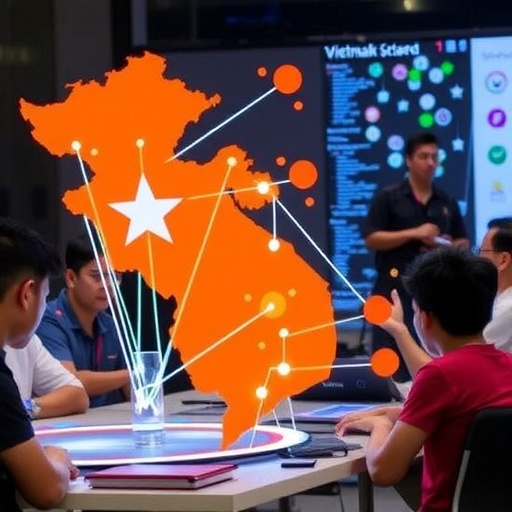
In a striking shift towards a global education paradigm, Vietnam is witnessing a transformative wave in its educational ecosystem, particularly within the realm of STEM (Science, Technology, Engineering, and Mathematics) education. Recent research highlights the profound implications of an internationally transferred educational approach, shining a light on the ways in which integrating Western educational methodologies can invigorate and elevate the learning experience for Vietnamese students. This move not only promotes a deeper understanding of Science and Mathematics but also fosters critical thinking and innovative problem-solving skills among learners.
The research conducted by Oliveira, Nguyen, and Lê delves into the essence of this educational transfer, presenting a rich narrative of the changes and challenges Vietnam faces in embracing and adapting to these new paradigms. As the nation gears up to position itself as a competitive player in the global market, the emphasis on STEM education cannot be overstated. The interconnectedness of these fields is essential in cultivating a society well-equipped for the demands of the modern world.
A salient point emerging from the research pertains to the curricular adjustments necessitated by this transition. The conventional methodologies, steeped in rote learning, are being reassessed and restructured to foster an inquiry-based learning environment. Such an approach encourages students to engage actively with materials rather than passively absorb information. This shift is particularly significant in Vietnam, where educational practices have historically centered around memorization and repetition.
Moreover, the study reveals that teacher training is a critical element in ensuring the success of the new STEM educational framework. Educators play a pivotal role in successfully integrating this pedagogical shift into the classroom settings. The research underscores that without adequate training and resources, teachers may struggle to implement these innovative practices effectively. Consequently, substantial investment in professional development programs tailored to the unique needs of Vietnamese educators will be vital for this paradigm to take root and flourish.
Complementing curriculum changes, the study also emphasizes the importance of infrastructure improvements. Adequate facilities equipped with modern tools and technologies are essential for a comprehensive STEM education program. Lack of resources can severely limit students’ ability to engage with hands-on projects and practical applications of their learning. Thus, discussions surrounding infrastructure must be at the forefront of educational policy agendas as Vietnam seeks to modernize its educational framework.
However, the transition brings its own set of challenges. Cultural attitudes towards educational achievement and failure may pose obstacles in fully embracing the inquiry-based models prevalent in Western education. In some instances, the fear of making mistakes can deter students from exploring and experimenting, fundamental aspects of the STEM fields. Addressing these cultural nuances will not only enhance student engagement but also contribute to a more resilient and innovative educational environment.
The international transfer of educational approaches also raises questions about the localization of content. As Vietnam adopts foreign methodologies, it is crucial to ensure that the curriculum is culturally relevant and contextually appropriate. The nuances of Vietnamese society, economy, and culture must be woven into the STEM education narrative to create a meaningful connection for students. This contextualization preserves the integrity of local knowledge while integrating global best practices, thereby creating a hybrid model of education that respects both local traditions and international standards.
Another significant finding from the research highlights collaboration between local educational institutions and international partners. Such partnerships are instrumental in providing Vietnamese educators and students with exposure to diverse teaching styles, resources, and knowledge. Collaborative projects and exchange programs can enrich the learning process, enabling students to experience STEM education beyond the confines of their classrooms. These partnerships not only provide mentorship opportunities but also cultivate a sense of global citizenship among students.
Furthermore, the emphasis on STEM education aligns with Vietnam’s broader economic goals. As the nation aspires to transition from a manufacturing-based economy to one driven by technology and innovation, the demand for a workforce proficient in STEM fields will continue to surge. By equipping students with the necessary skills and knowledge, Vietnam can ensure a steady pipeline of talent that can contribute to national and global advancements in various scientific and technological domains.
Importantly, this educational reform is not solely about preparing students for future employment; it also endeavors to instill a lifelong love for learning and exploration. The researchers assert that cultivating curiosity and resilience among students can lead to a culture of innovation that extends beyond the classroom and into the fabric of Vietnamese society. This shift towards valuing creativity, experimentation, and a growth mindset is critical in nurturing the next generation of thinkers and leaders who can tackle the complex challenges of the future.
As the research underscores, the journey toward embracing STEM education in Vietnam is an ongoing process, requiring collective effort from government bodies, educational institutions, teachers, students, and the community at large. Continuous evaluation and adaptation will be necessary to ensure the effective implementation of these educational methodologies. By actively engaging with and responding to the needs and feedback of all stakeholders, Vietnam can nurture an educational environment that truly prepares its youth for the demands of the 21st century.
In summary, the exploration of STEM education within Vietnam reveals a multi-faceted narrative of opportunity, challenge, and resilience. As the nation embarks on this transformative journey, it stands at the precipice of redefining its educational landscape, ultimately shaping a future where innovation and creativity are at the forefront of societal development. The insights garnered from the research conducted by Oliveira, Nguyen, and Lê present valuable considerations for policymakers, educators, and stakeholders invested in the steadfast evolution of Vietnam’s educational framework.
By fostering an environment built on inquiry, collaboration, and contextual learning, Vietnam can not only elevate its educational standards but also empower its students to become active contributors to a rapidly evolving global community. The path is laden with challenges, yet the promise of a robust STEM education system is more compelling than ever, heralding a bright and innovative future for the country.
Subject of Research: The impact of internationally transferred educational approaches on STEM education in Vietnam.
Article Title: STEM education in Vietnam: examining the impact of an internationally transferred educational approach.
Article References:
Oliveira, A.W., Nguyen, C.Y., Lê, H.H. et al. STEM education in Vietnam: examining the impact of an internationally transferred educational approach.
Discov Educ (2026). https://doi.org/10.1007/s44217-025-01086-1
Image Credits: AI Generated
DOI:
Keywords: STEM education, Vietnam, educational reform, inquiry-based learning, teacher training, curriculum development, cultural localization, international collaboration, innovation, lifelong learning.


