

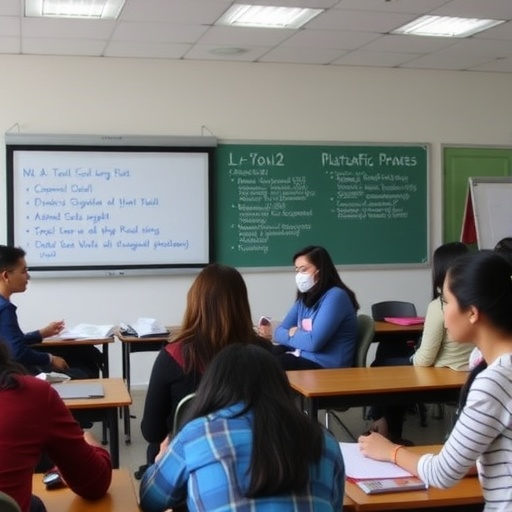
In a rapidly evolving technological landscape, artificial intelligence (AI) has undeniably emerged as an influential player across various domains, including education. Within this context, researchers are keenly investigating how emerging technologies, specifically generative artificial intelligence, impact learning environments. A groundbreaking study by J. Marpaung delves into the readiness and utilization of generative AI among Indonesian graduate business students, unveiling critical insights on the integration of these advanced tools in academic settings.
The exploration begins with a close examination of the current state of AI technologies and their transformative potential in educational contexts. Generative AI refers to systems designed to create content ranging from text to images and even music, mimicking human cognitive abilities to a certain extent. The advent of such technologies raises questions about their implications for student engagement, comprehension, and overall learning outcomes. As educational institutions worldwide grapple with these advancements, understanding their impact on learners’ preparedness is essential for equipping them with the skills necessary to thrive in the digital age.
Marpaung’s research adopts a systematic approach to assess the perceptions and readiness of graduate business students in Indonesia regarding generative AI applications in their curricula. The study utilizes both qualitative and quantitative methodologies, facilitating a comprehensive analysis that captures diverse viewpoints. Participants are surveyed about their familiarity with generative AI tools, their perceived effectiveness in enhancing educational experiences, and their concerns regarding ethical considerations and potential drawbacks.
The findings reveal a striking inclination among students toward embracing generative AI but also illuminate significant gaps in readiness. While many students express enthusiasm about the prospects of using AI-driven tools for assignments and collaborative projects, a notable percentage also exhibit apprehension about their efficacy and integrity. This dichotomy highlights a critical juncture for educational leaders: the need to provide not only advanced technological resources but also robust training and support structures that can guide students in navigating this brave new world.
Furthermore, Marpaung’s study emphasizes the necessity for educational institutions to foster a culture of innovation and adaptability among students. The evolving job markets increasingly demand tech-savvy professionals who are well-versed in leveraging AI to enhance productivity and creativity. As such, it’s imperative for academic programs to integrate generative AI into their curricula actively, ensuring that graduates are not merely consumers of technology but also skilled operators capable of harnessing its full potential.
The research also underscores the role of educators in this transformative process. Faculty members must be equipped with the necessary knowledge and expertise to facilitate discussions around generative AI, helping students critically assess its applications within their fields. Effective pedagogy that encourages experimentation with these tools can cultivate a mindset of continuous learning and adaptation—skills essential for modern professionals. This aligns with broader trends in education that advocate for experiential learning and critical thinking as vital components of the contemporary curriculum.
Another key component of Marpaung’s findings is the ethical dimension inherent in the use of generative AI. Students frequently voice concerns regarding issues such as plagiarism, misinformation, and the reliability of AI-generated content. These concerns necessitate a thorough examination of the ethical implications of deploying AI in academia and beyond. Educational institutions must guide students in understanding not only the technological capabilities of AI but also the moral and ethical considerations that accompany its application.
Moreover, the study posits that generative AI’s potential extends beyond merely enhancing individual learning experiences; it can also revolutionize collaborative projects among students. The ability to share and generate data-driven insights can foster a culture of collective intelligence, where students leverage AI to produce innovative solutions to complex business problems. This collaborative framework reflects a shift toward more interactive and participatory learning environments, echoing contemporary trends in business education that prioritize teamwork and practical applications.
Interestingly, Marpaung’s study also highlights the geographical and cultural dynamics at play in the acceptance of generative AI in Indonesia. As globalization continues to influence educational paradigms, students must navigate a confluence of local traditions and global technological advancements. This unique position may affect their perceptions of AI’s role, emphasizing the importance of context in understanding the educational landscape.
As the discourse around generative AI evolves, institutions are presented with an unprecedented opportunity to reimagine their curriculum and instructional strategies. By prioritizing research and development in this area, educators can pioneer innovative methodologies that not only enhance academic success but also prepare students for an uncertain future—a future where adaptability and tech-savviness will be paramount.
Finally, Marpaung’s research serves as a clarion call for stakeholders across the educational spectrum, urging them to recognize the symbiotic relationship between generative AI and the learning process. The time for action is now; equipping students with knowledge and practical skills to leverage AI technology while fostering an ethical and critical approach will position them as leaders in an increasingly AI-driven world. By embracing change and facilitating preparedness, educational institutions can play a pivotal role in shaping a generation capable of thriving in a dynamic technological era.
As the examination concludes, the implications of Marpaung’s findings resonate beyond the confines of academia. Acknowledging the readiness and apprehensions of Indonesian graduate business students provides a unique lens through which we can address the broader conversation on AI integration in education. The collective journey towards understanding and implementing generative AI as a transformative educational tool is just beginning, and its impacts will undoubtedly shape the future of learning.
Subject of Research: Readiness and usage of generative artificial intelligence among Indonesian graduate business students in education.
Article Title: Investigating Indonesian graduate business students’ generative artificial intelligence readiness and usage in the classroom.
Article References:
Marpaung, J. Investigating Indonesian graduate business students’ generative artificial intelligence readiness and usage in the classroom.
Discov Educ (2026). https://doi.org/10.1007/s44217-026-01112-w
Image Credits: AI Generated
DOI:
Keywords: Generative AI, education, Indonesian graduate business students, technology readiness, ethical implications, collaboration, curriculum innovation.


