


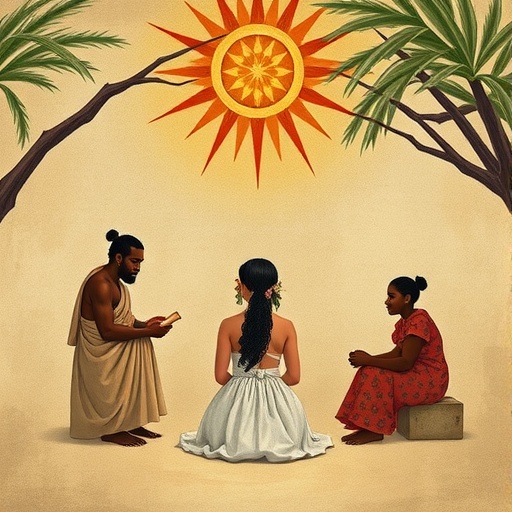
In an era where modern medicine dominates the healthcare landscape, the detailed exploration of traditional medical paradigms unveils a treasure trove of centuries-old wisdom, often overlooked yet profoundly resonant with the human experience of illness and healing. A recent publication by M. Anshari in the International Journal of Anthropology and Ethnology plunges deep into the complex concept of illness etiology as understood within a traditional medical system centering on the philosophy of Aruh and its associated healing rituals. This comprehensive analysis not only revitalizes the significance of ethnomedicine but also bridges contemporary scientific inquiry with rich cultural narratives, offering fresh perspectives on health and disease management.
The philosophy of Aruh presents a unique ontological framework, wherein illness is not perceived merely as a biological malfunction but as an intricate imbalance between various metaphysical and physical forces. Unlike the reductionist view commonly held in biomedicine, this system emphasizes the interconnectedness of body, spirit, and environment, positing that disease arises from disruptions in this delicate equilibrium. This model challenges the often linear causality ascribed to disease and invites a more holistic understanding, one that recognizes illness as a multi-dimensional phenomenon embedded within socio-cultural and ecological contexts.
Central to this traditional system is the role of healing rituals, which serve as dynamic agents in restoring harmony and re-establishing the flow of vital energies. These rites are not simply symbolic gestures but are imbued with substantive therapeutic efficacy acting through psychological, social, and perhaps even physiological channels. The ritualistic healing practices incorporate elements such as incantations, herbal applications, and communal participation, creating an immersive therapeutic environment designed to realign the patient’s intrinsic forces with the cosmic order.
The article showcases an ethnomedical viewpoint where the etiology of illness is a narrative constructed through collective memory and cultural symbolism. This narrative framework allows communities to make sense of suffering, assign meaning to symptoms, and develop coping mechanisms that transcend physical treatment. By analyzing the philosophy of Aruh within its cultural moorings, the study highlights how indigenous knowledge systems validate the patient’s subjective experience and support the social fabric essential for health and recovery.
A particularly compelling aspect of Anshari’s analysis is the emphasis on how traditional practitioners diagnose and interpret illness causation. Diagnosis goes beyond physical examination—it involves deciphering signs, spiritual messages, and interactions with ancestral spirits or natural forces. These interpretations influence the choice of treatment modalities and underscore the importance of culturally competent healthcare that respects indigenous epistemologies rather than dismissing them as superstitious or anecdotal.
The therapeutic paradigm within the Aruh philosophy encompasses both preventative and curative strategies. Preventative measures focus on maintaining balance through lifestyle, diet, spiritual purification, and environmental harmony. Curative measures, conversely, are adaptive and personalized, addressing the specific disturbances identified in the patient’s bio-psycho-spiritual constitution. This adaptive quality reflects a deep appreciation for individual variability and acknowledges the limitations of one-size-fits-all medical prescriptions.
Moreover, the study argues that the integration of ethnomedicine and traditional rituals offers a compelling alternative for global health frameworks striving to be more inclusive and culturally sensitive. In many indigenous societies where access to biomedicine is limited, these traditional systems are not only primary sources of care but also repositories of biodiversity through their use of medicinal plants and natural resources. The preservation and scientific validation of such knowledge could unlock novel pharmacological agents and holistic treatment models.
The paper further stresses that the philosophy of Aruh and its healing practices hold psychosomatic implications that modern clinical settings often overlook. The rituals facilitate a psycho-emotional reset, reduce anxiety, and reinforce community support—factors increasingly recognized in psychoneuroimmunology as pivotal to health outcomes. This underscores an urgent need for multidisciplinary research combining anthropology, neuroscience, and clinical medicine to explore the mechanistic underpinnings of ritual efficacy.
From a methodological standpoint, Anshari’s work exemplifies rigorous ethnographic research that includes participant observation, interviews with traditional healers, and cross-cultural comparison. This approach ensures an authentic representation of indigenous knowledge and mitigates the risk of misinterpretation often encountered when external observers impose their conceptual frameworks. Such depth of inquiry lays the groundwork for respectful dialogue between traditional and biomedical systems.
The socio-political dimension of the research cannot be understated. By highlighting the validity and sophistication of traditional illness theories and healing rituals, it challenges the marginalization of indigenous knowledge in national health policies. The study advocates for recognition and integration of such systems as complementary rather than oppositional to biomedicine, thereby promoting equity, cultural dignity, and health sovereignty.
Another revealing insight is the environmental ethic embedded within the Aruh philosophy. Healing is inseparable from respect for nature and sustainable interaction with natural elements. This ecological consciousness aligns closely with contemporary concerns about environmental degradation and its impact on public health, illustrating how ancestral wisdom could inform modern sustainability initiatives.
The article also reflects on the dynamic nature of traditional knowledge, dispelling the myth of static folklore. The philosophy of Aruh is depicted as adaptable, evolving through continuous interaction with changing social conditions and scientific developments. This fluidity enables the system to remain relevant and effective amidst external pressures and modernization.
Furthermore, the therapeutic community surrounding Aruh practitioners plays a crucial role in reinforcing health behaviors and social cohesion. Healing is not an isolated event but a communal journey where empathy, social support, and shared cultural identity converge to enhance therapeutic success. Such insights are invaluable to contemporary public health strategies focused on community engagement.
Crucially, the research calls for deeper scientific engagement with ethnomedicine to document, preserve, and potentially integrate valuable traditional practices into broader health systems. It cautions against appropriation devoid of cultural context and urges collaborative frameworks that honor intellectual property rights and community participation, paving the way for ethical innovation in global health.
As we continue to grapple with complex health challenges that include chronic diseases, mental health crises, and emerging infections, revisiting traditional medical philosophies such as Aruh could inspire more holistic and versatile approaches. These holistic models encourage health practitioners and researchers to transcend biomedical reductionism and embrace the richness of human cultural diversity in defining and treating illness.
In sum, Anshari’s article provides a powerful contribution to the literature on ethnomedicine and medical anthropology by systematically dissecting the philosophy of Aruh and its healing rituals. Through this lens, it advocates for a broader conceptualization of illness and healing that integrates metaphysical, social, and ecological dimensions, thereby revolutionizing our understanding of what it means to be healthy in a complex, interconnected world.
Cite Scienmag News
Courtney Benton. (August 5, 2025). Aruh Philosophy and Rituals in Traditional Healing. Scienmag. https://scienmag.com/aruh-philosophy-and-rituals-in-traditional-healing/
Courtney Benton. "Aruh Philosophy and Rituals in Traditional Healing." Scienmag, 5 August 2025, https://scienmag.com/aruh-philosophy-and-rituals-in-traditional-healing/. Accessed 3 September 2026.
Courtney Benton. "Aruh Philosophy and Rituals in Traditional Healing." Scienmag. August 5, 2025. https://scienmag.com/aruh-philosophy-and-rituals-in-traditional-healing/


