

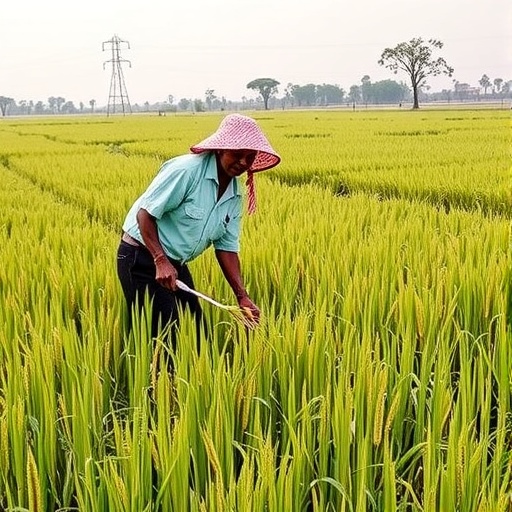
The cultivation of rice, one of the world’s most important staple foods, is increasingly coming under scrutiny due to its interaction with environmental pollutants, specifically arsenic. A recent study conducted by researchers including Simões, Ferreira, and Marques sheds light on the mobilization and accumulation of arsenic in rice plants, particularly in the alluvial Tejo river basin in Portugal. This research is crucial, considering that rice plants are known to be efficient accumulators of arsenic, a toxic element that can have serious health implications for consumers.
Arsenic is a naturally occurring element found in soils and water across various ecosystems. However, its concentration can vary significantly due to anthropogenic influences such as industrial contamination, agricultural practices, and the overuse of certain fertilizers and pesticides. In regions surrounding the Tejo River, the risk of arsenic mobilization into agricultural systems has raised alarms regarding the safety of consuming locally grown rice.
The study examined how different soil and water compositions, alongside agricultural practices, influence the levels of arsenic that rice plants absorb. The alluvial Tejo river basin presents a unique environment for this research because of its varied agricultural methods and significant water management practices. These factors create a complex interplay that researchers aimed to unravel in order to understand the fate of arsenic in this agricultural context.
Water management practices can have a profound impact on arsenic mobilization. This study highlighted that flooding, a common practice in rice cultivation, affects the solubility of arsenic and its uptake by plants. When fields are flooded, reduced oxygen conditions can lead to the dissolution of arsenic compounds, enhancing their availability for plant uptake. This process underscores the importance of understanding hydrological practices in conjunction with soil chemistry.
Soil composition also plays a critical role in the arsenic dynamics. Different minerals and organic matters present in the soil can either bind arsenic, thereby reducing its bioavailability, or, conversely, enhance its mobility. The research pointed out that soils with high levels of iron and organic carbon might exhibit lower arsenic availability, suggesting that land management strategies could be developed to mitigate arsenic uptake in rice.
The researchers conducted field experiments to monitor and measure arsenic levels in rice plants grown in the Tejo river basin. Their work involved collecting soil and water samples and analyzing them for their arsenic content. The data indicated a direct correlation between certain agricultural practices and increased arsenic accumulation in rice grains. This information could be pivotal for farmers looking to reduce arsenic levels in their crops through informed agricultural practices.
Agricultural practices, including the type of fertilizers used and irrigation methods, were also found to influence arsenic levels in rice. The use of nitrogen-rich fertilizers, for instance, can promote the growth of rice while simultaneously affecting soil and water chemistry in ways that may increase arsenic uptake. As the application of agricultural inputs keeps evolving, so must the approaches to assess and manage risk factors related to arsenic.
Moreover, this research raises pertinent questions about food safety and public health. With rice being a staple for billions, any example of arsenic accumulation poses a vast risk to human health. Chronic exposure to arsenic is linked to various health problems, including cancer and cardiovascular issues. This study, therefore, emphasizes the need for regular monitoring and guidelines to ensure the safe consumption of rice, particularly in regions susceptible to arsenic contamination.
In addition to health implications, the findings of this research have broader environmental consequences. The mobilization of arsenic within agricultural systems can alter the ecological balance, affecting flora and fauna in affected areas. Policymakers and environmentalists must take these findings into account to implement sustainable agricultural practices that protect both human health and the environment.
The implications of this study are vast and extend beyond the Tejo river basin. Similar agricultural systems worldwide may be experiencing the same challenges regarding arsenic accumulation in rice. This research serves as a warning and a proactive message to database efforts for environmental monitoring to safeguard food safety globally.
As the study concludes, the researchers call for more extensive investigations into sustainable practices that might limit arsenic bioavailability. Such practices could include adjusting irrigation techniques, selecting appropriate soil amendments, and exploring plant varieties that exhibit lower arsenic absorption rates. Addressing these factors will be crucial in ensuring the safety and sustainability of rice cultivation moving forward.
This comprehensive examination of arsenic’s role in rice production opens many pathways for future research, policy-making, and community education. It highlights the pressing need for a multidisciplinary approach to tackle this pressing issue holistically. The insights gained from the alluvial Tejo river basin study are essential to enhancing food security while safeguarding public health against the backdrop of environmental contaminants.
In conclusion, as global awareness of food safety increases, this study marks an important step forward in understanding the complexities of agricultural practices and their environmental impacts. Researchers, policymakers, and farmers alike must engage in dialogue to foster practices that will ensure the continued safety and sustainability of rice production harboring arsenic concerns.
Subject of Research: Arsenic mobilization and accumulation in rice plants in the Tejo river basin.
Article Title: Arsenic mobilization and accumulation in rice plants (Oryza sativa L.) produced in alluvial Tejo river basin: effects of water and soil composition, and agricultural practices.
Article References:
Simões, M., Ferreira, D., Marques, A.C. et al. Arsenic mobilization and accumulation in rice plants (Oryza sativa L.) produced in alluvial Tejo river basin: effects of water and soil composition, and agricultural practices.
Discov Agric 4, 13 (2026). https://doi.org/10.1007/s44279-026-00488-5
Image Credits: AI Generated
DOI: https://doi.org/10.1007/s44279-026-00488-5
Keywords: Arsenic, Rice, Oryza sativa, Tejo river basin, Agricultural practices, Soil composition, Water management, Food safety, Public health.


