

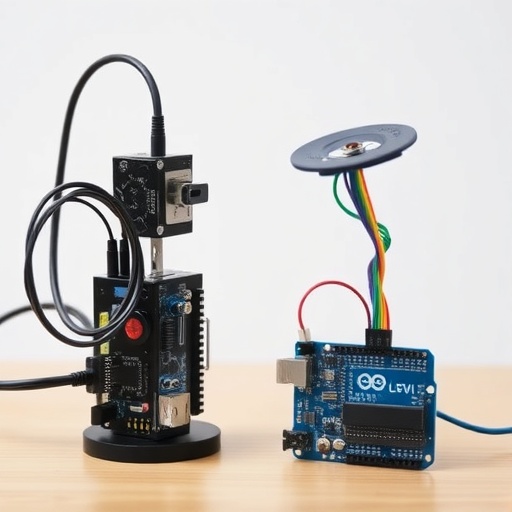
In an era where technological advancements seamlessly infiltrate nearly every aspect of our lives, the issue of examination impersonation has garnered escalating attention. It poses not only an ethical dilemma but also jeopardizes the academic integrity that educational institutions strive to uphold. A team of researchers led by C.C. Mgboji, culminating in a groundbreaking study published in the journal “Discovery in Education,” has undertaken a mission to fortify examination protocols through innovative technology. Their work introduces the Arduino-based Multimodal Fusion Biometric Examination Impersonation System (ABMFBEIS), aimed specifically at combatting the troubling trend of impersonation during assessments.
The notion of using biometric data to authenticate student identities is not entirely novel; however, this particular system takes a multifaceted approach. The ABMFBEIS utilizes various biometric modalities, such as fingerprint recognition and facial recognition, to enhance validity and reliability. As education transitions into an increasingly digital landscape, it becomes paramount to ensure the security of examinations. The use of Arduino technology stands at the forefront of this initiative, lending a robust framework for the mixed modalities that characterize the ABMFBEIS.
Understanding the technical intricacies involved in developing the ABMFBEIS is crucial. The researchers leveraged Arduino microcontrollers due to their flexibility, affordability, and extensive community support, making them an ideal platform for innovation in biometric systems. By integrating various sensors, the system is able to capture different biometric traits in real-time, which are then processed to verify the identity of candidates. The multi-modal approach mitigates the risks associated with relying on a single biometric signature, creating redundancies that bolster security and enhance user trust.
The genesis of the ABMFBEIS lies in a thorough examination of existing systems and their limitations. Traditional methods of preventing examination impersonation often rely heavily on proctoring, which can be both invasive and not entirely effective. By shifting to a biometric framework, the researchers aim to provide a more seamless user experience while simultaneously upholding academic integrity. The research clearly highlights how the ABMFBEIS not only simplifies the identity verification process but also reduces the likelihood of impersonators slipping through the cracks.
One of the pivotal components of the system is its ability to perform real-time analysis. This feature is incredibly significant, as it means that once a student registers for an examination, their biometric data can be continuously monitored. If any inconsistencies are detected—be it through a fingerprint discrepancy or facial recognition failure—the system can alert administrators instantaneously. This aspect introduces a proactive measure against impersonation, shifting the focus from reactive to preventative actions in educational settings.
The researchers conducted extensive testing of the ABMFBEIS to gauge its efficacy in various examination scenarios. The results were compelling, demonstrating that the system achieved a high success rate in distinguishing between legitimate students and would-be impersonators. Furthermore, their analyses suggested that the combination of different biometric modalities significantly reduced false acceptance and rejection rates compared to traditional single-modality systems. Such findings not only validate the efficacy of this technology but also lay the groundwork for broader applications in various sectors.
While the technology behind the ABMFBEIS is indeed sophisticated, the researchers made a concerted effort to ensure that it remains user-friendly. They recognized that any successful implementation in educational environments must prioritize ease of use for both administrators and students. Thus, the interface of the system was designed to be intuitive, facilitating quick training and adaptability. This user-centric approach is key to overcoming potential resistance from educational institutions, as cumbersome systems are often met with skepticism and reluctance.
Moreover, the potential implications of this technology extend beyond the confines of examination rooms. By incorporating biometric verification systems in educational institutions, the framework could be adapted for various administrative functions, including enrollment and attendance tracking. This not only enhances security but also optimizes operational efficiency, drastically reducing the administrative burden often placed upon educational staff.
As the conversation around biometric data and privacy continues to evolve, the ethical considerations involved in implementing the ABMFBEIS cannot be overlooked. The researchers have taken great care to address these concerns by emphasizing informed consent and transparency in how biometric data is collected and used. They assert that the protection of student privacy should be paramount, ensuring that such data is utilized solely for the purpose intended—safeguarding the integrity of examinations.
The ABMFBEIS has the potential to act as a model for other educational institutions grappling with similar challenges of examination integrity. The world of academia is facing unprecedented pressures, and technologies like this serve to reinforce trust in assessment processes. By proactively addressing issues like impersonation through robust and innovative solutions, educational institutions can embrace the future while maintaining a commitment to fairness and integrity.
Looking ahead, the researchers envisage broader applications of the ABMFBEIS beyond educational institutions. The principles underlying their research can be adapted to other high-stakes environments, such as professional certification examinations, where the need for verifiable identity is equally critical. This opens a potential avenue for the technology to serve as a comprehensive solution to integrity-based challenges across various sectors.
In summary, the innovative work of C.C. Mgboji and colleagues heralds a new approach to safeguarding examination integrity through the ABMFBEIS. Not only does it challenge traditional practices, but it also sets a new standard for how technology can be harnessed to address long-standing issues in academia and beyond. As institutions continue to navigate the complexities of modern education, the insights provided by this research could catalyze a wave of transformation, ensuring that the sanctity of academic assessments remains intact.
This groundbreaking study illustrates a significant leap in the fusion of technology and education and opens the door for future innovations that can dynamically respond to the evolving challenges facing academic integrity globally. The integration of biometric systems may very well represent not just a trend, but a transformative movement towards ensuring that every student’s work is their own.
Subject of Research: Examination Impersonation Detection
Article Title: Development of an Arduino-based Multimodal Fusion Biometric Examination Impersonation System (ABMFBEIS) for detecting examination impersonation.
Article References:
Mgboji, C.C., Ibezim, N.E., Nannim, F.A. et al. Development of an Arduino-based Multimodal Fusion Biometric Examination Impersonation System (ABMFBEIS) for detecting examination impersonation. Discov Educ (2026). https://doi.org/10.1007/s44217-026-01151-3
Image Credits: AI Generated
DOI:
Keywords: Biometric Systems, Examination Integrity, Technology in Education, Arduino, Impersonation Detection, Academic Integrity.


