


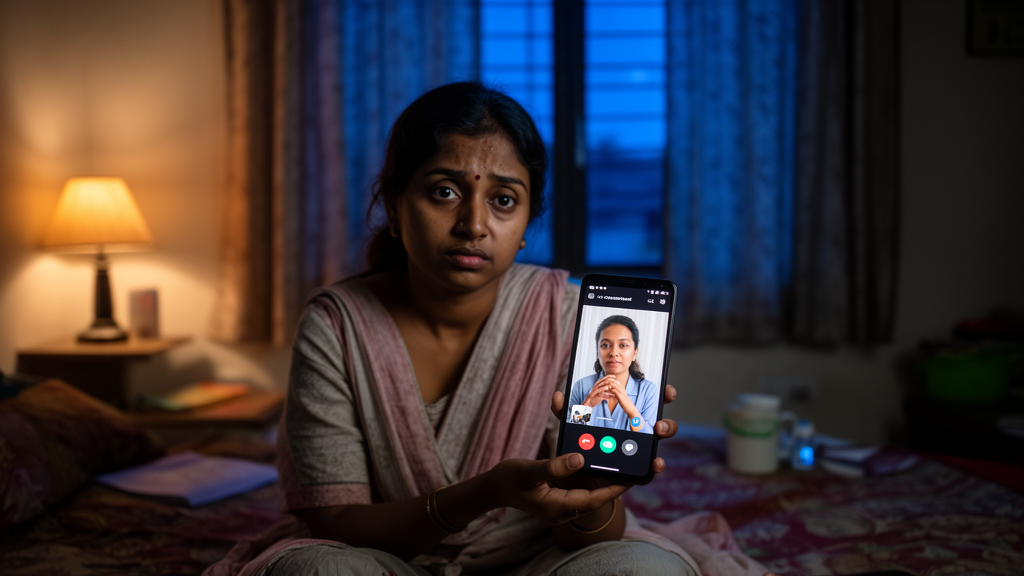
Online mental health platforms have quietly become a lifeline for millions of women in low- and middle-income countries, offering counseling that sidesteps stigma, distance, and the crushing logistics of reaching a clinic. Yet the women who arrive at these digital doors are often carrying far more than the services can measure. A new cross-sectional study published in PLOS Mental Health has now quantified that hidden burden among Bangladeshi women seeking help through an online counseling platform, and the numbers are stark: nearly six in ten women screened positive for anxiety, a nearly identical share for depression, and roughly one in four for both conditions at once. The findings, drawn from a full year of client data, offer one of the clearest portraits to date of the psychological landscape of women who turn to digital mental health services in South Asia.
The research team, led by Kamrun Nahar Koly of the Women Support Initiative Forum (WSIF) and collaborators including Daniel D. Reidpath, analyzed information from 375 women who received counseling through WSIF between September 5, 2023, and August 26, 2024. Rather than recruiting a sample from the general population, the investigators studied women already engaged with a real-world service, which means the results capture the actual clinical load arriving at digital counselors’ screens every day. Data were collected by WSIF psychologists using a structured client information form that documented socio-demographic characteristics, histories of mental health conditions, physical health problems, and the symptoms that prompted each woman to seek help in the first place.
To measure psychological distress, the study relied on two of the most widely validated screening instruments in global mental health practice. The Generalized Anxiety Disorder-7 scale, known as GAD-7, asks respondents about seven core anxiety symptoms over the preceding two weeks, from nervousness and restlessness to irritability and fear that something awful might happen. The Patient Health Questionnaire-9, or PHQ-9, mirrors this structure for depressive symptoms, probing low mood, anhedonia, sleep disturbance, fatigue, appetite changes, concentration problems, psychomotor slowing, and thoughts of self-harm. Both instruments score symptoms on a continuum from minimal to severe, allowing clinicians and researchers to grade the intensity of each condition rather than treating mental illness as a simple yes-or-no category.
The headline result is difficult to ignore. Among the 375 women assessed, 59.2 percent reported mild to severe anxiety, and 58.1 percent reported mild to severe depression. A quarter of the sample, 25.6 percent, met criteria for both conditions simultaneously, a comorbidity pattern that clinicians know well: anxiety and depression frequently travel together, amplify each other’s severity, and complicate treatment. For a platform whose counselors might previously have assumed they were handling routine stress and adjustment difficulties, the data suggest instead that digital services in Bangladesh are functioning as frontline responders to a substantial and largely untreated epidemic of common mental disorders among women.
Beyond raw prevalence, the study used multivariate logistic regression, a statistical technique that estimates the independent effect of each factor while holding all others constant, to identify who was most at risk. Some of the associations were counterintuitive. Women with graduate-level education had a 66 percent lower likelihood of anxiety compared with women without graduate education, and women who had one or more siblings showed 50 to 54 percent lower odds of anxiety than only children or those without siblings. These protective patterns hint at mechanisms that researchers have long debated: higher education may build psychological resources, problem-solving skills, and help-seeking confidence, while siblings may provide emotional buffers and social support that blunt the development of anxious symptoms.
Depression told a different and more troubling story. Women with graduate-level education had 3.41 times higher odds of depression than non-graduates, and those with postgraduate education showed similarly elevated risk at 2.63 times. The authors also found that women reporting hormonal conditions had more than ten times higher likelihood of depression compared with women without such conditions, one of the strongest associations in the entire analysis. The apparent reversal of the education effect between anxiety and depression is striking and may reflect the specific population studied: women educated enough to seek out an online counseling platform may be more aware of and better able to articulate depressive symptoms, or the pressures accompanying professional and academic achievement in a context of limited gender equity may weigh heavily on mood even as they protect against anxiety.
Physical health conditions also shaped the risk profile in unexpected directions. Women with a history of mental health conditions and those reporting migraine, headache, or allergic conditions had 52 percent and 65 percent lower odds of depression, respectively, compared with women without these conditions. The authors do not overinterpret these inverse associations, but they underscore how difficult it is to disentangle somatic complaints from psychological distress in self-reported data, and how clinical populations differ from community samples. What remained consistent across the sample was the symptom picture: distress, negative thinking, and persistent feelings of worry were highly prevalent among women with anxiety and among those with depression, painting a coherent portrait of rumination and emotional exhaustion as the dominant clinical presentation.
The study’s setting matters as much as its statistics. Bangladesh has one of the lowest ratios of mental health professionals to population in the world, and cultural stigma around psychological suffering falls disproportionately on women, who face layered pressures from economic dependency, caregiving burdens, and restricted autonomy. Online platforms like WSIF circumvent many of these barriers by allowing women to seek counseling privately, often from a mobile phone, without traveling to a facility or being seen entering one. The very accessibility that makes these services attractive, however, also means they absorb demand that would otherwise go entirely unmet, and this study demonstrates that the demand arriving at digital counselors is severe, comorbid, and clinically complex.
For policymakers and service designers, the implications are concrete. The authors argue that the significant mental health burden among women accessing online psychological counseling demands targeted action in designing interventions, rather than one-size-fits-all counseling scripts. Screening for depression should be routine even when women present with anxiety, given the quarter of clients affected by both. Hormonal health deserves explicit attention in assessments, given its outsized association with depressive symptoms. And the protective roles of education and sibling support suggest that digital services could be strengthened by integrating family involvement and building on the cognitive resources that educated clients bring to therapy. Digital platforms, in other words, should not merely replicate in-person counseling online but should be engineered around the specific epidemiology of the women who use them.
As digital mental health expands across the developing world, this Bangladeshi study offers both a warning and a template. The warning is that the women reaching out through screens are sicker than many providers assume, with anxiety and depression affecting roughly three in five and co-occurring in one in four. The template is a model of how service-embedded research can work: psychologists collecting structured data during routine care, validated screening tools administered at scale, and regression analyses that convert thousands of counseling encounters into actionable risk profiles. If the global push for digital mental health is to deliver on its promise of equity, studies like this one make clear that the first step is simply knowing who is knocking on the digital door, and how heavy is the burden they carry when they arrive.
Subject of Research: Prevalence and determinants of anxiety and depression among women using digital mental health services in Bangladesh
Article Title: Prevalence and associated factors of anxiety and depression among women seeking digital mental health services in Bangladesh
Article References: Koly, K. N., Saba, J., Sarker, F., Rudhsarah, E., Billah, M. A., Muzaffar, R., Mosaddek, N., Mosaddek, A. S. M., & Reidpath, D. D. (2026). Prevalence and associated factors of anxiety and depression among women seeking digital mental health services in Bangladesh. PLOS Mental Health, 3(9), e0000715. https://doi.org/10.1371/journal.pmen.0000715
Image Credits: AI Generated
DOI: 10.1371/journal.pmen.0000715
Keywords: digital mental health, anxiety, depression, Bangladesh, women's health, online counseling, GAD-7, PHQ-9, cross-sectional study, mental health services, hormonal conditions, South Asia
Cite Scienmag News
Glenn Wilkins. (October 9, 2026). Anxiety and Depression Touch Nearly Six in Ten Women Using Online Counseling in Bangladesh. Scienmag. https://scienmag.com/anxiety-and-depression-touch-nearly-six-in-ten-women-using-online-counseling-in-bangladesh/
Glenn Wilkins. "Anxiety and Depression Touch Nearly Six in Ten Women Using Online Counseling in Bangladesh." Scienmag, 9 October 2026, https://scienmag.com/anxiety-and-depression-touch-nearly-six-in-ten-women-using-online-counseling-in-bangladesh/. Accessed 9 October 2026.
Glenn Wilkins. "Anxiety and Depression Touch Nearly Six in Ten Women Using Online Counseling in Bangladesh." Scienmag. October 9, 2026. https://scienmag.com/anxiety-and-depression-touch-nearly-six-in-ten-women-using-online-counseling-in-bangladesh/


