


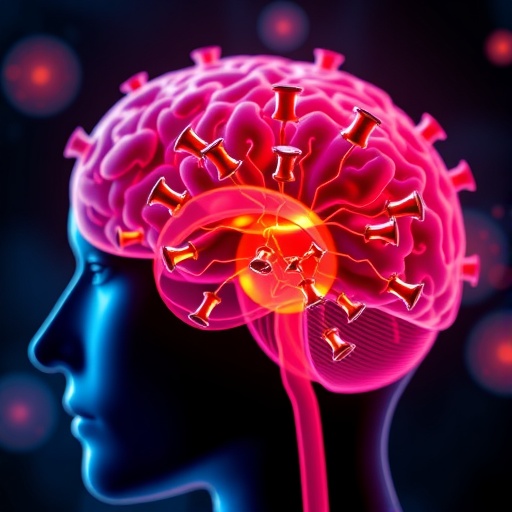
In an era where the nuanced treatment of psychiatric disorders hinges critically on our understanding of brain chemistry, a groundbreaking study has emerged, shedding unprecedented light on the pharmacodynamics of antipsychotic drug combinations. Published in Translational Psychiatry, this research by Spangemacher et al. tackles one of the most complex puzzles in psychopharmacology: how the simultaneous use of multiple antipsychotic drugs influences dopamine D2/D3 receptor occupancy, a pivotal factor in the treatment of disorders such as schizophrenia.
The dopamine D2/3 receptors are central to the pharmacological action of antipsychotics, mediating the therapeutic effects and side effects of these drugs. Historically, clinical decisions on prescribing combinations of antipsychotics have been guided more by trial-and-error and clinical intuition rather than solid quantitative models. This new research introduces a sophisticated kinetic model that predicts receptor occupancy in response to various drug combinations with remarkable precision, heralding a potential paradigm shift in personalized psychiatric care.
Antipsychotic drugs primarily exert their effects by occupying D2/3 receptors, thereby modulating dopamine signaling within the mesolimbic pathways of the brain. However, excessive receptor blockade—for instance, occupancy beyond a window of 60-80%—is associated with debilitating side effects, including motor disturbances and cognitive dulling. Conversely, insufficient receptor engagement fails to ameliorate psychotic symptoms effectively. Balancing this delicate occupancy has always been challenging, especially when multiple agents are prescribed simultaneously.
Spangemacher and colleagues have meticulously constructed a mathematical framework that integrates the individual pharmacokinetics and affinities of various antipsychotics. Their model rigorously predicts the cumulative receptor occupancy resulting from combinations of these drugs. This approach demystifies the ambiguous clinical practice of polypharmacy, providing quantifiable insights into how different drugs interact at the receptor level when co-administered.
A particularly enlightening aspect of the study is the revelation that drug combinations do not simply sum linearly in their receptor occupancy effects. Instead, nonlinear dynamics emerge, in which high-affinity drugs dominate binding sites and alter the effective occupancy of other drugs. This nuanced interaction challenges conventional dosing strategies, which often assume additive effects without considering competitive binding intricacies.
Equally vital is the model’s ability to simulate receptor occupancy under various clinical scenarios, including different dosage regimes, drug affinities, and patient-specific factors such as metabolism and receptor expression. This level of customization signals a move toward precision psychiatry, where treatments can be tailored on an individual basis to maximize efficacy while minimizing adverse effects.
The implications of this research extend beyond pharmacological theory into tangible clinical applications. For clinicians, having access to a predictive tool that accurately models receptor occupancy could radically improve decision-making in complex cases where patients exhibit treatment resistance or intolerable side effects on monotherapy. Such insights could help rationalize or avoid problematic polypharmacy, reduce trial periods with ineffective drug combinations, and ultimately enhance patient quality of life.
Moreover, the study surfaces the often-overlooked risk of receptor oversaturation when combining drugs, which may exacerbate extrapyramidal symptoms and metabolic disturbances. By illuminating these dangers through their model, the authors advocate for more rigorous evaluation of polypharmacy practices, encouraging the psychiatric community to reconsider prevalent prescribing habits grounded more in tradition than evidence.
Beyond its immediate clinical impact, the research stimulates vital discussion about the principles of drug development and regulatory evaluation for antipsychotics. Pharmaceutical companies may leverage this model to design drug regimens that optimize receptor occupancy profiles, potentially accelerating the development of safer and more effective combination therapies.
The comprehensive nature of the model, validated against empirical PET imaging data, provides a robust platform for future investigations. It also invites integration with neuroimaging and genetic biomarkers to refine predictions further and unravel the complex heterogeneity of psychiatric illnesses. Such multidisciplinary approaches are essential to transcend the often one-size-fits-all mentality in psychopharmacology.
In conclusion, Spangemacher et al.’s work represents a milestone in our quest to scientifically justify and optimize antipsychotic polypharmacy. By grounding treatment choices in quantitative models of dopamine receptor occupancy, it opens the door to more rational, personalized, and safer management of psychiatric disorders. The ripple effects of this research are poised to influence clinical guidelines, drug development, and ultimately, the lives of millions affected by mental illness worldwide.
This study underscores the indispensable value of integrating pharmacokinetic principles, receptor pharmacology, and computational modeling in modern psychiatry. Its insights resonate deeply amid growing concerns over the global burden of psychiatric disorders and the pressing need for more targeted, effective interventions with minimal side effects.
As psychopharmacology advances into an era characterized by precision and personalization, models like this serve as beacons lighting the path forward. The fusion of computational science and clinical pharmacology embodied in this research exemplifies the innovative spirit needed to tackle the complexities of brain disorders, fostering hope for improved therapeutic outcomes.
It is now incumbent upon researchers, clinicians, and policymakers alike to embrace such evidence-based frameworks to refine treatment paradigms, reduce healthcare costs associated with ineffective therapies, and elevate standards of mental health care universally.
The future of psychiatry may well hinge on these intricate molecular insights translated through computational lenses into practical tools—ushering a new dawn in understanding and managing the enigmatic disorders of the mind.
Cite Scienmag News
Glenn Wilkins. (October 1, 2025). Antipsychotic Combinations: Dopamine Receptor Occupancy Explained. Scienmag. https://scienmag.com/antipsychotic-combinations-dopamine-receptor-occupancy-explained/
Glenn Wilkins. "Antipsychotic Combinations: Dopamine Receptor Occupancy Explained." Scienmag, 1 October 2025, https://scienmag.com/antipsychotic-combinations-dopamine-receptor-occupancy-explained/. Accessed 3 September 2026.
Glenn Wilkins. "Antipsychotic Combinations: Dopamine Receptor Occupancy Explained." Scienmag. October 1, 2025. https://scienmag.com/antipsychotic-combinations-dopamine-receptor-occupancy-explained/


