

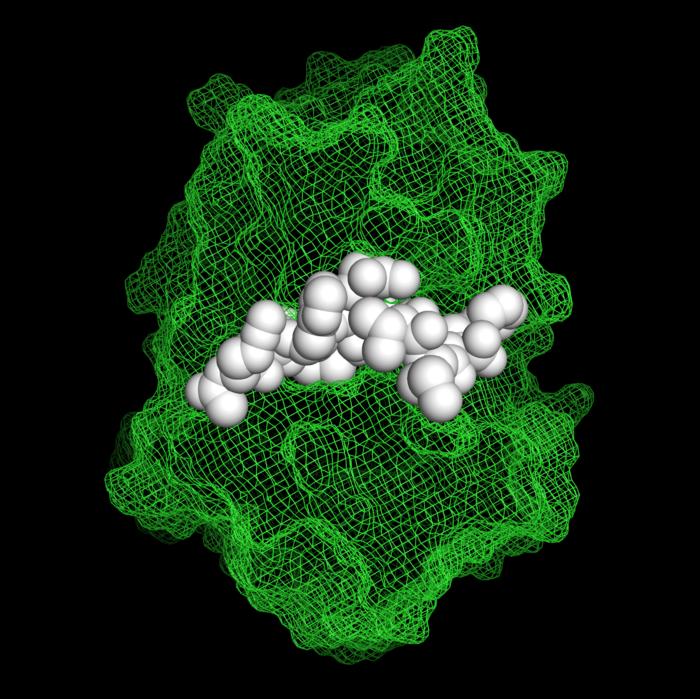
Tumor cells often hijack normal physiological processes to support their growth, exploiting proteins that are in charge of essential cell functions. It is therefore important to block the activity of these proteins only in cancer cells without affecting their crucial roles in healthy tissues. For this reason, classical approaches using small molecules that induce systemic inhibition across all cells in the body can lead to severe side effects.

Credit: Aaron Petruzzella (EPFL)
Tumor cells often hijack normal physiological processes to support their growth, exploiting proteins that are in charge of essential cell functions. It is therefore important to block the activity of these proteins only in cancer cells without affecting their crucial roles in healthy tissues. For this reason, classical approaches using small molecules that induce systemic inhibition across all cells in the body can lead to severe side effects.
An example of essential proteins hijacked by cancer cells are the cathepsins, a family of enzymes that is responsible for breaking down other proteins and remodeling the body’s tissues. Cathepsins are implicated in various cancers, osteoporosis, and autoimmune diseases. However, clinical trials with small molecule inhibitors of cathepsins have failed due to either lack of efficacy or toxicity.
Now, a team of scientists led by Elisa Oricchio and Bruno Correia at EPFL has developed a novel approach to overcome these limitations. They created a modular drug platform that conjugates non-natural peptide inhibitors (NNPIs) with antibodies, creating antibody-peptide inhibitor conjugates (APICs). This method ensures that the inhibitors are delivered specifically to cancer cells, thereby reducing systemic side effects and increasing therapeutic efficacy.
The researchers began by designing NNPIs that covalently bind to and inhibit cathepsins. They modified peptide sequences to include a Michael acceptor, a chemical moiety that makes it easier to form a stable bond with cathepsins.
The Michael acceptor reacts with the cysteine residue in the cathepsin’s active site (the part that of the enzyme responsible for its main job), creating a stable, covalent linkage that effectively inhibits the cathepsin. To further optimize the peptides’ specificity and potency, the team used saturation mutagenesis screening – a method that systematically changes each amino acid in a protein to find the best variants with desired properties.
The researchers identified several strong inhibitors against four different cathepsins, namely cathepsin S, B, K and L. By attaching these inhibitors to antibodies that recognize CD22, CD79, HER2, and Siglec15, the researchers could precisely deliver the NNPIs to lymphoma cells, breast cancer cells and osteoclasts. This leverages the natural ability of antibodies to be internalized by target cells, precisely directing the inhibitors where they are needed.
Then, it was time to test the APICs: in both cell lines and animal models, they showed significant therapeutic effects. For example, in lymphoma models, treatment with APICs that target cathepsin S led to tumor reduction and activation of the immune response against cancer cells. In breast cancer models, APICs targeting cathepsin B hindered tumor invasiveness and cell migration, underscoring the potential of APICs to prevent metastasis.
By delivering inhibitors specifically to cancer cells, the APIC approach can avoid or minimize the side effects commonly associated with other treatments, such as chemotherapies. Moreover, the modular nature of the APIC design means it can be adapted to target various proteases implicated in different diseases, potentially revolutionizing the treatment landscape for conditions beyond cancer.
The APIC project is now extending beyond the lab and is taking its first steps towards becoming a clinical reality. “We filed two patent applications based on this project,” says Elisa Oricchio. “Aaron Petruzzella, the PhD student who led the project, recently received the support of the SNF Bridge Proof of Concept fellowship to continue working on these inhibitors, build the foundations of a start-up and attract the attention of potential investors.”
List of contributors
- EPFL Swiss Institute for Experimental Cancer Research (ISREC)
- Swiss Cancer Center Leman (SCCL)
- EPFL Institute of Chemical Sciences and Engineering (ISIC)
- EPFL Institute of Bioengineering
- EPFL Laboratory of Protein Design and Immunoengineering
- Ludwig Institute for Cancer Research (Lausanne Branch)
- Lausanne University Hospital (CHUV) and University of Lausanne (UNIL)
- Radboud University
- Institute for Chemical Immunology Nijmegen
- EPFL Protein Production and Structure Core Facility
- Agora Pôle de recherche sur le cancer
Reference
Petruzzella, A., Bruand, M., Santamaria-Martínez, A., Katanayeva, N., Reymond, L., Wehrle, S., Georgeon, S., Inel, D., van Dalen, F. J., Viertl, D., Lau, K., Pojer, F., Schottelius, M., Zoete, V., Verdoes, M., Arber, C., Correia, B. E., & Oricchio, E. Antibody-peptide conjugates deliver covalent inhibitors blocking oncogenic cathepsins. Nature Chemical Biology 29 May 2024. DOI: 10.1038/s41589-024-01627-z

