

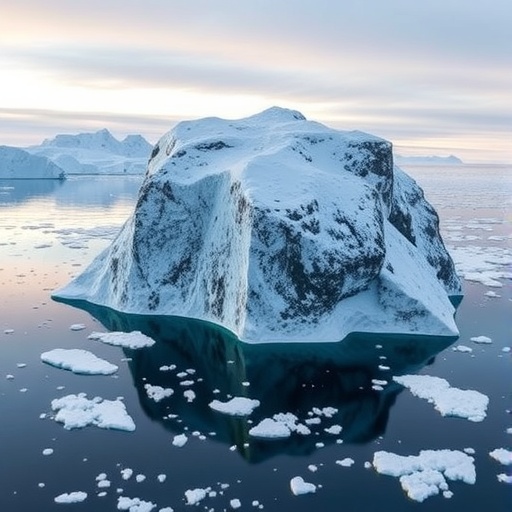
As global temperatures continue their relentless climb, the frozen continent of Antarctica is on the cusp of dramatic transformation. Recent projections suggest that the expanse of ice-free land in Antarctica could increase by an astonishing 550 percent over the next three centuries. This unprecedented shift, driven principally by the retreat of ice sheets and evolving sea levels, may reveal vast tracts of land that have been shrouded for millennia, bearing profound implications for earth sciences, mineral resource exploration, and environmental stewardship.
Antarctica, traditionally seen as a vast white wilderness dominated by ice, is poised to undergo one of the most significant geographical metamorphoses in recent history. Employing advanced sea-level models alongside detailed ice sheet melt simulations, scientists have charted potential futures under various greenhouse gas emission scenarios. These models coalesce to forecast that up to approximately 120,000 square kilometers of today’s ice-covered terrain could become exposed in the not-so-distant geological future, revealing mineral deposits that have never before been accessible to researchers or industry.
The driving mechanisms behind this transformation stem from a complex interplay of warming-induced ice mass loss and the resultant sea-level feedbacks. As Antarctic ice sheets continue their gradual disintegration, vast portions of the land they shield from direct exposure will emerge. But the interaction does not stop there; changes in sea level, influenced by both regional and global dynamics, further sculpt the potential landscape of new ice-free zones. These emerging lands are not confined to any singular geographic area but span across all regions with existing territorial claims, including the unclaimed sectors in West Antarctica, hinting at a continental-scale phenomenon.
The geological context of Antarctica offers a tantalizing glimpse into what this sudden deglaciation might unearth. Beneath the ice lie rich mineral deposits distributed across various rock formations shaped over hundreds of millions of years. The strip maps derived from the projections indicate potential exposure of new mineral occurrences, notably in areas that have hitherto been geologically inaccessible. This profound unveiling of resources could redefine human understanding of Antarctic geology, simultaneously setting the stage for possible exploitation.
The implications of accessing these mineral reserves are multifaceted and deeply complex. While from a purely economic perspective, the acquisition of such resources could become increasingly viable with technological advances and shifting market demands, the environmental costs carry significant weight. Antarctica’s fragile ecosystems, sculpted by millennia of isolation, could face unprecedented disruption. Extractive activities that may follow could disturb habitats, alter hydrological cycles, and introduce foreign pollutants to an environment that has remained remarkably untainted.
Adding to these ecological concerns is the geopolitical dimension. The newly exposed ice-free lands overlap with the territories claimed by various nations, raising questions about sovereignty, resource rights, and international cooperation. The Antarctic Treaty System, which currently governs the management and preservation of the continent, could face intense pressure to evolve in response to these emerging realities. How nations navigate this potential resource competition will be pivotal in defining the future trajectory of Antarctic governance.
From a scientific viewpoint, the exposure of new ice-free terrain offers a unique natural laboratory for understanding past climatic and geological processes. Rock outcrops that were previously concealed beneath kilometers of ice will become accessible, enabling researchers to reconstruct Antarctica’s glacial history and better understand the planetary climate system’s responsiveness to warming. These insights are crucial for refining predictive climate models that inform global policy decisions.
Moreover, the interplay between ice sheet melt and sea-level changes poses a distinctive feedback loop potentially accelerating the deglaciation process. As ice sheets shrink, the underlying bedrock rebounds upward, modifying gravitational fields and local sea levels, which in turn influences the stability and retreat rates of surrounding ice masses. This complex dynamic underpins the projections, highlighting the need for advanced modeling sophistication to fully capture and predict Antarctic futures.
Technological advances in remote sensing, satellite observation, and geospatial analytics have been instrumental in enabling these refined projections. Algorithms integrating high-resolution elevation data with climate and ocean models paint a biologically and geologically plausible scenario of Antarctica’s landscape three hundred years hence. This integration underscores the power of multidisciplinary approaches in tackling the challenges posed by rapid planetary change.
The potential rise of mineral resource extraction in Antarctica also prompts urgent discussions about sustainable development in one of Earth’s last remaining frontiers. How humanity engages with these untapped resources, balancing economic gains with environmental responsibility, will be a defining challenge for the coming centuries. The stewardship decisions made now and in the near future could set precedents that resonate far beyond the polar regions.
Public and scientific community awareness of these prospects is critical. As warming advances and policy frameworks are tested, transparent dialogue and inclusive governance become essential to navigate the competing interests of conservation, research, and resource development. Knowledge dissemination on the scale of this transformation empowers stakeholders to craft solutions that are both visionary and pragmatic.
Ultimately, Antarctica’s future landscape will be the cumulative outcome of climate forces, geological processes, human agency, and international diplomacy. The continent’s emerging ice-free land represents both a remarkable natural phenomenon and a crucible for the interconnected challenges of the Anthropocene epoch. How this narrative unfolds will depend not only on the science but also on society’s will to steward some of the last pristine environments on Earth.
In summary, the anticipated sea-level-induced exposure of vast new sections of ice-free land across Antarctica heralds a profound environmental shift with cascading effects on mineral accessibility, ecosystem dynamics, scientific discovery, and geopolitical frameworks. This projection not only underscores the urgency of understanding the complex cryosphere-climate interactions but also illuminates the pressing need for anticipatory governance models that prioritize sustainable coexistence with the planet’s changing polar frontiers. As the Earth warms, Antarctica’s veil thins, revealing treasures and challenges in equal measure—an epochal transformation bearing lessons for all humankind.
Subject of Research: Antarctic ice-free land expansion and mineral resource exposure in a warming climate
Article Title: Emergence of Antarctic mineral resources in a warming world
Article References:
Lucas, E.M., Richards, F.D., Cederberg, G. et al. Emergence of Antarctic mineral resources in a warming world. Nat. Clim. Chang. (2026). https://doi.org/10.1038/s41558-026-02569-1
Image Credits: AI Generated


