

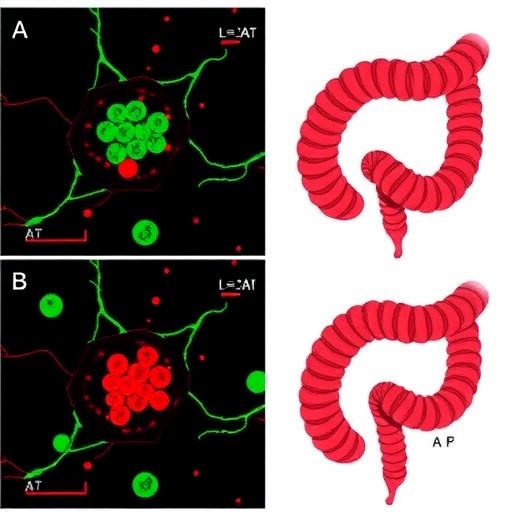
In the relentless pursuit of understanding cancer and finding ways to combat its formidable challenges, recent research has unveiled an intricate molecular mechanism that plays a critical role in the behavior of colorectal cancer stem-like cells. This innovative study, conducted by Ganesan, Ramasamy, Alshawsh, and their colleagues, delves into the role of Annexin-A1 and how it modulates the apoptosis-autophagy switch in a model of 5-fluorouracil (5-FU)-resistant colorectal cancer. The findings highlight the involvement of the PI3K/AKT/mTOR signaling pathway, a crucial player in cell survival, proliferation, and metabolism, underscoring the complexity of cancer’s molecular backdrop.
The research opens a window into the specific mechanisms by which cancer cells resist therapy and maintain their stem-like properties—all of which contribute to the progression and recurrence of colorectal cancer. By understanding the apoptosis-autophagy interplay, which can determine whether cancer cells survive or undergo programmed cell death, this study offers new insights into the therapeutic potential of targeting this balance in resistant cancer models. The significance of these findings becomes particularly evident in light of the increasing prevalence of drug-resistant cancer stems.
A major focus of the study is Annexin-A1, a protein implicated in various cellular processes, including inflammation and apoptosis. The authors present compelling evidence suggesting that Annexin-A1 plays a pivotal role in the adaptation mechanisms of cancer cells. For instance, in 5-FU-resistant cells, the expression of Annexin-A1 is enhanced, indicating an adaptive response to chemotherapy. This elevation corresponds with changes in the forward balance between autophagy—the process by which cells break down and recycle cellular components—and apoptosis. Such findings suggest that Annexin-A1 may serve as a double-edged sword, aiding cancer cells in surviving the harsh conditions induced by chemotherapy.
At the crux of this research is the PI3K/AKT/mTOR signaling pathway, often regarded as a central hub for transmitting growth signals. It directly controls important cellular functions, including metabolism and survival. The study unveils its intricate involvement in the regulation of both autophagy and apoptosis in colorectal cancer stem-like cells. By demonstrating that Annexin-A1 enhances the activation of this signaling pathway, the researchers highlight how cancer cells exploit this mechanism to evade death and promote survival in the face of cytotoxic agents.
Through a detailed examination of this signaling pathway, the study offers a nuanced understanding of how alterations in the PI3K/AKT/mTOR axis can tip the balance in favor of either survival through autophagy or cell death via apoptosis. This observation is particularly intriguing, considering that many current therapeutic strategies often fail due to the ability of cancer cells to switch between these two fates and develop resistance to treatment. Consequently, targeting this axis emerges as a promising avenue for enhancing the effectiveness of existing therapies.
Moreover, this research has significant clinical implications. In understanding how Annexin-A1 and the PI3K/AKT/mTOR signaling pathway function together, the authors pave the way for novel therapeutic strategies aimed at overcoming resistance in colorectal cancer. This means that future treatment regimens may not only focus on killing cancer cells but also on manipulating the environment and biological pathways that regulate cell fate decisions.
The findings call attention to the potential of exploiting the apoptosis-autophagy switch. By pharmacologically inhibiting the pro-survival signals derived from this switch, researchers envision new foundations for enhancing the sensitivity of 5-FU-resistant cells to chemotherapy, pushing the boundaries of current treatment protocols and ultimately improving patient outcomes. This strategy could become critical as we strive for more personalized therapies that consider the unique characteristics and behaviors of each patient’s cancer.
As scientists unravel the complex web of interactions involved in cancer pathology, studies like this exemplify how interdisciplinary approaches can yield significant insights into cancer biology. The interplay between cell signaling pathways, the tumor microenvironment, and the cellular mechanisms governing life and death paves the road toward transformative strategies against cancer. By continuing to explore these intricate pathways, researchers can craft targeted therapies that hold the promise of reversing drug resistance and enhancing the longevity and quality of life for patients afflicted by colorectal cancer and beyond.
The collaboration among researchers in unearthing the role of Annexin-A1 not only highlights the concerted effort in the scientific community but also serves as a clarion call to focus on understanding resistance mechanisms in various cancer types. Each novel discovery adds a piece to the puzzle, facilitating the development of effective interventions that disrupt the cancer lifecycle at multiple junctures. Therefore, the future looks promising as thresholds are crossed in the battle against cancer, with intricate molecular insights lighting the way.
As we anticipate ongoing advancements rooted in findings like those presented by Ganesan et al., it is crucial to remain hopeful yet critical. Continuous research is needed, especially concerning the translation of these findings into clinical settings. Each step forward draws us closer to a deeper understanding of cancer resilience and potentially revolutionary treatment avenues.
In conclusion, the research on Annexin-A1 and its regulatory role in the apoptosis-autophagy switch within 5-FU-resistant colorectal cancer stem cells illuminates new paths for overcoming one of the foremost challenges in oncology today. By dissecting the PI3K/AKT/mTOR signaling pathway along with this switch, the study not only enriches our comprehension of colorectal cancer mechanisms but also inspires future innovation in therapeutic interventions, creating a ripple effect that may transcend cancer disparities.
Subject of Research: The role of Annexin-A1 in regulating the apoptosis-autophagy switch in 5-FU-resistant colorectal cancer stem-like cells.
Article Title: Annexin-A1 Regulates Apoptosis-Autophagy Switch in a 5-FU-Resistant Colorectal Cancer Stem-Like Model Through the PI3K/AKT/mTOR Axis.
Article References: Ganesan, T., Ramasamy, T.S., Alshawsh, M.A. et al. Annexin-A1 Regulates Apoptosis-Autophagy Switch in a 5-FU-Resistant Colorectal Cancer Stem-Like Model Through the PI3K/AKT/mTOR Axis. Biochem Genet (2025). https://doi.org/10.1007/s10528-025-11279-w
Image Credits: AI Generated
DOI: https://doi.org/10.1007/s10528-025-11279-w
Keywords: Annexin-A1, apoptosis, autophagy, colorectal cancer, PI3K/AKT/mTOR pathway, 5-FU-resistant, cancer stem cells, therapy resistance.


