

Wednesday, October 21, 2026
Science
No Result
View All Result
  • Login
  • HOME
  • SCIENCE NEWS
  • CONTACT US
  • HOME
  • SCIENCE NEWS
  • CONTACT US
No Result
View All Result
Scienmag
No Result
View All Result
Home Science News Technology and Engineering

Android Prototype Recommends Eyeglasses by Detected Face Type

October 21, 2026
in Technology and Engineering
Blake Davidson
By Blake Davidson Scienmag Editorial Profile - Data Science
Reading Time: 3 mins read
0
Android Prototype Recommends Eyeglasses by Detected Face Type

Android Prototype Recommends Eyeglasses by Detected Face Type

65
SHARES
587
VIEWS
Share on FacebookShare on Twitter
ADVERTISEMENT

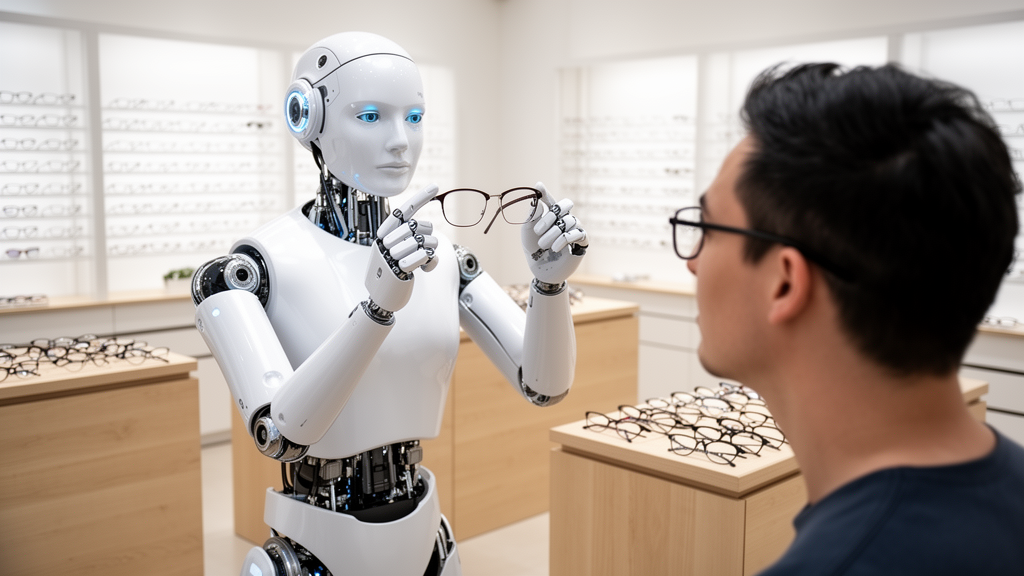
A mobile research prototype combines image processing, deep learning and internet-connected hardware to recommend eyeglass styles according to a person’s detected face type. The study, by Hasan Tezcan and Bekir Aksoy and published in Mobile Networks and Applications , describes an Android application that accepts a photograph taken with the phone’s camera or selected from its gallery, improves the image and sends it to another device operating online through the internet of things. The system then uses deep-learning methods to determine the face type and returns a list of eyeglass types associated with that classification.

The workflow links four components: image acquisition on an Android device, image enhancement, remote analysis and presentation of the recommendation. Custom Android software obtains the photograph through the device’s photo-taking feature or gallery. Image-processing techniques improve the picture before it is analyzed by a separate internet-connected device.

Following the face-type determination, the application displays the glasses types the system identifies as most suitable for the person. In this configuration, the phone provides the user interface while the computational analysis occurs through a networked device rather than entirely on the handset. Technically, the project draws on the increased computing capacity of mobile devices and the connectivity between mobile applications and other networked systems.

The authors describe deep learning as a subdiscipline of artificial intelligence with capabilities for complex calculation, abstract representation and pattern recognition. In the proposed system, those capabilities are used to analyze the enhanced portrait and assign a facial category, while the internet of things provides the connection between the Android application and the online analysis device. The system’s intended practical benefit is convenience: users can obtain a face-type classification and a corresponding list of frame options through a digital interface, potentially saving time and space.

Those savings are stated aims, not quantified results in the accessible material. The supplied abstract and preview also do not provide numerical measures of face-classification accuracy, recommendation quality, processing speed or reliability. They do not specify the neural-network architecture, training dataset, number of facial categories, criteria used to define each category, eyewear database, Android-device specifications or image-resolution requirements, preventing independent assessment of those components.

Because the available material consists of the abstract and a preview with numbered figures, the work is presented here as a research prototype and application concept. The accessible preview does not establish the size or composition of the dataset, the populations represented in it, the conditions under which images were captured or whether users participated in a quantified evaluation. It also does not explain whether face types are defined through facial proportions, geometric measurements or another approach, nor how the recommended glasses are mapped to each category.

No evidence in the accessible material shows whether the system improves appearance, fit, visual performance or clinical suitability. The reported development nevertheless demonstrates a concrete route from a mobile portrait to a personalized list of eyewear categories, using image enhancement and remote deep-learning analysis to connect face-type classification with a glasses recommendation.

Subject of Research: A mobile deep-learning prototype for face-type classification and eyeglass-style recommendations

Article Title: Implementation of a Mobile Supported Glasses Recommendation System According to Human Face Type Using Deep Learning and Internet of Things

Article References: Tezcan, H., & Aksoy, B. (2026). Implementation of a Mobile Supported Glasses Recommendation System According to Human Face Type Using Deep Learning and Internet of Things. Mobile Networks and Applications. https://doi.org/10.1007/s11036-026-02512-w

Image Credits: AI Generated

DOI: 10.1007/s11036-026-02512-w

Keywords: deep learning, Android app, face-type classification, eyeglass recommendations, image processing, internet of things, mobile computing, computer vision, pattern recognition, prototype system, Implementation, Mobile

Cite Scienmag News

Blake Davidson. (October 21, 2026). Android Prototype Recommends Eyeglasses by Detected Face Type. Scienmag. https://scienmag.com/android-prototype-recommends-eyeglasses-by-detected-face-type/

Blake Davidson. "Android Prototype Recommends Eyeglasses by Detected Face Type." Scienmag, 21 October 2026, https://scienmag.com/android-prototype-recommends-eyeglasses-by-detected-face-type/. Accessed 21 October 2026.

Blake Davidson. "Android Prototype Recommends Eyeglasses by Detected Face Type." Scienmag. October 21, 2026. https://scienmag.com/android-prototype-recommends-eyeglasses-by-detected-face-type/


Tags: AI-powered eyeglass suggestionsAndroid appAndroid camera and gallery integrationAndroid face type detectioncloud-connected fashion recommendation systemcomputer visiondeep learningdeep learning for face analysiseyeglass recommendationseyeglass style recommendation appface classification for accessory matchingface-type classificationimage processingimage processing in mobile applicationsimplementationInternet of Thingsinternet of things in eyewear selectionmobilemobile computingmobile device image enhancementPattern Recognitionprototype systemremote image analysis for fashionsmartphone-based facial feature analysis
Share26Tweet16
Previous Post

Case Report: Giant Pancreatic Cyst Removed by Enucleation in 68-Year-Old Man

Next Post

Three Guduchyadi phytochemicals remain bound in MCI-related protein simulations

Related Posts

GFAP mutations selectively reshape lipids in Alexander disease cell model
Technology and Engineering

GFAP mutations selectively reshape lipids in Alexander disease cell model

October 21, 2026
Research report: NUS CDE researchers design AI hardware that filters out irrelevant visual data
Technology and Engineering

Research report: NUS CDE researchers design AI hardware that filters out irrelevant visual data

October 21, 2026
YOLOv5-LiDAR basketball robot reaches 97.85% detection accuracy in evaluation
Technology and Engineering

YOLOv5-LiDAR basketball robot reaches 97.85% detection accuracy in evaluation

October 21, 2026
Energy routing framework links alloy metastability to deformation pathways
Technology and Engineering

Energy routing framework links alloy metastability to deformation pathways

October 21, 2026
Reinforcement learning curbs drag in turbulent bluff-body wakes
Technology and Engineering

Reinforcement learning curbs drag in turbulent bluff-body wakes

October 21, 2026
Confidence-aware system combines Arabic text and images to flag hateful memes
Technology and Engineering

Confidence-aware system combines Arabic text and images to flag hateful memes

October 21, 2026
Next Post
Three Guduchyadi phytochemicals remain bound in MCI-related protein simulations

Three Guduchyadi phytochemicals remain bound in MCI-related protein simulations

  • Mothers who receive childcare support from maternal grandparents show more optimized

    Mothers who receive childcare support from maternal grandparents show more parental warmth, finds NTU Singapore study

    27656 shares
    Share 11059 Tweet 6912
  • University of Seville Breaks 120-Year-Old Mystery, Revises a Key Einstein Concept

    1061 shares
    Share 424 Tweet 265
  • Bee body mass, pathogens and local climate influence heat tolerance

    682 shares
    Share 273 Tweet 171
  • Researchers record first-ever images and data of a shark experiencing a boat strike

    546 shares
    Share 218 Tweet 137
  • Groundbreaking Clinical Trial Reveals Lubiprostone Enhances Kidney Function

    531 shares
    Share 212 Tweet 133
Science

Embark on a thrilling journey of discovery with Scienmag.com—your ultimate source for cutting-edge breakthroughs. Immerse yourself in a world where curiosity knows no limits and tomorrow’s possibilities become today’s reality!

RECENT NEWS

  • Three Guduchyadi phytochemicals remain bound in MCI-related protein simulations
  • Android Prototype Recommends Eyeglasses by Detected Face Type
  • Case Report: Giant Pancreatic Cyst Removed by Enucleation in 68-Year-Old Man
  • Cultural sustainability crisis of the Taikat people of Papua

Categories

  • Agriculture
  • Anthropology
  • Archaeology
  • Athmospheric
  • Biology
  • Biotechnology
  • Blog
  • Bussines
  • Cancer
  • Chemistry
  • Climate
  • Earth Science
  • Editorial Policy
  • Marine
  • Mathematics
  • Medicine
  • Pediatry
  • Policy
  • Psychology & Psychiatry
  • Science Education
  • Science News
  • Social Science
  • Space
  • Technology and Engineering

Subscribe to Blog via Email

Enter your email address to subscribe to this blog and receive notifications of new posts by email.

Join 5,150 other subscribers

© 2025 Scienmag - Science Magazine

Welcome Back!

Login to your account below

Forgotten Password?

Retrieve your password

Please enter your username or email address to reset your password.

Log In
No Result
View All Result
  • HOME
  • SCIENCE NEWS
  • CONTACT US

© 2025 Scienmag - Science Magazine

Discover more from Science

Subscribe now to keep reading and get access to the full archive.

Continue reading